 57:56
57:56Austin · 2026
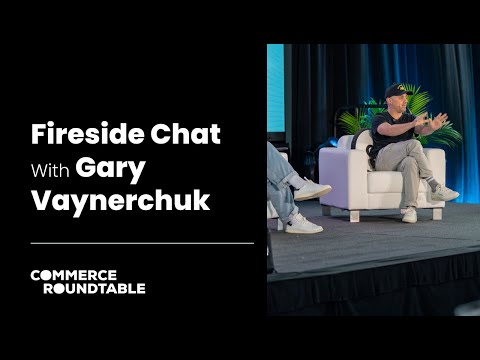
Gary Vaynerchuk connects organic content, paid distribution, creative accountability, and the changing ways people discover brands in a candid ecommerce strategy conversation.
Gary Vaynerchuk connects organic content, paid distribution, creative accountability, and the changing ways people discover brands in a candid ecommerce strategy conversation.
For founders and marketing teams building a stronger connection between content and customer acquisition.
Speaker roles and platform examples reflect the session’s original context. This is an archived conversation.
Use organic response to learn which ideas deserve further creative and paid investment.
Read this part · 03:33 ↓Replace a broad audience label with a specific situation or interest the creative can speak to.
Read this part · 08:30 ↓Discuss why the idea worked or failed, not only how the media was bought.
Read this part · 13:17 ↓Build useful discoverable content and test new tools against your own business horizon.
Read this part · 32:17 ↓Create a shared feedback loop between the people making content and the people distributing it.
Read this part · 40:18 ↓A quick editorial guide to the key ideas. Read the complete transcript below for the examples, details, and discussion in the recording.
Original recording on YouTube ↗Gary makes the case for investing thought and effort in organic social creative. It gives brands a way to learn which ideas earn attention before deciding how to distribute them more widely. That learning becomes more valuable when it feeds the paid team.
The argument is not that every business should abandon its existing acquisition system. It is that the quality of the content deserves a place in the growth discussion, alongside the measurement and buying skills that performance teams already emphasize.
Broad demographic buckets can produce broad, forgettable creative. Gary argues for narrower groups with recognizable interests, experiences, or needs. A piece of content with a clear point of view gives the distribution system and the audience more to respond to.
He describes a shift toward interest-driven discovery, where creative can find people who do not already follow the brand. That changes the value of making something relevant to a particular community, instead of addressing the entire potential market in every post.
The conversation challenges teams to examine the work itself when results disappoint. Distribution and measurement matter, but they cannot answer every question about whether an idea resonates. Gary repeatedly brings the discussion back to the creative choices being made.
Combining artistic judgment with feedback creates a more productive process than treating those disciplines as opponents. Teams need people who can make an interesting piece of content and people who can help understand its response. The two kinds of work should inform one another.
In the Q&A, Gary considers AI-assisted shopping and the role of searchable content. He describes investing in useful material that can help a brand be found as the way people ask questions changes. The time horizon matters: a founder planning a quick sale and one building for decades may prioritize differently.
His response to AI-generated creative is to learn the tools while continuing to develop human creative capability. The session presents this as an expanding set of options, rather than a single replacement for every existing production method.
The closing discussion returns to the relationship between organic and paid activity. Content, audience response, and distribution work better when the teams share what they learn. A good idea should not be trapped inside one channel’s reporting structure.
Gary also resists the search for one permanent formula. The appropriate mix depends on the brand, its ambitions, and the period it is planning for. The durable practice is to keep making relevant work, assess the response, and adjust how it reaches people.
From the recording’s auto-generated YouTube captions, with filler words removed and paragraph breaks added for readability. Names, numbers, and wording may contain caption errors; refer to the recording for exact phrasing. Chapter links jump to the text below.
Original recording on YouTube ↗0:00you made a much more meaningful investment financially to organic social creative and measured it. And the way you measure it is if it does better than your normal posts. You post organically, you normally get a,000 views. If you then take that piece of creative back to the house, back to you, and you slightly tweak it, and you add performance elements to it, and you rerun it in the platform, it went organically strong. you rerun it that it will outperform your best practices on AB creative and that is the punchline thus rendering you not having to waste as much money on the working media dollars you will see substantial growth you're starting to feed the future of the LLMs [Music]
0:44>> please give a warm welcome to Gary Vaynerchuk Thank you. Of course. Thank you. >> Let's get everyone. Let's see. >> Keep it going. Yeah. Please, please, please, please. So, he came in early, actually. So, Gary came in early. He's He's a very, very kind guy because he likes to celebrate and do things with his fans, which I am.
1:12And I'm going to show you guys what our day was like yesterday. Here we go. This was us. We were Dude, not only were we day trading attention, we are day trading Pokemon cards. We were slinging these things. And then there then there was this one. >> Very nice. >> What were we doing here? >> Fail action. I like that. >> We were. And then lastly, we had incredible game. >> I really wish she didn't put this photo up.
1:35>> I'm in very salty spirits this Monday morning. I was trying to keep it in a good mood, but all honestly, like I've been I've been supporting this man for for quite a while, watching and learning, consuming, and I know many many of us are too. So, >> thank you. >> I have to ask this. I'm being top of
1:51mind. You're here talking a little bit about you knew who everybody was in the room already, the level of acquisition and work that they're putting in. They're trying to grow their brand, >> of course. >> What are you feeling? What are you seeing right now from a macro level? >> You know, it's a really interesting time. I I I'm in a funny part of my career where I'm not doing a lot of speaking and I'm trying to be selective of which ones I go to. And I thought it'd be nice to tell you genuinely why I'm here. I have a lot of admiration for practitioners and that seems to be the makeup of this audience. And it's funny because I build so much brand and personal brand that I'm aware that even many people in this audience might think I'm a motivational speaker or a mascot. But since 1996 to today, which is now, you know, quite a period of time, there's never been a day in the last 30 years where I am not on
2:47the hands of a wheel of a business or the marketing execution of that business. And so when I answer this question, it comes from my day-to-day on wine text or vfriends or all these things. is that I think the most interesting thing that I'm curious about in this room is where are you on the journey between brand and sales, right? They're incredibly different. But I would argue that as we sit here today, the most exciting thing probably for a lot of you in this room, if I'm reading my intuition right, is we are in a very interesting era in the last three years where we are dangerously close to putting a very significant math overlay on art. So, I would argue we're in the
3:36first era ever where you can actually measure creative and that's because you can post all of your content on the seven social networks and the reach that that creative will get organically is something you can measure. If you do not use working media dollars to disguise your creative, you're able to actually measure the creative. And if you can measure the creative, you can fundamentally grow your business to the moon. And so, what am I thinking about? I'm thinking that organic social media in a 5-year window has gone from a nice to have to I would argue for the most performance quant mathematical people in this room that organic social has become the most important thing and I do not believe that most people believe that or realize it yet. Thus, that motivates me to get on stages and talk about it.
4:40>> Thanks, Dad. It's it's it's hard to hear this because on one level like we have to make sure that the business survives and I need to measure my ROI on every dollar I'm spending. >> Agreed. >> Happens all the time, right? >> I agree. >> And now if you have the measurement because a lot of the room is some agencies, marketers, etc. When you go to bat and argue, it used to be I'm going to cookie. I'm going to follow you all around the internet.
5:03>> That's right. And now it's the creation of I'm going to create the persona that I'm going to attract the customer that is already into a specific thing because majority of the AI is happening on the major networks anyways. >> Yeah. But I would argue that let me go a little further because this is a room of practitioners. Here's the punch line. I believe that if you cut down your working media dollars and I'm sure it's not lost actually. How many people here use Google search and Google ads as a meaningful part of your mix? Raise your hands. Raise them high. I mean, I'm I'm sure every single person that just raised their hand is not delusional to the fact that that ecosystem is about to get very expensive because so much of the supply of the attention is going to GEO and AEO aka you know AI search versus going to Google and everything you've been buying is about to go up triple and quadruple in price because you and your direct competitors are
5:55going to be battling for less of the inventory that's there. Right? What I'm saying to everyone in this room is I believe that if you made a much more meaningful investment financially to organic social creative and measured it and the way you measure it is if it does better than your normal posts. You post organically you normally get a thousand views. I'm keeping it very like humble here. You now post something and it gets 100,000 views. If you then take that piece of creative back to the house, back to you, and you slightly tweak it and you add performance elements to it, a free shipping code, a discount code, you change the copy, and you rerun it in the platform it went organically strong, you rerun it in Instagram or Tik Tok or Google Shorts that it will outperform your best practices on AB creative. And that is the punchline. Thus rendering you not having to waste as much money on the working media dollars and that once you get that flywheel working, you will
6:57see substantial growth because you're doing brand and you're doing conversion. And here's the biggest ele in the room. You're starting to feed the future of the LLMs. My friends, you have to start feeding these LLMs, these chat bots, open AI, what happens inside of Meta, Gemini for sure. I could argue in the last week I've decided for myself that Google Shorts has become the most important social platform for me coming from fourth or fifth place because I'm fully aware that Gemini is going to eat on the back of the information on shorts and I know that Gemini is going to have a very significant piece of the puzzle because Google can't afford for that to fail and they will put all pot committed to that.
7:41So again, I'm just ranting here for a second, but organic social creative has exploded in importance for the math kids. I think it's measurable, brother. I don't want to waste money. I don't [ __ ] want to guess. I just don't know how people don't see what's happening. And that's what I'm trying to suffocate. You can't just throw good working media dollars at [ __ ] creative and look at your CAC and LTV and rorowaz. All of you have played this game. The reason it worked for the last generation was the Facebook ads were so cheap.
8:16>> This is what I was yelling about in 2017 and 16 and 15. Remember >> I do. >> They were so underpriced. You could be dog [ __ ] at the creative and it still worked. >> We're in a different era and you need to understand your mix. the relationship of
8:31authentic content from just paid to organic and then the inclusion of now AI iterations and volume and drama when it came out with the update of like they want net new concept from a very specific way of content coming on meta is iterate until you find what's happening or is it brand new big swing concepts across the board for me it's who the [ __ ] going to buy your how many different consumer segmentations are there's probably 40 50 60 segmentations, right? If I'm selling wine, the creative I'm going to put against a 25year-old male who uses wine as an asset to their dating life is very different creative than I'm going to put in front of a 48 to 52-year-old female who's part of a wine club who's only been drinking too much penog grigio, Chardonnay, and sansair, and I want to show her there's other things to drink.
9:23And that goes on forever, whether you sell skateboards or t-shirts or toothpaste. So for me it's who are the 30 to 40 different consumer segmentations and not of yesterday 18 to 35 >> the big buckets. >> Yeah. These big buckets make no sense. The more narrow you go the more when you think of the creative you're going to make for it the more that creative is going to have teeth. The more that creative has teeth and is more niche the more the creative will find the audience. I hope it's not lost on you that every hour that's going by how many followers you have is declining in importance. I spent 15 years building my world. It's collapsing. The creative is finding the audience. In fact, I would argue that we don't even live in social media anymore. We're firmly in something I called interest media. Like, the creative is finding the audience. If I make a video right now on TikTok about skateboarding, I've never made a single piece of content about skateboarding.
10:16The first 500 people that don't follow me that are going to see that piece of content are into skateboarding. This is a very profound shift and it is elevated organic social creative to the first thing in the marketing mix because if you do it well, you can cut your media spend. You can cut your overall marketing budget and you'll have more effectiveness. That is what we're all looking for. The problem is so many people in this room have so been addicted for a decade of just math, math, math, math, math that they're scared to even put their toe into something they can't measure from the first second because you're not actually marketers. You're salespeople.
10:55That that is a I need you to get this through your pretty heads. You're very attractive crew here and say they listen to me. When you do not believe in this, you're a salesperson, not a marketer. You must, by the way, I love selling. I'm obsessed with being a salesperson. In fact, my favorite other thing to talk about live social shopping. I love going live on whatnot and Tik Tok shop and being a 100% salesperson. It's my favorite.
11:24There's nothing wrong with sales. Sales is remarkable, but sales is what you do and rely on when you're not good at branding. >> Yeah, let's clap that. That's a that's a bar. >> And so, but again, I'm as addicted to math as I am to art. To me, even this color scheme is not by accident. When I think about marketing, I think about math verse art the same way I think about our political system. Red verse blue. Everyone's so deeply entrenched in their meaning the math crew is like math and they get delusional because they don't understand the value of the art.
12:01The art crew where I spend a lot of my time in Fortune 500 marketing land. Those [ __ ] are completely lost. They think their opinion on a 30-cond commercial or on a picture is the end all beall and they disrespect consumer truth. It's not red or blue. It's firmly purple. And you have to ask yourself where you're at. Are you one of these people that are obsessed with how the grid looks on your Instagram for brand but can't sell? You're too far on the art. Or are you just so mathemat and it's been cycles. The math dominates for a while, then the art dominates.
12:41When I was writing some of those books, like when I wrote the yellow book, Crushing It, I pounded Facebook ads, they were so underpriced. that just said it. Literally, you could put any picture in video, AB test a little bit. You found something that worked for your rorowaz and you cooked. VC money was pouring. You weren't really even building a real business. You were building a financial arbitrage machine that was just trying to get to the next fundraising round and it all collapsed.
13:05Right now, we're in a place where art has the value because the art has math behind it. Now, we are literally spending two, three billion dollars in media at Vayner Media. Plus, I've got all my own companies. I believe as I sit
13:19here today in San Diego with all of you that it is asinine to spend $1 of media to amplify a piece of creative that has not been validated by an AI algorithm in a social network right now in the audience. How many of you guys the way that your teams are set up? I know a lot of people, a lot of faces, a lot of brands in this room, there's not a organic team or a marketing team. It was just like this team makes content, we put it behind ads. Is this how most of you guys are built this way? Anybody different where it's like I have my organic >> bro? Everyone's different. Everyone's got the performance team and then if they are big enough, they have the brand team. Everybody has media and creative separate. It's all just one thing.
14:03>> That's not how they're that's not how they're set up though. >> No. That's why I'm here. >> Like, you know what I mean? Like >> that's the punchline. We need to understand that it changed 3 years ago. The Tik Tockification of all social media has changed everything. And again, I'm kind of bouncing here because I'm excited cuz I I get excited because I'm like, "Oh, I know six people in here are going to do something about what I'm saying." And it's going to fundamentally change everything. Not at first, right?
14:28You're going to go back home. You're going to take more money, hire, and commit to creative. You're going to post, and after a month, nothing's going to do super well, and you're be like, "Gary, him, right?" But then month three, one video just hits for some unknown reason. You're going to bring it back. You're going to take your performance DNA and tweak it a little bit and you're going to run ads and it's going to be three, four, $5 less than anything you've ever done in your career in your best performance and there's going to be room for it cuz the create, you know, you know when you're like you run out of time with, you know, this is such a big thing for this audience like the ad ran too much, there's no more rorowaz on it. You you blame the inventory. It's not the inventory, it's the creative.
15:12You're welcome. The amount of money that you can spend on an ad exponentially grows if an ad is good. How do you find a good ad? You definitely don't guess. You run creative at scale in these channels. But then this, this is my rant. I know a lot of you follow me and you know this is my rant. Where this rant got super crazy is where we're going with AI bots. The fact that this creative is also going to feed the LLMs, which is basically doing your 1990s version of SEO and not SEM SEO.
15:50It's a very big deal. And I could I mean, every face I'm looking at right now should be posting three pieces of creative organically a day on Google Shorts just for the LLM in three years. just that, let alone what it's actually doing day-to-day on marketing and relevance, consumer insights and conversion. >> If you were to rank, you said Google Shorts, what's what's the next platform where time and attention and effort should be from the brand side?
16:19>> Tik Tok's got the most advanced algo, as you all know, on a video getting 8 million views when you normally get 300,000. The problem is, the reason I wrote a book called Day Trading Attention is [ __ ] changes every day. I'm sure you're aware that Tik Tok's about to go through significant changes. I have a funny feeling that the algorithm is going to be different and who the hell knows what that thing's going to do. Meta is a beast. Facebook, all of you know. In fact, another thing that I continue to watch and be baffled by is how little effort people are putting into Facebook blue. You all know this.
16:54We've all become way too one-dimensional with Instagram and Tik Tok. the which means the opportunities sit in other places. So Facebook blue is amazing. I'll give you one. Who here markets to 15 to 25? Raise your hands. You sell your stuff to 15 to 25 year olds predom or predominantly or a little bit. All right. So for the three people that raised your hand, brother Snapchat spotlight which is like their Tik Tok it, you know, obviously it's not the size of Tik Tok or Instagram, but there's a load of 15 to 25 year olds in there. But the good thing is nobody here is marketing inside of it. So it's just good oldfashioned supply and demand. for the B2B people in here, LinkedIn's remarkable. A lot of you have emotional feelings towards LinkedIn from a math standpoint because they have an artificially high CPM floor that isn't the same thing everywhere else. The problem is if you really want to if anybody here B2B and sell SAS products, I assume not that many. Oh, raise
17:51>> raise it high. Don't be shy. Raise it high. for all of you, the the issue is LinkedIn is got so much of the audience we want that if you get the creative right, you can even make their inflated floor on CPMs work for you because the audience is there. Plus, they don't have Cambridge Analytica like politics. You can target people on LinkedIn who are CEOs, who are CIOS, who are CTO's. Their targeting capabilities is still kind of like 2016 like. So, the answer is everyone. You you can't you don't regardless of how good I am at this nancond. Every platform's changing.
18:27I look at Pinterest once a week just to make sure I'm not missing something, you know? So, like it's an everyday thing for me. >> The the sweet spot also is there's a lot of agencies that are needing to keep up and satisfy because a lot of on the brand side there might be product people, but there's a a grip of agencies in this room that provide creative must do more creative for all the platforms that they manage. You obviously have an incredible agency yourself. How are you informing the team so you can make sure that they're sticking with and keeping up with the what they need to be doing?
18:55>> Who's an agency person here? Raise your hands. Raise it high. So, for this crew, I've got a very, very, very good piece of advice, especially if you decide to go down the organic path like we have. You can't avoid measuring it. A lot of times those agency people are like, "Just trust me, or it's good, or of course you need to do it." if you're a agency and you don't do both creative and media, you're going to be in trouble. Yeah.
19:20>> And when you do creative and media, so again, my agency has $400 million in billings this year. A lot of revenue, right? Every one of those clients when they ask me what the ROI is of the organic social creative, I tell them, if you don't let us do the media, you can't hold me accountable if I don't do the media. How do you want me to like because the punch line is crush it organically and then when you have winners, you go into a media spend and you convert it. And everybody here who loves measurement is then cooking, right? Everybody here will buy my thesis if you can spend Everybody here, brother, just has a marketing budget.
19:57>> Yes. >> So if you have an eight if you have a $8 million marketing budget, $2 million marketing budget, you don't really give a [ __ ] if it's on the media to the platform or if it's to make content. You just want business >> done, >> right? What is confusing to everyone now is we all went so pendulum to spending a lot of it on the media. Measure, measure, measure, measure. >> But the way to actually convert is to put more investment in the creative. So just very basic math, if you have $2 million in marketing and only 80,000 go or a h 100,000 go into the creative and the other one nine goes into media, I am telling you, and here's a very important caveat. If you're good at the creative, meaning you have a higher propensity to make videos and pictures that do do well, that if your spend is 500,000 on the creative, your media spend can be a million. Now you're in for 1.5. It will crush your 2 million at 100,000 and one
20:53nine because the creative is the variable. That is what you have to figure out in however you want to figure it out. I'm a big fan of live social shopping because I actually see a direct correlation. And this might be something you guys can cook with that if you sell even if you go on Tik Tok shop and you're not even selling that much stuff. Like you sold 80 units, but you can see the data of where you sold 40 of the 80 units by one thing you said. Clip that and run that ad outperforms a lot of your best AB stuff. So, you're using you're using the live social shopping as a selling day, but it's also a production day for the creative and you have black and white data that shows the words you said that made more people buy it. I'm sure we can all figure out that that ad will do well >> and everybody wins there. Now, everyone Okay, there the benefit of having someone that can speak to literally
21:45every other person in this room is is an absolute blessing. I'm already starting to see some questions come through. David, will you throw back up the the slido scan QR code? Is there any any
21:54questions from the audience that Gary can speak directly to? He's got a power to to really jump into it. K, would you please share please share your name, the brand to give him as much context as he needs. Tap it. Tap the top catch mic, please. Oh, hey there. Hey. Hey, everybody. My name is Hans Grabard. Gary, great getting to be here. So I have two questions. The first one is going to be I understand that there's a part of the math and there's a part of the art. But the argument that everybody's having right now is ad structure. Whereas people used to have ad structures on meta where it was like have seven retargeting reinterest broad all that kind of stuff. We're now seeing it being boiled down to two. Your AI shopping campaign and testing campaign. And that's an argument that we're seeing.
22:44Where do you stand on that argument? >> That that's an and that I'm fine with that. That's a good that's a fine part of the a it's a fine structure to be part of the equation. What I'm saying is where's the live shopping of it all if you're selling something. What I'm saying is how much organic creative are you putting out? I I think it's not lost on people here. Actually, by show of hands, how many of you were aware of either other businesses or direct competitors or maybe in your own life, how many of you were aware that a DTC brand had a Tik Tok get 10 million views and sell a load of stuff? Raise your hands. Raise your hands. So, to me, like I'm fine with that, but there's so many it's to me the thing that I struggle with in a room like this is we have this obsession with ore. as if there's one structure that's going to work, right?
23:36This is an and thing. I'm thrilled with that. You need everything. Literally, I spent five% of my talk right now trying to make sure that everyone's producing enough content to be the first results when somebody types in what soap should I buy on OpenAI and on Gemini in three years. So, it all depends on your life cycle. Half the people here, brother, don't give a [ __ ] for three years because they want to sell their company in the next 12 months. So, they don't need to listen to that as much. But I I think it's an and thing. But I will tell you there's disproportionate returns on investment in a 36 48month window right now of really being thoughtful and giving a lots of around your organic social creative.
24:16>> Thank you very much. And then the second question is you know we were just talking we're asking somebody on somebody thinks that like you know the blend between performance and art and marketing that it should be everybody. There shouldn't be an organic and there shouldn't be a paid person. Is that across all channels in your eyes or is that only on meta, only on Instagram? >> I think it should be all channels, but I think it should be creative and media, right? Not performance and marketing, just creative and media. But what I'm saying is, and it should make all the math people very happy. I can't believe we could measure creative.
24:54I've spent 30 years marketing and I had to guess every time I put something up if that was going to work well. And I had to spend real money on Google and Meta and other platforms to see the early returns. Even when I got those, even when Meta got so good where I could spend $1,000 to get meaningful insights, it was still $1,000 times unlimited assets. The fact that I can just go organic, have the upside of what everyone just raised their hands about, which is get 10 million views and sell stuff, but then also have the ability to bring that home and go performance. So I think what has to happen is who here is a a media math performance marketer?
25:32Raise your hands. All of you know that you've been frustrated with the creative. You're at the mercy of the creative. You can no matter how good your channel strategy is and like you figured out that nobody knew about Snapchat spotlight and you're buying attention for 40 cents when everyone's spending a dollar on meta. It still didn't matter if the creative sucked. The fact that we're measuring creative as a added value for just posting organically is bananas. So I think it's creative and media people. There'll be lots of channels. We didn't even talk about CTV, YouTube TV, pre-roll. Are you kidding me? Everyone's like, there's so much opportunity, but the creative is the punchline. For example, this keynote, I have your attention, but if everything coming out of my mouth was 2015 best practices and stupid, this wouldn't be effective. The creative is the punchline.
26:28And so, I need more people to understand that. And I understood why people didn't want to because it was all fugazi in in the ether. Right now, it's not. You post, there's no hiding. If you get 5,000 views, well, because I don't know if you know this, all the AI algos that run the news feeds, they're all based on relevance. The this is the first time that distribution is aligned with the advertiser. The New York Times and the Wall Street Journal didn't care if you made a full page ad. They just wanted your money. NBC and CBS and ESPN didn't care if your 30-cond commercial was good or bad. They were paying for your distribution. They were charging you.
27:10They just took your money. they could care less. Meta and Tik Tok and LinkedIn and Google care a lot because if your ad and creative isn't good, you're leaving the platform and going to another platform. They're aligned to keep people on the platform. So, they're showing they're setting this up. They want to keep people on. That's why we've gone to interest, not social. Well, how do you
27:32keep people on? You put stuff in front of them that they like. I actually predict that these platforms won't even take our ad money if the creative is not good enough. You know how insane that is? >> Crazy. >> Isn't that sick? Like I literally think there's a day and age where they're going to get so deep on knowing how valuable you staying on it is that you'll literally try to run ads against a piece of creative, it'll run for a few, you know, a couple hundred bucks and it will stop you.
27:58That's how much they want to keep people on. So this is the era we're in. So
28:02creative people who are held accountable to the math are incredibly important. And then good media people that understand, okay, now I got some good assets. Where's the underpriced attention, whether that's CTV, YouTube, Snapchat, Spotlight, Pinterest, LinkedIn, Facebook, Direct Mail, Outdoor, I could care less. What's the price? What's the value? But the creative is measurable. This is a big deal. And that was not the case 36 months ago. >> I feel like most of us are dealing with some terrible experience on on Meadow.
28:32Something just won't spend. I think this last >> It's because everyone's doing the same [ __ ] You're just letting the AI friends, if you're letting the AI do it and everyone's doing it, what the do you think is going to happen? Meta wins, you lose. Thank you. >> Perfect. So, I'm going to get We're going to go couple on stage. It's being upvoted again. If you have the questions, ask it. We'll I'll I'll hand the mic around.
28:59I promise. Can I go the other side? This
29:00question is Gary, how do you get better at the art as a non-creative person? How do you get better at the art? There's two ways. You're self-aware enough to realize you're not the art person and you hire someone who is, or you do what some of us in this room have done, which is you get into better shape, which is you go to the gym every day and you eat better. You either spend hours every day learning how to get better at the art by consuming content around how to get better at the art or you have the funds or the humility or the self-awareness to say I'm not the art person which is fine. I'm the business person. I'm the math person.
29:37Let me hire someone. Here's why all you
29:39math people are going to get so pumped about what's happening. You didn't know how to measure how good the art person was before, right? You could do it after you spent a lot of money, but now when they post organically on all the channels, either they get views or they don't. And any brand here that is spending money on getting more views for a post they post organically to make it look like it did better so your grid looks good is completely out of their mind.
30:10You're literally spending ad money for the perception that the creative did well. Just archive it and do the next post.
30:20How do you scale paid social if you need to test everything? >> How to what, brother? >> How do you scale paid social if you need to test everything organically first? When do you have to m move them must fast, launch new ads, launch new offers every day? >> Yes, that's right. That's what you have to do. >> Done. Great question. It was from the audience. >> But but to that question, like you're you do all understand that we're competing against each other for money, right?
30:44Like it should be hard. People forget that. >> I think so. >> I I know. So, look at this room. They're trying to figure out what's what to do next. >> No, actually, this room, to their credit, is actually part of the crew that actually can win. There's people that aren't here that are just laying in bed letting the AI do it and think it should be all okay. >> It's not the way. >> Hi. Hi. my name's Chelsea and I wrote Chelsea called Sunny Road. My question is, I love this conversation and what you said about art and branding and sales is what you do when you're not good at branding. What do you recommend
31:22in terms of budget as you're looking at next year and we're on the smaller side, but really kind of >> How much revenue do you do? >> 6 million. >> How much do you spend on marketing this year? >> Not enough. 3%. >> Three. >> Yeah. So, more than 3%. Okay. But again, I laugh because I'm so obsessed cuz marketing to me is the offense of a business, right? I don't laugh because I don't know your margins. I definitely don't know what your objectives are. So, let's break it down because this might help people. So, you're doing six million. You spend very little on marketing, which are does that mean you're getting a lot of customers through organic?
31:56>> Yes. >> So, your personal organic content? >> Yes, >> makes sense. You sell a physical product. Yeah, we do design and dev CRO and retention. So, we're organic on Shopify, Premier, Platinum Partners. >> Have you thought about live social shopping, selling on those platforms? >> I don't know where to begin.
32:17>> Okay, you go to whatnot and you go to Tik Tok shop and you just go. >> Okay. >> Like, meaning you just Google or chat GPT. How do I sell on whatnot? Enter. >> Okay. >> Right. By the way, every question is no longer valid because AI can answer it for you. Like literally, there's no such thing as I don't know where to go anymore. It's crazy. I'm not judging. This is like all of us. Like it is ludicrous to have a question not answered anymore in the world we now live in. We just haven't all, me included, adapted fully yet. But in 24 months, that will never run through your mind again. Where to start is over.
32:51>> I guess it's cuz we're a service, not a product. >> I get that. But you know what's crazy? You can literally make a product that you sell that comes with the service for free. >> Okay. So for everyone who sells a service, you could literally create if you want to. The reason I'm going down that path with her is she's the personality. So I see an opportunity. Personal brand creates other opportunities. But I think the biggest thing for you is making unlimited content around the service organically across seven platforms.
33:20>> Okay? >> Facebook, Instagram, Tik Tok, all that stuff. And when something does well, that's when you spend media dollars against it to amplify it for conversion. >> Okay? Here's a quick one for you.
33:31Generative AI, video or image or real human content? >> Yes. >> I fundamentally, you know, I turned 50 in November, which is insane. And I'm like, okay, I'm halfway home, you know, about to go into halftime. What have I learned? I've learned that many things have factored into what's worked for me for 30 years, but disproportionately my obsession with and in a world where everyone's obsessed with ore has been a huge competitive advantage. The answer to that question is AI images, AI video, human images, human video. It's just always and and opportunity costs and all this, but what people dismiss is you learn.
34:21Well, Gary, I don't have time. Well, get the out then cuz somebody else is going to have time. >> Right here. >> Hey Gary, how you doing? >> Good brother. >> I own a street interview. What's your name? I'm Josh. >> Josh. I'm actually best friends with Buster Sher. >> Oh, that's awesome. He's the best. Nice to meet you, man.
34:37>> Good to meet you too. I own a street interview ad company in New York City. You have to do street interview ads for consumer brands. Breeze is actually one of my first clients. Dropped out of college. street interviewed every single day. 40,000 steps a day. Built it up. We have 32 team members now. it's incredible. Years old. So, we for you. We have actors and communities that do these street interviews. >> Yep. For for casino brand.
34:57>> Totally get it. >> As I'm growing this business, we're moving to Santa Monica now, Miami. We're really trying to productize stream ads. How do you see VO competing with us in the next two to three years? >> favorably. >> Okay. do is I literally am 24 months are gonna be like, "Hey, I need a super attractive dude with blonde hair and a you know, and I want him to be on a street in Tyrron asking people about my, you know, porcupine nuts startup." Like, I mean, >> yeah, >> we're it's coming. But but >> that's nothing to get scared of because it's and AI is a huge title wave. Either you're going to be like and put your head in the sand and here's your strategy that it doesn't happen or you realize you need to be at the forefront of being someone who's great at doing the prompt engineering and have both because there will be room for both.
35:53>> Yeah. >> Right. And you are a production company of creative. You need to get out of just the niche of that. You need to add and not just street interviews, but other kinds of productions, >> other other niche, other content niches. >> That's right. If you come to me and you're like, "Hey, Gary, I do street videos." I'm like, "That's cool. Let's do a bee friends thing." If you come and say, "I do street videos. We do podcast production as well. We also do, you know, green." As you start to add, you become a 360 production company.
36:22>> Obviously, that was your look. Vayner Media, >> for the first three years, all we did was community management. Literally, my company just replied to people in the comments on Twitter and Facebook fan pages over the last 12 years. We do everything now. And I think that's what you have to think about. >> Thank you so much. >> Good luck, brother. >> Thank you so much. >> Got about four minutes left with you, Gary. Just >> I can milk it a little bit. Let's do eight. There's more questions.
36:48>> Hell yeah. Let's go. With LM with LLM's
36:50pulling so much from Reddit, it seems everyone should have a Reddit strategy. What is your Reddit strategy? In the last several months, weeks, LM are starting to pull less from Reddit because so much of the Reddit content is AI generated day trading attention. So to me, Reddit is stand pay attention to what I said. Google Shorts, why Gemini is real. Why? Google is going to lose an extraordinary amount of market share with search. As we all know, they're a monopoly in search. Nobody's killing it on Bing. You know, maybe a couple people have figured it out, but Google has owned search.
37:32We're about to go to a new version of search, right? What Google did to the yellow pages, AI bots are about to do to Google, right? Google isn't just sitting around saying, "Cool, let's get killed." They're desperate to win. They're smart. They know they're not going to have 95% of the market the way they did in classic search, but they want 50 60. What does Google own? They own Android. There's more Androids than iPhones. I actually think you're not going to be able to even open your Android in five years without them forcing you down Gemini. That's how much they need to win. Where is that content going to come from? It's going to come from YouTube and YouTube Shorts. So, Reddit is standalone over here. And yes, the early portions of LLM's models are grabbing a good amount of content from Reddit. If you look carefully over the last couple of updates, it's already starting to decline. How many people here are OG OG SEO people from the late 90s, early 2000s? Raise your hands. Just want to
38:33see this cuz actually, can you stand up if you're one of those people? Please just appease me, sir. You ma'am, I saw you. Just look around. Everyone, look at these people's faces. They can tell you what's going to happen in LLMs. Thank you. They know that back in the day we did lots of different things to show up on the first result of Google, but then there'd be an update hurricane and tornado like every couple months, every couple years [ __ ] would change and our best practices would change. Same thing's going to happen here. So yes, I think a Reddit, by the way, I I love Reddit and I think a good Reddit strategy is good. I just like the double benefit of doing marketing on social that drives sales now and it's contributing to your LLM and I don't want to assume everyone here has unlimited resources you know cuz I know we don't you know 6 million 3% like I just know we don't have unlimited resources so I'm trying to think about what is the pecking order
39:29but if you can do everything do everything. Hey Gary. Hey. So John Clark from Modern Shelving. Every time I watch you, I look at the shelves behind you. I've actually created a series to create content to own it. Okay. I've been I'm doing been doing modern shelving for over 20 years. Good for you. It's called Behind the Shelves. >> I love that. >> Okay. So I'd like to come to your office and upgrade your shelving. Number one.
39:51>> I'm open to it. >> Excellent. My wife put me up to that. Number two, I'd like to figure out where to put this content. We've done some amazing storytelling. We've trademarked behind the shelves. I really feel that this is a tipping point for our business. We're now doing four to five million. I think we're at the point with a room filled with people like this, we can really get to the next level. Where should we put this content? People collect things like you say. Should we go after the latest trend? What's your
40:18advice? >> I think you need to put the content that you're producing on the seven to eight social networks. It's not super complicated. Now, what you're going to learn if you do that is you have to know how to do thumbnails. You have to know how the first 3 seconds go. You have to know how the 10th second impacts reach the copy, what time you post, which platforms are pushing which parts. friends, this is an acronym and that I think could really really help a lot of you. At Vayner, we call it pack platforms, algorithms, and culture. I think if you take anything from my talk, if you want to noodle with that, it can help you be much better at organic social. Platforms matter. Similar to I told that gentleman about Snapchat, you know, spotlight, like where's the attention? And then platforms matter because you have to know what the platform's pushing. If Instagram cares to learn a lot more about carousels, your carousels are going to get a lot more reach. That gets
41:10a little bit into algorithms, the next one. But then within algorithms, you need to understand like what's driving reach. Is it zoom? Like I'll give you one that no one thinks about. People think about engagement, likes, comments, shares, saves. Nobody thinks about zoomins. If you get someone to zoom in on your photo in the feed, you will get a lot more people to see it. If you know that, all of a sudden, the photo you're going to put out starts to gify the zoom in, right? It's that game. So, that's algorithm. And then culture. Leoo's the Jets lost 0 and3. What happened yesterday? What music's happening? What happened at the Grammys? What's happening in fashion? Baggies in tights out. just understanding culture, pop culture for the customers you're trying to reach because that will impact what you put. As you can imagine, if you knew the way I did that Lubus were going to go crazy 18 months ago and made unlimited Lubu shelf content, that would have been good for your business. So now
42:07it's over, bro. I have no idea, but when I see it, I'll execute against it. >> Right here and then in the front. >> Hey, Gary. >> Hey, brother. I'm launching an
42:16innovative brand in sports performance and there's some regulatory issues around it. It's a micro dos psilocybin product. So if you can't use normal distribution channels when you can't run paid ads and you're sort of on the cutting edge of wellness for live streaming, >> okay, >> kick, Twitch, some of the live stream platforms have a lot more leniency than some of the big tech companies. So literally podcast like literally interviewing like making content that lives within kick and Twitch and the live streaming platforms Rumble those those are the places you need to go until the bigger platforms accept it otherwise you can't do anything right >> right >> so those platforms exist and we didn't talk about live streaming I'm sure it's not lost on anyone especially if you pay attention to youth culture or you have a 12 to 18year-old in your life that Kai SET and Aiden Ross and I show speed.
43:08These are the most famous people in the world actually. Now they live on live streaming. Some of these people aren't even crushing on social. They are residually because they're so famous. But for you, brother, doing a kick live stream, one hour podcast live on that platform slowly but surely building. You could do that. >> Thank you. You're welcome. >> Hi, Gary. Hi, this is Robin Nissa and I made a career out of being a millennial opening brand social channels and driving millions of dollars in revenue on a panic social >> ship of course with paid. And so the
43:40conversation where I always fi feel like I'm beating my head into a wall is when I'm in a room with paid media people or performance advertisers because I can't speak in terms of dollars in versus dollars out. >> Well, you can. I just literally I just literally though tell you I just literally I get it which is why I'm yelling so hard about this. You're now in the game. You sit if I'm a performance marketer and I'm sitting with you and you're like organic and I'm like but what's what's the return on investment? You're like very simple when you invest you say to me very simple Gary how much are you spending 6 million on media. How much are you spending on organic social? Me nothing. We're just doing creative for the six million.
44:23You're like, Gary, if you give me $600,000, you're now at 5.4. If you post $600,000 worth in a year of organic social, the three to seven best performing creative organic videos and pictures, I'm going to tell you to then slightly twe. So, I'm giving you that. I'm down to 54. If I run 54 against seven ads that you made that were organic, that were You made it organic. Haha. It's funny. It's pretty. I come back, I add a yellow banner at the end that says, "Here's free shipping." I change the copy. You say to me, "Your 54 is gonna outperform your six because the creative is the variable." Either I believe that or I don't. That's it. And I would tell you, do not be in the convincing business, right?
45:09>> Be in the conviction business. Understand what I'm saying and show them examples of it. >> Okay? >> Like Walgreens sold out of every mango gummy candy by one organic ad. That's real life sales. That's why television worked. That's why marketing works. So, somebody might be so one-dimensional that they don't care about anything but the math of it all, but more and more people are realizing what I'm talking about in rooms like this. What I just told you is the answer. You will out cack an LTV and rorowaz on your 54, Gary, if you give me 600,000. And you've got to give me the year to do it because I don't know when the viral hits or the overindexing hits. It's not just virality. If you're a brand that normally gets 800 views per video, if something gets 54,000, that's like a very big jump from what your norm is. And again, I I can see by the faces you're catching what I'm putting down. Like, you bring that video back, you slightly convert it, the
46:05imagery, the call to action, the first three seconds, definitely the copy, and you run the ad. And don't forget, you're going to have insights on who saw it organically. This is how you're going to find new customer bases. You're like, "Shit, this ad did well in Texas organically. Let me run the ads in Texas against males." So, you just got to explain to them that's And by the way, I'm telling you firmly that that's right. Now, what I don't know, and this is why Vayner Media doesn't win 100% of the time, is if you can't hit creative pay dirt with the 600,000 I gave you, then you're in trouble. But the thesis is right.
46:42>> All right. I gotta get the out of here. >> All right. All right. Thank you. >> Thank you.
57:56 32:44
32:44 26:17
26:17Join Commerce Roundtable in 2027 for focused learning and conversations with people working through the same challenges.