 42:03
San Diego · 2024

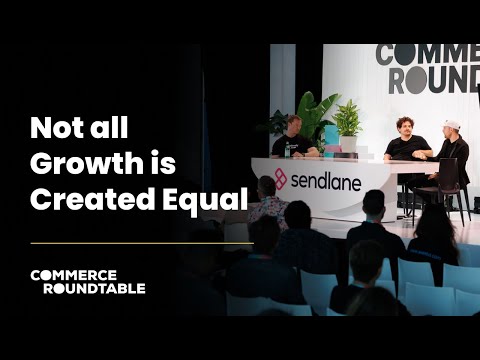
Patrick Barnes, Isaac Medeiros, and Ben Yahalom discuss lifetime value, hiring, product expansion, retail, and inventory. For operators evaluating what makes growth valuable.
Patrick Barnes, Isaac Medeiros, and Ben Yahalom discuss lifetime value, hiring, product expansion, retail, and inventory. For operators evaluating what makes growth valuable.
For ecommerce founders, marketers, and operators working on growth & measurement.
Speaker roles and platform examples reflect the session’s original context. This is an archived conversation.
Lifetime value needs context from the way customers interact with the brand.
Read this part · 03:14 ↓A growing company needs people who can contribute beyond a narrow task list.
Read this part · 09:50 ↓Retail and new products introduce opportunities and operational demands.
Read this part · 18:23 ↓A quick editorial guide to the key ideas. Read the complete transcript below for the examples, details, and discussion in the recording.
Original recording on YouTube ↗Lifetime value needs context from the way customers interact with the brand. The panel discusses value beyond a single purchase and how it informs growth decisions. This frames later choices about products and channels as part of a longer customer relationship.
A growing company needs people who can contribute beyond a narrow task list. The speakers discuss aptitude, attitude, and decisions about internal versus outsourced roles. Their examples connect team structure with the capabilities required to build and operate the brand.
Retail and new products introduce opportunities and operational demands. The discussion connects channel expansion with product strategy and inventory management. The panel considers what successful growth looks like when the team must fund, stock, and deliver the next stage of the business.
From the recording’s auto-generated YouTube captions, with filler words removed and paragraph breaks added for readability. Names, numbers, and wording may contain caption errors; refer to the recording for exact phrasing. Chapter links jump to the text below.
Original recording on YouTube ↗0:00we hire for aptitude and attitude aptitude comprises of wisdom and intelligence wisdom being everything you bring to date your set of experiences your judgment how good are you at problem solving how critical of a thinker are you learning or intelligence is purely your ability to learn your ability to solve complex problems how quickly you reason and that's actually the easy of the two when it comes to attitude in my opinion it's they make it or break it and we have six of them that we came up with over time after realizing what are those attitudes that we value so number one is grit and resilience because if people are not sufficiently determined to succeed they will fail all righty oh I was only like
0:4650% sure that would work off the break thanks everybody for joining especially for Isaac and Ben excited to jump into it this afternoon I do have some notes normally because I forget like afterwards I think of all these I wish I would have said one thing I wasn't planning on talking about was life Ely and how we came into life Ely and then Nick grabbed me upstairs and was like you have to talk about this so I just talk about it really quickly so my co-founder and I have actually been in SAS for Shopify since 2013 he founded a company called trade gecko which did inventory and Order management and that company went away in around 2019 or 2020 cuz it unfortunately got acquired by a small company called into it and it's now their QuickBooks Commerce product and then we had to go into you know you know sit on the bench for a couple of years during an earnout and then we came back and we had
1:42we were still super enthusiastic about e-commerce like when we started Shopify was doing say 15 million in revenue or 30 million in revenue and now it's doing 8 billion in Revenue so still very enthusiastic about developing from the merchants but we're definitely feeling you know when you sell your company you don't have a team anymore you don't have customers anymore so we thought a great way and then we met this amazing entrepreneur Ki through the founder of woo Commerce and we're able to form a partnership quickly and we acquired lifetim 2 years ago now I think people only heard about it for the first time a year ago cuz we just decided to shut the [ __ ] up double the engineering team and get back to work before talking about it but that's that's a story of Lifetime in amp and we want to do a few more products as well so thank you no than thanks I hope that's what we had in mind so I think the two Founders we
2:33have up here or the two leaders we have up here need no introduction but I'll do one anyway two people at the homes of amazing and very different businesses what do they have in common super high quality products whether it's clothing candy or katas and probably different slightly different gross margin profiles slightly different expectations around repurchase rates slightly different CA to aov very very few variants very very very many variants so we're excited to get into it and we've sourced a few questions from Mob and a few other people in the industry I think to start off though LTV
3:16is a acronym that everybody uses a lot Ben what does it actually mean like what does it mean to you what does it mean in aggregate a true classic yeah I actually would love a quick show of hand of how many of you feel like LTV is well defined within your company where everybody knows what it means everybody's using the same calculation just show your raise your hand if you feel like it's figured out yeah it's interesting right so if you break it apart lifetime Lifetime and then value lifetime you got to Define what it is but is it 3 months is it 6 months is it 12 is it 3 years so you might have multiple lifetime values cuz you look at it through the lens of let's say 12 months and then 24 months and then 36 months and then value is the one that I find most interesting in this industry being very poorly defined you even mentioned aov what is the average order value most people look at Shopify revenue and call it value value is a lot
4:09deeper than that and you need to go in our world all the way deep to contribution profit so our definition is the cumulative contribution profit per customer being their quote unquote value and then over whatever period of time so that means you got to take into account discounts and returns and exchanges and payment processing fees and product costs and PE and back and shipping Logistics and you name it so many different things into account to ultimately understand what is the value of the order whenever the order actually comes and as you get more complex those order economics actually starts to vary right an order dropping in Amazon looks very different than an order dropping at Shopify looks very different than order dropping at calls or Target so as you go deeper and deeper into that concept you start realizing that even in the metric definitions alone there is a lot of value no pun intended so we're all speaking the same language but cumulative contribution profit per customer is the North Star at true classic I like that a lot cumulative
5:10contribution profit Isaac does anything jump out you to very different businesses in terms of maybe one does not need that many katas one does need a lot of candy what are you what are you thinking there Ben why do you think like there's no unified definition in the industry it's a great question in my view most platforms just don't really surface all the data we need so think Shopify as an example I think they're no offense we love Shopify but do pretty poorly poorly on the job of explaining to Merchants like how their business actually operates and that's why tools like lifetim Le are actually super valuable those insights are not available readily on Shopify and so if you think about the profitability profile Shopify doesn't really surface to you for example return rates like what's the expected return rate and how does That Vary based on type of customer if it's their first order second order and on how does That Vary based on different product categories and then what is the cost for you as the merchant
6:07to process that and it that might look different whether they came back and bought another product or just cleared it and returned and never came back like it just becomes super deep and complex for them to really surface that in my opinion I also feel like it's really situational like we have a sword business and we have a candy brand right in the sword business nobody for the most part nobody really buys a sword twice like it'll be very counterintuitive for us to be like let's optimize LTV and try to make sure everyone's buying a sword twice no it's like it's actually easier for us to get better at acquiring new customers which is why we ended up focusing so much on viral Distribution on social platforms and now why we get billions of views a month right but like for the Kenny brand that's infinite LTV the product is so good if you let the customer taste it once they're hooked so our job is to really just get the customer taste it once and then
6:58LTV will kick over and they'll buy it several times a year and that's all retail first so like you know they'll pick it up at their target the average Target customer goes to Target four or five times a year so they'll pick it up on their trip so I think there's like a so situational right different businesses have different physics depending on your product profile and I think you have to be very cognizant of what you're dealing with like with shirts of course people buy a lot of shirts like I have 40 of these so like they look great yeah I think it's Michael Kors not true classic I'm making a switch soon but but like of course this can you can stockpile LTV on top of this over time right so I think I think it's just situational yeah I'll add even a deeper
7:39thought for a second so what I just shared is looking at the customer as an individual but now start thinking about well that customer brings potentially some other customers or maybe they become Advocates of the brand how do you start capturing that type of value and what is that word of mouth kind of like flywheel effect and who of those customers end up becoming you know an advocate or an ambassador for your brand so even in your example maybe they don't bring more orders themselves but perhaps they influence other orders and therefore they provide more value to your brand so you can kind of really go deeper and deeper into that concept and thinking about like truly how valuable is that customer for me how do you optimize referrals we do a referral program and we look at basically how many successful referrals people ultimately provide and we sometimes even look at things like are they posting online and are do they help us generate user generated content like that's value if they become insiders and they provide
8:42product feedback insiders for us is the membership program shout out to inveterate amazing program for us and we engage with them on a really deep level and we have an amazing community of insiders and we ask them lots of questions and they give us lots of insight that's value right cuz because now they help me with my product road map I have customers who show up to our All Hands CU every allance a true classic there has to be at least one customer to come and talk to us that's value that helps the company and the team really understand who that customer is how they feel how do we make them feel Etc so I I just view this from different lenses but I think we all can intuitively say that the value of a customer is greater than lifetime revenue on Shopify yeah to totally I think there's so many interesting things there to jump back to the start you sort of through to the room as like hey how many people have this one definition
9:36that everybody uniquely understands and is perfect and it's very difficult that almost makes me think to something we were talking about earlier which is like grading talent and the hiring process and how like we drive our businesses
9:50forward internally through either whether it's tracking metrics or whether it's repeating our company values or top priorities at the All Hands every every time even though it can be perceived as relative when it comes to grading talent and the hiring process what are some actionable things that you all do that might be unique that might be interesting for the brands we have with us today I always ask how do you make a campfire because nobody knows how to make a campfire so you can see I like testing how quick people are on their feet because we have such a fast based environment with the way we operate that if somebody's quick on their feet and can critically think they'll probably thrive in any role and it also lets them grow within our organizations right so I really prioritize the cultural and the the kind of the fit of whether they're like they could just think can you hack it in this environment can you survive in a startup environment where it's like too fast all the time yeah nice I like
10:47that yeah I first of all I would say this is by far the hardest part of business and anybody who tells you otherwise lies to you so if you struggle with hiring if you struggle with people it's it's natural and it happens to all of us and it's just part of the business we hire for aptitude and attitude aptitude comprises of wisdom and intelligence wisdom being everything you bring to date your set of experiences your judgment how good are you at problem solving how critical of a thinker are you learning or intelligence is purely your ability to learn your ability to solve complex problems how quickly you reason and that's actually the easy of the two when it comes to attitude in my opinion it's they make it or break it and we have six of them that we came up with over time after realizing what are those attitudes that we value so number one is grit and resilience because if people are not sufficiently determined to succeed they will fail this is a hard
11:49game I always tell my team that we're all athletes in the game of business and the weights don't get lighter you get stronger you get better and it takes a lot of determination to persevere and to push through and so examples of that would be like questions like tell me about a time where you dealt with something really hard perhaps your lowest low and what pushed you through and how did you kind of like persevere and and overcome that and you start realizing if people dealt with hardship before because that's what builds character and if you're trying to do anything great it's going to be hard and I'm looking for those types of attributes in hiring and I have others similar like around creativity Innovation like growth mindset trying to be 1% better every day all sorts of kind of small things what I found is that it the aptitude components are almost like table Stakes right you need to have someone with the relevant experience who's intelligent and smart and being able to reason and solve problems but
12:49the attitude ones is the make or break it at the end of the day for finding the right people to be in the right seats I feel like where I make the most mistakes are actually like not firing fast enough or like I'm actually like hiring is like I feel like we've gotten a really good at but like we always don't fire bad people fast enough yeah yeah I you know we we think about so we're Venture back this time around we've had one bootstrapped one Venture back before and I was sitting down with who turned out to be our lead investor when we were just starting the business and he said Patrick want you get a piece of paper and write down all the mistakes you made last time and just just don't do any of that and he went on to lead our fundraising round and I went on to make all the same mistakes I like to think I realize much faster you know like a untenable people situation that I might
13:42have let go for 11 months might now go for like 11 days or 30 days or something like that yeah everyone who's like resigned or been fired like the the next one we hired was a way bigger upgrade yeah so like I I I think like my in my past would be like hey you you can fire it's okay just fire yeah it can be better for them as
14:05well Co hit and everybody was like let's go let's go extremely remote let's hire from all over the place are there any roles you're like I don't care for that to be in house and I would like this role to be an outside vendor maybe a contractor is there is there things you're like that will always be out of house versus I want this in-house so I'll tell you my philosophy there at there is this invisible bar that keeps Rising within the company and that's the bar below with below which we can actually Outsource effectively and let's call it like the Strategic bar so any role when you don't have any let's say decision Frameworks or Sops or any way of how we do things how we move you need that strategic thinking and that's likely going to need to happen kind like internally but as things progress and Things become more basically well defined well strued ructure the systems are in place the house is in order the Sops are established it becomes more and
15:05more and more outsourced and and at least a true classic and so for you to be on the US team quote unquote or the corporate team you have to keep actually app leveling and working on the business not in the business because that bar keeps rising and you need to actually be that person who keeps like raising the bar and so I think of it as like an evolution and it just depends on how developed the business is most outsourc like resources you don't expect them to do the deep thinking you don't expect them to do to define the direction 100% And so it's just dep depends on like how developed your business is in a given area of whether or not it makes sense for that point in time to bring it inhouse versus outsourced I think there's growth roles and there's like maintenance roles and the growth roles we keep in the US preferably near me where I can go annoy them and the maintenance roles are all offshore so like think of like a
15:59like a bookkeeper somebody who's maintaining a system right like you said where there's a clearly defined so out of curiosity how many people here Outsource can we can we ask that question more specifically like Outsource outsourced outside the US I okay Outsource creative Outsource finances Outsource what else would you [ __ ] Outsource Medi buying the the actual growth it saves so much money do it well you you're you're very focused on making sure that the one core piece that you guys create a lot of which is your content it'd be very difficult to do a lot of Outsourcing I even think on the Ben side you guys probably have a bunch of creators that are more or less outsourced with some kind of like very specific eye to what you guys want to be created I'd love to hear your different ideology on like the creative workflow in versus out when it comes to creat creators like really good like creative content I tend to like find a single team member and I always hire around those
17:04people right like you find one great person who's like great at with short form video then you can hire another Creator to learn from them then you can hire an editor and then you can hire script writers and you can hire more team members who keep learning from that that team now right so we actually have a studio in Alabama and we have a studio in Spain because that's just where I happen to find the best talent for the initial hire and I think that that's how I like to go about it and I think the results speak for themselves because really like you're building the attention will come from very creative talented people and you want to enable those people this P this goes back to your high leverage decision- making right you want to keep that one thing the closest to yourself what's your thoughts on that what was that sorry on the high level decision- making like where you should keep this leverage Point yeah well I think to step back I think for us when
17:55hiring even internal or external we like everyone to be in like the same form 4 Hour spread like not everybody needs to have 8 hours of overlay we like to have at least 4 hours of overlay as far as I I think if whether it's internal or altern external for us if there's any question it's internal and just everything else can be figured out afterwards that would be like our default decision the tradeoffs are is you know sometimes it takes a little longer yeah you yeah you could chance
18:24into something working externally I guess and so we touched on target there you went from starting a new brand to in Target in 8 months Ben you are now looking at other retail options for True classic as well how explain the journey in 8 months from starting a brand to getting into Target like what was that like how I'm sure yeah tell us about it well I I want to preface by saying when I had the sword business like we we had such a great marketing Playbook where we for context to everyone maybe some of you don't know we get like a billion views a month on YouTube and that's our main acquisition Channel That's the entire Brand's marketing at this point we started on Tik Tok but we pivoted earlier and but I picked just such a bad product like swords like nobody buys swords so the business's total dressle Market was like just capped and it became this this massive frustration where it's like oh views kept increasing but like we just
19:33weren't being rewarded for it I couldn't you know I couldn't promote the team too much I couldn't reward our own team members for the great culture we created together and I really I talked to a lot of people and the you know smarter people than me Sean Frank Ben a lot of folks and really the problem I came back to was product right product product is the hack that's the ultimate hack and compai I spent about a year making the first like four or five SKS and then launched it in January and all that success comes from like a year of just really focusing in a commercial kitchen on the best possible products to launch right and before we launched I actually like wrote my dream retailer Target that's where I go to and strategically speaking we got smaller accounts like World Market that we knew would like be proof to Target that we could sell through well on their Stores but it's just it's been the product like the velocity is so High retailers
20:29have to keep reordering people are addicted to it once they taste it amazing and Ben as it's come like the business has already gotten into so much revenue prior to doing retail how do you see that shaping up as a mix or as a channel for for you all yeah another quick question for the crowd how many of you buy your clothes primarily in physical ril locations okay and that's a very digital first crowd to begin with but it's about 70% yeah and so we spent a lot of money on all our big Tech platforms right our favorites Google and Facebook and and Tik Tok and all of that and we were nowhere to be found in any physical form
21:17and so it just there is this like interesting concept right of what I call like the invisible assets on your balance sheet right you spend all this money you collect all those emails you reach so many people it's there it's this like potential for monetization that until people might actually Rob into you in the real world they might not actually pull the trigger cuz I can tell them all day long we make the best jackets or the best t-shirts or the best jeans but they need to go and try it they're that sensory Shopper so we were
21:44just on the path right now to basically be available or make ourselves available whenever and wherever the consumer might want to shop and so we launched with calls Nationwide it was a great success we launched with Sam's Club we're in active conversations with all the largest retailers and that's just a big part of how we envision the brand kind of like playing forward not to neglect the direct to Consumer side at all we also have our own retail locations we have nine specific stores specifically stores around the us more to come we are in marketplaces so Amazon is a big a big one for us and we just want to make our available that's kind of like the short of the strategy still direct to Consumers is the bread and butter but people want to shop in all sorts of
22:26ways and the the vision is to be become Global Omni Channel Omni Channel brand but that's where I'm going back to the importance of lifetime value and there is just so much complexity when you start thinking about this Omni Channel approach and how do you make sense of it commercially speaking for the greater good of the business totally I think yeah it'll be interesting to see say one year or two years from now how many customers you have shopping from you online but who started out in retail cuz they tried on a specific product it fit they wore it they bought it again and now they're buying bundles on and we already see that for our own retail locations we use the Shopify point of sale so you can already see that Omni Channel behavior and we definitely have people who shopped true classic first time offline and then they come online or they visited offline or physical and they wanted something in another color whatnot but that was kind of what they needed to see in order to place the
23:24order online so we already see some of that not through the other retailers but through our own retail location out of curiosity did you always have this like very defined vision of what LTV was just the main part of to me the North Star has always been generating when when you were scaling the brand like seven figures eight figures did you have that clear defi definition contribution profit yeah the North Star has always been we are here to me to generate marginal incremental contribution profit that's literally what we're intending to do so if you think about the three company objectives for us is acquire as many customers as possible maximize their lifetime value I.E cumulative contribution profit per customer and operate efficiently and effectively that's literally the Northstar that hasn't changed and now we're thinking through that lens of like okay like what does it look like but the deeper convers that we just discussed like those are not even being reflected effectively I don't have like a already built in like I don't know CDP where you
24:18factor in all this extra if it will add-on value from customers but I think those are actually really important because frankly we all know what it feels like when you bring in an ambass those are insanely valuable right people call them the whales and whatnot and if you think about it from an acquisition standpoint like how do you get more of them you know that they're super valuable I don't think that most brands inclusive of us are doing a phenomenal job really finding them effectively and scaling that segment even though it's a super important one so that's where I think the focus could actually yield better results and then you can also spend more money cuz you can afford it if you have a just more valuable asset in a customer and so with that in mind
24:57let's talk about when is the right time to add new products like so let's say you started I think you started with the you added bigger swords sharper swords you've gone from t-shirts to everything as far as I could tell on the menu I'm often on the Australia site but I think even Australia has everything now at what point what what does that lineation look like and what are their expectations is the expectation like yep they will all be equal successful or do we expect something to be like 80% of the new product line revenue what yeah what's the thought process when to add and what does success look like all right I'll go again I view every product every product as a line of business and so I I look at it through the lens of like if we started with t-shirts I think that for a good amount of time we would still be known as a t-shirt brand because we did so much marketing it's true classic te's before we even dropped the teas and
25:54became true classic and that carries forward I still actually again another show of how many of you who did know about true classic knew that we sold other things aside from t-shirts okay some some hints it's something we're still working on there's a different awareness Gap but I view that as like like if you think about in the US the denim Market is like five times as large as the T-shirt Market massive opportunity we have phenomenal denim like really really good comfortable stretchy fits really well offered a good price point I don't almost view that in the lens of like is it t-shirt or Den I view it as like how do I maximize my opportunity as a t-shirt line and then how do I maximize the opportunity as a denim line and then from a lifetime standpoint you start realizing well look the people who shop multiple category are definitely way more valuable than the single category ones because they come back at different points in time and if you get someone hooked on underwear or socks those might
26:46be replenished on a faster cycle than maybe denim right and so every one of those start kind of playing a different role I would say though 100% same story here product is super [ __ ] important and don't like short change that for the life of I marketing is going to make it all work marketing is the fuel on the fire right to make the fire bigger but like you not going to get that spark and you're not going to get success if you don't have their raw materials right and that's to me the product so yes you can blow that campfire way bigger but the product success is super important or else you just have a marketing funnel that eventually will not yield particularly great results so I would say move on that path as soon as you feel like you have enough bandwidth to generate additional successful good product but don't kind of like fall into the shiny syndrome object kind like shiny object syndrome and just do a bunch of products kind of well but
27:43really not particularly well and then it just becomes complete loss of focus and frankly detrimental to your business success were you going to say something there Isaac it's just when I started 3 4 years ago yeah I got on Twitter and all anybody will talk about is like meta yeah right and it's like I just want to make cool swords yeah I want to make the coolest possible thing and I want to keep making the coolest possible thing over and over again and now that things are like getting really hard on meta and the easy acquisition has dried up everyone's Shifting the conversation back to the fundamentals which is like making really cool stuff that people want to talk about people want to buy and want to be passionate about and I I think people that started there were way ahead of the game really yeah I think that makes sense and so let let's keep pulling on that how do you figure out let's say there's a product that everyone thinks is [ __ ] awesome
28:31whether it's swords or candy or clothing how do you figure out how much to make
28:36like what's your I suppose what would be most interesting is how is your inventory forecast in process evolved over the last three or 4 years yeah for us like it's impossible yeah impossible right like you just what we do is we look at like social sentiments so we we're very blessed with a big audience so we run polls we look at comments we actually make everything based off in comments amazing Candy was actually a poll that mini Katana Ran 2 years ago about what else people would consider buying and Candy was like the top one it was actually higher than apparel but we we tap into the audience that's always been our model with forecasting we are very conservative and we a it targeted sellouts so everything becomes like a limited edition product and when things don't sell out we have little I call them value ad hacks to get rid of them like practically speaking we have a subscription box that's like heavily discounted it's like a sword a month and it works really well we
29:33give a lot of gifts during the holiday season which people love yeah that's cool it like makes them spend so much more money and you can dump you know inventory that wouldn't have otherwise sold there's a lot of like little tools and hacks you can actually do to optimize you know the unsell unmovable units in your Warehouse that's cool that's awesome Ben I think clothing would be very diff the variance is a is a wrinkle how's that going for you all and it sounds like it's every ordering period you almost like iterate your way there or I I don't know what's what's the current state at true classic so so if I said that hiring or people is the number one challenge Inventory management is number two and I think it's pretty common challenge by so many companies right we all wish we had a crystal ball but it turns out to be a lot more complicated than we all thought and so again be kind to yourself it look it's we look at it as like a risk
30:27mitigation exercise of trying to balance the two types of risks of being over stuck and understuck and they both carry different levels of Financial Risk what we value what we benefit from is that our inventory is pretty Evergreen it won't go bad it doesn't go out of style it's not sezon all it just might sell slower or faster than we hoped so we're trying to kind of get to that 18 weeks of Supply it has by the way don't just take my numbers and run with them think about it through your own lenses of like what's your lead time how quickly can you replenish how much inventory should you have on hand inventory is the fastest way to kill your company if you don't have a healthy cash conversion cycle and good methods to liquidate so be really careful about this whole thing but in our world 18 weeks and and the challenge is and I mentioned earlier about our expansion is now we look at it through the lens of like every skew
31:16which is a style color size combination so there's thousands of them by week byy sales Channel by location it's a lot of combinations yeah and all the variables that go into it well does my marketing team have a media plan of how every like no they don't do we know what's going to happen no we don't so it's just a lot of guessing but one thing we're trying to do which helps us is just read the reading the business more frequently we're trying to get down to like a weekly read and react and and that helps us if we have enough of a buffer to just react in a little bit more of a in time if you will to the changes in demand and we either slow it down or or or bring it back up and then in terms of tools I completely agree and I think you have more control over balancing inventory Than People realize so we do gift with purchase and the cart we have a post-p purchase unit with after sale amazing
32:09partner of ours where we can decide to offer specific discounts that are deeper than normal on specific products kind of like more dynamically so we might prioritize or deprioritize products based on you know our stack availability so you can just influence it right through different areas placements on your site upsells crosss in general to try and like course correct if it starts getting out of whack and I would say that the the risk of being Overstock is [ __ ] big if you're sold out it's painful as as can be but it's a better problem to have I have to reiterate that yeah being not knowing what to do with your inventory so just just remember that on those I feel like people get FAL they get FAL it's like Q4 what if I miss out no no no sitting on too much cash too much in cash invested inventory can kill you if you're bootstrapped AB too much cash over too much inventory is the yeah and too much inventory specifically yeah yeah yeah
33:04totally I don't have the energy to go back into inventory sass I think that we had enough I would always rather grow slower and be sold out always like that's the that's the best SP place to be it can't kill you I love that I love that and we have just a minute left so with that in mind just in case you have another great hot take like that what do you when you see Brands try and do creative or content you know you've got a billion views a month like what's a really cringe mistake if anything you see Brands making when trying to enter that channel I I think it's like I mean
33:39I kind of told everyone what I do which is like focus on the individuals like I Brands generally don't give a lot of creative freedom which I think is like the easiest mistake to make because you're like oh I'm used to controlling how adsets will perform no like if you're hiring a young person who knows you know an algorithm really well you should trust him a little more yeah cool I like it awesome thank you both very much really appreciate it thanks everyone any is there any wait wa wait
34:07is there any questions any questions for the audience that want to why're questions great I didn't know we were doing that awesome no I'm I'm I'm saying we're just going to do it when you get two people up on stage that actually have like a lot of the depth we're going to keep them up here for as long as we can Isaac you answered part of my question it sounds like surveys was how you decided to go into candy as the second category right what gave you the confidence then looking at that data to say yeah that's the right move considering it's a very different category than what you started in completely different unit economics I think that's a tough question to answer for a lot of Brands it's when and how do I make that move to a secondary category what made you like yeah we're all in and we're going for candy it's a complicated answer but I think it's easy for me to answer because I I was actually very
34:54intentional about the category in the product this time as opposed to is starting a letter open letter opener company pivoting to large swords and becoming an arms dealer no like I picked candy like I knew what I was doing the first thing is you have to look at the actual category we're in and we're we're selling freeze dried candy which if you really pay attention to Trends that's a whole new category within confectionary so the opportunity is like a blue ocean right and it's very easy it's way easier to be in a Blue Ocean than a red ocean so I wanted to avoid that that was the first thing and the number two was hey I'm really good at this one kind of marketing Playbook and I want to double down on that because our society rewards you doubling down on things and becoming the best at them so is this going to work super well for this Playbook and with candy the answer is yes there's a reason why every YouTuber has a candy brand it's because
35:42the audience aligns really well with the product and the third thing I looked at was like can I build a mil here and again the answer was yes because there weren't a lot of co- manufacturers and we had to make manufacturing happen in house so we had to learn how to do that so it was very like there was a process behind it I I think the biggest Factor though was that it was such a blue ocean all right I try to formulate my question as fast as possible but it's for Ben for the longest or right now you guys currently sell a lot of different types of clothes but for the longest time you obviously just stuck to selling T-shirts and so the question that I would like to pose is how did you guys manage to position just t-shirts in a way where even though you were growing so fast year-over-year that you stayed so efficient and kind of what levers did you try to pull whether it was through
36:30you know specific offers bundling and so on and so forth all right so I think to start is you have to find a real problem that you're trying to solve versus just having a product it's like one thing if you have a T-shirt and I don't think it's you know frankly like if you were to ask me and and I'm thinking back on like 2019 when when the company started hey let's create a t-shirt brand it just doesn't sound particularly appealing right it's like well what what are you going to renew and or or do particularly well in that category but we had a real problem that we were trying to solve and the whole idea of the company was how do we Empower people to look good and feel good and specifically for guys finding a t-shirt that feels really great soft to the tou fa great fabric fits really well fit was a huge and still is a huge problem in the marketplace people don't find clothes that fit them well that easily
37:22and we made this whole kind of fit around like tighter around the chest and arm looser around the Torso which really resonant and with a lot of of folks we also went all size run up to 3XL you go speak to like guys who are have larger body types and you will see that it's even bigger problem for them cuz nobody really thinks about how to make clothes that fit them particularly well and make them look good and feel good so we had like just a whole thing of like hey we actually think we can make a whole lot better t-shirt and offer it for a ridiculously Better Price Point Ben how long did it take you to make the perfect shirt a lot and it would I'm not I'm not a founder right there's three main Founders I run the company but the original like prototyping and whatnot was I want to say maybe close to like a year and even within that like we're on year five and it's still like
38:12reiterating on on the fit and and and the fabric and the quality and the colors and like it's a never ending project right I don't think you're ever happy with your product I think you always see the flaws in it but actually I think it gives you a lot of power when you go super narrow to start because you're not trying to be the everything for everybody you're just trying to be the best T-shirt in the world and then when you offer a great product for a great price point cuz let's just say the NICE T-Shirts out there are all way more expensive than true classic like way more expensive and we offer it even better when you bundle to your point about the offer like you just win cuz most consumers are just value Shoppers at the end of the day so you get them a great product great fit great feel good price point and then you go all in right with content and our content and I think that's back to your
38:59question earlier it's like it's really intentional it's really different you won't find out clothing brand doing exactly what sh classic does not easily at least maybe nowadays they all copy and try their different versions but it really left a you know an impression on people to want to be curious and try the brand and so storytelling was a huge actually differentiating factor for us early days and once you start enough you know getting enough truction you can start thinking you know what else how can you Empower people to look good feel good with beyond the T-shirt but the initial area the initial period was very laser focused on that particular skew that was an incredible answer dude thank you that was way more than you were expecting guys Round of Applause thank you three thank you we'll keep this good times going you guys are off the stage you guys are booted [Music]
Join Commerce Roundtable in 2027 for focused learning and conversations with people working through the same challenges.