 33:33
33:33San Diego · 2025

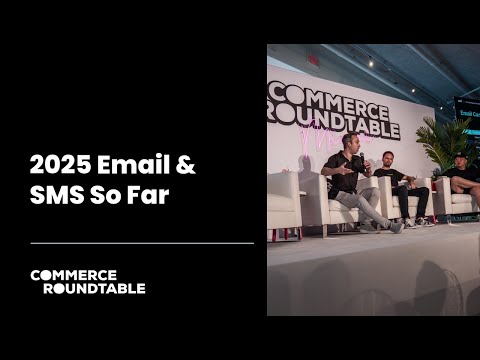
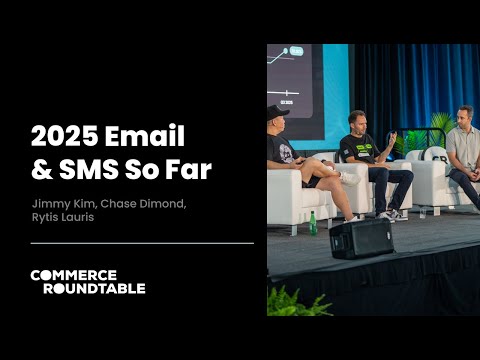
Jimmy Kim, Chase Dimond, and Rytis Lauris discuss the first part of 2025 in retention marketing, from changing consumer behavior to email, SMS, push, and automation.
Jimmy Kim, Chase Dimond, and Rytis Lauris discuss the first part of 2025 in retention marketing, from changing consumer behavior to email, SMS, push, and automation.
For email and SMS teams deciding how to coordinate channels and refresh their flows.
Speaker roles and platform examples reflect the session’s original context. This is an archived conversation.
Review channel results alongside the ways customers actually discover and buy the product.
Read this part · 04:29 ↓Turn a benchmark gap into a specific account-level question you can test.
Read this part · 07:19 ↓Consider push where it adds a useful touch, and measure the response before scaling it.
Read this part · 14:41 ↓Schedule a review of existing flow content, offers, and overlapping messages.
Read this part · 18:19 ↓Design the sequence across channels, with each follow-up responding to the customer’s behavior.
Read this part · 22:59 ↓A quick editorial guide to the key ideas. Read the complete transcript below for the examples, details, and discussion in the recording.
Original recording on YouTube ↗The panel discusses privacy changes and the way customers move among channels. Someone may subscribe to a brand’s email but choose a different place to buy. Price, convenience, trust, and previous experience can all shape that decision.
This gives the data discussion important context. A change in a channel’s performance is not necessarily explained by the message alone. Consider what the customer can see and do elsewhere, and what reason the brand gives them to stay engaged.
The speakers interpret email performance rather than treating the figures as a self-contained scoreboard. Their discussion connects creative, consumer attention, and sending behavior with the outcomes teams are trying to improve.
Benchmarks can reveal an area worth examining, but the practical work happens inside the account. Separate message types and customer groups so you can identify a testable explanation. The session captures the panel’s view in spring 2025, not a permanent forecast of performance.
The push-notification discussion distinguishes browser-based notifications from the assumption that every brand needs a separate app. The panel considers why the channel is underused and why its history can make marketers skeptical.
The useful question is how an additional touch helps a customer. Adding a collection prompt and sending more messages without a clear purpose can recreate the same problems in a new channel. Assess the experience and response before expanding the cadence.
The panel encourages teams to keep improving their automations instead of treating setup as completion. A triggered message can be timely because it responds to behavior, but its copy and offer still need to stay relevant.
Review what changed since the sequence was built: products, customer questions, promotions, and the other messages arriving around it. The strongest opportunity may be refreshing an existing journey rather than installing another tool or adding an unrelated campaign.
The speakers argue against thinking of email automations and SMS automations as entirely separate systems. A journey can use both, with the next touch responding to whether the customer engaged with the first.
Behavioral context can make a message feel more useful and less intrusive. The goal is a timely reminder or helpful next step, not simply duplicating the same promotion everywhere. Start from the customer’s action and decide which channel best serves the follow-up.
From the recording’s auto-generated YouTube captions, with filler words removed and paragraph breaks added for readability. Names, numbers, and wording may contain caption errors; refer to the recording for exact phrasing. Chapter links jump to the text below.
Original recording on YouTube ↗0:00So, I think testing offers, testing creative, writing better copy. I mean, especially now with AI, like there's no excuse for not testing a million different versions across your list. And obviously, if your lists are bigger, you can do more. So, I think sending better emails, sending better offers, leveraging better segmentation will hopefully allow you to drive more clicks and and drive more conversions cuz it's pretty crazy. The conversions are the same pretty much the entire last year.
0:23What drives the click? It's subject line. Brand in general, if I trust brand or not, and the second thing and most important thing is subject line. So test subject lines with AI now you really can optimize you can generate great subject lines and v AI tools embed it in into products you are online etc you can choose whatever you prefer so but mainly this is a thing and what we see like click to conversion rate the the second from the back so it's it's growing yeah so basically the conversion rate stays the same so the click is driven by subject line then the conversion is driven by the content which is in email yeah so it seems like content in email is working pretty good But the brands have to improve catchiness of of subject lines. So probably that's what I would emphasize here. All right. What's up Miami? How
1:11are you guys doing? Look at these beautiful pillows. Thank you to It's all about the vibe. They're in this room here. Thank you for the donation of the pillow. There they are right there. Really great little pillows that we have. We can use it for for back and everything. I do need a clicker, guys. or Chase has it. That's probably helpful. All right. cool. Well,
1:32guys, I am very excited to kick this thing off. We're going to kick it off with a lot of things about email. Obviously, you guys know, many of you guys know I'm the email guy in this room along with Chase and of course, Rita's here. And we thought it'd be best to go through a lot of insights of how 2025 is going so far. I feel like that is something that a lot of brands are thinking about. A lot of marketers, agencies, everyone's thinking about this. So, we're going to kick this thing off and I want to start off with just a little bit of introduction to make sure we go. So, Ritus, I want to kick it off with you. Rita, if you want to introduce yourself. Hello. Great to be here.
2:04Thanks for inviting. Yeah. Co-founder and CEO of Onescent Marketing Automation. We help you to retain existing customers by automating your email, SMS, web push notification. And we will review a lot of like data here how those channels perform this year. Yeah. Well, thank you Fredas flying in from Lithuania here. So, he made a far trip to be here on the stage. What's going on, guys? I'm a self-proclaimed email marketing nerd. Shaq, who's MC. We run a agency together. So, we work with brands doing email and SMS. And then Jimmy and I started basically a newsletter and community for email marketers. So, really excited to be here. Cool. Well, thank you two for being here today. I'm very excited to kick this thing off here. So, we're going to get right into
2:46it and you know, we're going to kind of start off with the current state of email marketing, how we've seen 2025 kind of kick off here so far. And I'm I want to get your opinions on this along the way, but you know, the one of the things that we've seen, and we'll start on the one side here, is about the decreased wallet share. And I know everyone's feeling this right now, but so far as we're kind of watching the AOVs, we're seeing about a 12% AOV drop across the industry right now happening.
3:07So, your average order values are continuing to drop. The biggest thing that I think that we're seeing right now, and I'm sure a lot of you guys feel it, is there there's a big discount culture going on right now where discounts are the lead, you know, getting him out there and stuff like that. Any thoughts on that right now? What you're seeing, Chase? yeah, I'd say for me, I know obviously as a as a brand, as consumers, we're all feeling it. It's a lot of uncertainty in the market. I don't think that's a surprise.
3:31I think email really is that channel, and obviously we're a little biased, but email is really that channel, I think, to do a couple things. One is to stay top of mind, right? It's the best way to communicate with your guys' customers and subscribers ongoing. And and with that, when you are communicating, it shouldn't just be pushing sales and discounts. It should be trying to be the most valuable, helpful brand there is. Going above and beyond, giving value, giving education, and frankly asking people, how can you help? And when you do those types of things, that's going to allow you to hopefully bring up your revenue and drive more consistent revenue because you're being helpful and because you're staying top of mind. Yeah, absolutely.
4:07And then you know one of the things obviously everyone knows this and is aware of this we've got consumer spending habits that are changing rapidly right now right a lot of the things that are happening tariffs all the things that are happening in this market there's a lot of uncertainty that's happening in this market and that's very much something that we're watching and tracking along and you definitely get to see it especially on the retention side of the channel. there's also some critical market shifts
4:29that are happening. Look the last couple years email has changed a lot. a lot of the privacy changes are making a lot of these changes happen. iOS 18, 17, 16, 15, every iOS is making changes. I mean, the the newest iOS changes are, you know, impact with AI that's starting to happen, spam tracking and all those different things. And we're definitely seeing changes and we'll when we get to the data, you guys will see things are happening, especially at a broad spectrum. And then of course the mobile first environment, right? Everyone's seeing that happen more and more. Reus like what do you think as far as like all the privacy changes that are happening right now? So I think it's kind of the the main thing which is happening which is not bad thing. So basically it's kind of defining your true loyal audience over just the large large large lists that you know it was in the past and maybe okay I I I have a great list maybe it's a bit outdated
5:19it's it's a big one but but kind of the loyal audience that keep buying and we always like once we analyze our customers behavior and the behavior of their customers so usually there is a rather small group that are continuously buying and and purchasing app. So all those kind of like privacy shift it's yeah maybe kind of ruin your numbers like a bit of vanity metrics like we will see some open rates maybe even click rates but but but conversions overall they they should stay okay because this is again the the most loyal group of you of of your customers and of course you have to constantly keep refreshing your list and asking asking to subscribe again for email for SMS communication it is very important and And it I mean privacy will not make an impact on this loyal customers. Yeah, absolutely. Good brands that helps. All
6:10right. And then the last thing of course consumer behavior and the evolution that's happening in the in the marketplace, right? Attention spans are shortening, right? Tik Tok has really shown that off is 15 seconds is what people want and you've got to capture their attention. That's happening more and more. Multi-channel shopping is becoming bigger and bigger. Everyone's going everywhere. I know for myself, I may be subscribed to a lot of brands, but I often shop on Amazon, for example, and that's part of the experience, right? I trust Amazon. It's fast shipping, things like that. And that's part of why you do that. Price sensitivity versus brand loyalty is really starting to be a challenge here.
6:43Are you buying the cheapest thing or are you buying the best thing, right? You go and go to Apple, for example, and you've got a $29 cord and you can buy the same thing for $9. And the question always comes in, what do I buy? Right? And if I'm buying an Apple product for my phone, well, I'm an Apple loyalist and I will end up going to spend $29 over the $9 cord because I've had a bad experience. Doesn't mean the product's bad. It's just purely how things are changing. And of course, social proof importance. I think that's been bigger than ever as we're seeing the generational shift of buying habits and behaviors that are happening. We're seeing the social proof is becoming bigger and bigger on the younger generation as they're making those decisions and buying. with that,
7:20let's talk about this data. Chase, you want to kind of share about how we got all this data here today? Yeah. So, as Nick mentioned, thank you guys to Reus and kind of the Omniscent team for the data and allowing us to do this event as a whole. essentially what we did is we took the data from them where you can kind of see the breakdown of about 55% of brands are using Omnisent just for email. About 42% are using them for both email and SMS. About 3% are using them just for SMS. So, that's kind of the breakdown of their brands. And that is from 125,000 customers. And essentially what we're going to look at throughout this presentation is all of the data from 2024 broken down by quarter as well as data from 2025 for Q1 and we're going to basically look at data on open rates, emails sent, SMS sent, push notifications and we're going to compare and kind of give you guys some insights as to what we're seeing.
8:07and they have a huge data set. So we're looking at billions of emails per quarter, tens of millions of you know push notifications and text messages. So thank you guys for the data and allowing us to do this event. Yeah, this this data is going to be incredible with 5.7 billion emails. I mean, you're really getting a core, especially a wide vast with 125,000 customers. You're going to get a lot of great data. So, let's kick off and look at this data and really dive in. We're going to start off with the trends. So, what you're seeing there is on the Q1 to Q4, that's 2024, and you're seeing 2025 occur. And you know, some of the things that you'll see on this thing is pretty interesting is that you're seeing a pretty like linear number, at least when you look at it from front side. We spent time investigating and looking at this thing and you know one of the things that we see often in this market which is really interesting and I want to talk to turn
8:52to you guys to talk about this but a lot of brands compare year-over-year insights. Now if you zoom into the top one and the bottom one which is Q1 of last year and Q1 of this year you'll notice some really unique trends that you're seeing. First things you'll see open rates are up right we know they're not the most reliable but they are a trend line at the ultimate things but click rates are down. And I know I've heard this from many brands that are happening right now and we're seeing that click rate continue to come down.
9:18But you know what's really interesting is that we're seeing the we're seeing the conversion rate stay steady. So we're seeing a steady conversion rate at the brand store. So people are getting less clicks and making still similar money. So the first question I have is when brands are often comparing year-over-year, right? Versus the last 90 180 days. I think there's an argument to be said like I like to look back 90 to 180 days as a retention marketer is my trend because that's more relevant than looking at year-over-year but a lot of brands think like that and they're seeing that and we saw this any thoughts on this like I'll start with you Chase like what are your thoughts as you kind of look at this data? Yeah, a couple things. I think one, because we're looking at Q1 versus Q4, a little bit different than Q1 and Q1. I feel like if it was Q1 versus Q2, maybe it's it makes more sense because Q4 is just madness, right? Yes. Way more offers,
10:05way more sense. So, that data is a little bit I don't know, different. I I'd say the the biggest thing that stood out for me based off what Jimmy said, Q1 of last year to Q1 of this year, even though we're getting more opens now, we're not able to take advantage of getting more conversions, right? If you look at the actual clicks, the clicks are down. So once we capture people's attention, which it seems like we're doing a better job of now, how do we actually keep their attention? How do we actually get them to convert, right? and I think more brands need to do a better job testing offers, testing creative. I think a lot of people look at a content calendar, they have something that's going out and they just check the box when they sent it, right?
10:41Or I think a lot of people maybe do a subject line test, but they're not actually thinking about offers. And and maybe that's a a brand thing, maybe that's an agency thing, but I think you need to challenge brands on, you know, what kind of offers if you're an agency you should be running or or brands study your competitors like what are they running and is there a reason they're running that? So I think testing offers, testing creative, writing better copy, I mean especially now with AI, like there's no excuse for not testing a million different versions across your list. And obviously if your lists are bigger, you can do more. So, I think you know, sending better emails, sending better offers, leveraging better segmentation will hopefully allow you to drive more clicks and and drive more conversions cuz it's pretty crazy the conversions are same pretty much the entire last year. Yeah, that was a good analysis. Read us. Oh yeah, just one thing completely agree to what you said just probably what is important what
11:30drives a click the it's subject line brand in general if I trust the brand or not and the second thing and most important thing is subject line. test subject lines with AI now you you can optimize you can generate great subject lines and v AI tools embedded in in products here online etc you can choose whatever you prefer so but mainly this is a thing and what we see like click to conversion rate the the second from from the back so it's it's growing yeah so basically the conversion rate stays the same so the click is driven by by the subject line then the conversion is driven by the content which is in email yeah so it seems like content in email it was working pretty good, but you know the brands have to improve the the catchiness that the of of subject lines.
12:14So probably that's what I would emphasize here. Awesome. Let's flip over
12:18to SMS data because I know a lot of people are looking at SMS and I think SMS has some interesting things going on but I think the core of this data that I saw was we're seeing an increase of conversion in SMS is a trend. So we're actually seeing as you can see on that third line over which says conversion percentage we're seeing conversion number. Yeah. So it's really great. So I think it's just another proof that SMS is a really effective channel. But what we saw you know if there is 100% of customers who use emails so only like less than a half 42% use SMS. So if you're one of those brands that still do not utilize SMS this is a great proof that this is way more effective. And if we compare like Q1 to Q Q1 yeah we see that in click rate click to send rate there is a little bit drop but what we have to to to to remember that Easter which drives a lot of additional clicks
13:08was end of March or beginning of April so basically the the kind of this this year it's it's two weeks later which make an impact on click rates as well. So SMS is just an effective channel on conversion rate is increasing and if you're not still using it you should be doing this as we see you know 4% of of of brands do it and others don't. So absolutely Chase, anything to add to that? The only quick thing to add is I mean SMS is the only channel where you have pretty much near 100% open rate, right? People either open it because there's intention or they open it to get rid of it, but either way they're seeing it. So So with that, right, like I think the biggest thing that brands could be doing better and people could be doing better in general is thinking from the the customer consumer's mind like what's in it for them. Don't just send a text message because you see that the clicks are here and you might be able to drive sales.
13:59really have some intention and and think about it strategically and we'll talk about it later but you know making sure that you're leveraging SMS beyond just campaigns is is super important as well because it is so powerful. Yeah, absolutely. And SMS which will not drive like great conversions highly likely for you but post-purchase experience SMS works really really well for post-purchase communication you know just that's how you show that you care about your customers. Yeah. So we have dispatched, we have delivered, can you leave a review, etc. So SMS works super well as to what Chase said. It's inevitable. I mean it 100% open rates, 100% read read SMS messages.
14:40Absolutely. All right, the next slide. I
14:41have a question in the room for you guys. How many people use push notifications room? Raise your hand here if you're using push. Wow, you guys are missing a lot of opportunity ultimately. It really represents the usage overall. Yeah, I think this room represents. Yeah, I mean it's it's really interesting to see this. We pulled the push notification data and there's dollars to be had. And the biggest thing about push notifications that comes down to which I love is the cost is very minimal for what it is. This is free
15:07money if you can get more people in there and you can get in front of people more and more. Ras, I want to kick the sun off with you like what are your thoughts on push? So initial kind of this room really represents what we see among our customer base what we see in the market that it's really really super underutilized channel although it's really effective channel and ra eyes are incredible to what but why is it why is it underutilized why why are we not doing this that's a good question shall we ask the audience I don't know where do they start like why why I'm a brand yeah you're a branded you do you use you don't no okay so what do I need do I need to download an app that's this is the that I don't know about is like do I need get an app to then get a push notification. If you download it omniscent, you you can you can use it. Yeah, it's free of charge.
15:51It's including your plan. So, I mean, you user do you need to download anything? Well, if I need to do the web push notifications, it's just a script, right? Yeah, just pops on your in your browser. I have a desktop or mobile just on your browser. Chrome Chrome and and and then Firefox and and Apple as well. Yeah. Just No, no, just doing it. Yeah, people just aren't doing. You literally install a script and it will pop up and work and you start building a list instantly. Yeah, that's it. So, as a brand, it's so easy to start using it as a consumer. You should not do anything additional. You no, you should not download any of this. It's all web
16:28based. why people are not utilizing I think the kind of the reputation is not the best because like back in the days I know maybe seven years ago or eight years ago it was kind of a rise of push and everybody start kind of doing a lot of those drop shippers that you know maybe not the best quality sellers etc maybe overused it a little bit for a while and then it became kind of like spammy experience and if I'm serious brand I will not be do push notifications that's what we hear from our customers although it's it's not it's not true you to do it. Yeah. A couple things on on push. I'd say as Jul mentioned and R just mentioned that the cost is pretty much non-existent. So the ROI is super high. The other thing with push is it's very much like SMS where people will open and engage with it almost immediately. and then the other thing too is like when you think about push, there's zero inbox
17:17competition, right? When you think about an email or a text, you're competing with other brands sending emails and texts. With push, it's basically a notification that you get to your phone right away, right? There's no competition. And so it's either you write something that's compelling or you and they open it or you don't. And it looks like about half the people are actually opening it. And then the other thing too, I think the biggest mistake with push is people treat it like email.
17:38They just schedule it. They send it whenever it's convenient for them. They don't look at the web activity of their users. So you want to schedule things when your users are actually engaged, not when it's convenient for you. And if you do that, the engagement could I think even be better than what's on the screen. Yeah, very important. And I think this is something that people can lean into. And it it's free revenue. I mean, literally, they're opting in. So, it's not forced. They're opting in. They want the notification to be able to hit hit send with a very minimal. I think it's pretty much on Omnisense, free.
18:07Literally free money that you're being able to print out and continue to capture because you have to be in all the channels that the consumer wants to be in. And they might want to email, they might SMS, they might like push. And if they love your brand, they're probably going to be on push. All right,
18:20let's jump into some automation data. So, we can break down some automation data. You know, I was looking at this data again and you know, some of the things that I'm seeing on this data side of things. The biggest thing that I saw that kind of highlighted was we're starting to see a decrease in automation effectiveness where automation has been a lot of the hero in the in the world. And I know a lot of people set and forget this could be as simple as that brands have set up an automation four years ago when they started their brand and forgot to update it, which is a very common and typical story that we're seeing. Thoughts here, guys? What do you guys think? I'll start with you Chase.
18:50Yeah, I think that's the biggest issue, right, is like when you audit brands accounts, like they haven't they're sending the same abandoned cart, abandoned checkout, welcome series that they did a year ago, right? So the same consumer is receiving that potentially weekly, monthly, quarterly, right? They're receiving the exact same email ongoing that after the first time it kind of loses its excitement. People are like, I've already seen this before. So constantly testing and constantly updating is super important. and with that, like what do you test? Right?
19:17Again, like it's the same type of things. first testing the subject lines to get people to open and with a lot of these you know we I think we'll show you the breakdown a little bit some of these will get upwards of 60 70% open rates like you know the look at like the welcome series or you know other ones that we're talking back in stock etc they get insane open rates and then the actual click to conversion a lot of these emails are huge so I don't know why people aren't giving them the same love that they do to campaigns so you should be testing the subject lines the offers how many messages you send right for the abandoned checkout. Should you be sending two emails? Should you be sending four emails? What does the timing look like? There's just so many things that like if you're game for making a lot of money for your own brand or for your client's brands, like I would spend a lot more time optimizing
20:01these and testing these and and giving them the love they deserve. Anything to add? And to add to what Chase said is really that on average like our customers or brands going on and they use around like 2 something automation. So then there are way more automations and we'll see soon on on the other slide that variety of automations is so so huge and you have to use more. So that's what would help with conversions rates as well. So completely agree that you
20:28know if you just set up abundant cart few years ago and you never optimize you never you never played with it and there only like two automations so of course you leave leave money on the table as well. So just use use more automations. automations are still very effective and the best is that you know you have you don't have to do it like on daily on weekly basis and you should review but not every week yeah I would say every 30 days you should be reviewing your automations and if your marketer and team or agency they should be reviewing it doesn't mean they're always changing it but products change your branding changes your messaging changes things that are working change they should be consist constantly updated along the way yeah and one last thing to point out if you look at that second to last one that says click to conversion converion is basically a third of people on average are converting like it's it's insane. So you can basically do way more with less
21:18with automations than you can with compa can campaigns but they work together where like if you do a campaign you send people to a product page and then they add to cart but they don't buy then the abandoned cart's going to kick in right so campaigns automations work hand in hand where if you have both set up and the more campaigns you send the more people that go into the automations it's going to help kind of clean up some of that revenue that maybe you're missing on campaigns. So, when you have, I think you said, two or three automations set up, you're leaving so much money on the table. You probably should have, depending on your your brand, 8, 10, 12 different automations or more. And then each of those should have anywhere from two to five emails, depending on if it's a welcome series versus a browse abandonment versus a site abandonment, right? There's just so many emails that you should be having. Like when it's all said and done, you could be having 50 to
22:02100 different automation emails, which sounds kind of overwhelming, but if you just build them out in increments, focus on a couple every week or a couple every month. you know, by the time you finish building those and the next ones, then go back and test them and go back and test them. So, it's super effective and you know, optimize automations like occasions based as a while because again, what we see, quite quite often that that brands, marketers, you just set up like a bun car, the most popular. Yeah. So just set up and it's always the same but if there's some kind of like calendar celebration is happening etc. there is any occasion so just adjust a little bit the subject line just a little bit the content it it doesn't cost much you know maybe 20 minutes for you etc. But but again it's it's it becomes it increase effectiveness becomes more effective.
22:46Yeah and I think the TLDDR here for everyone is one in three clicks that are happening your automations are creating conversions. Think about that guys. get more clicks in your automations, get more revenue. I think that's the biggest thing you can see in this data trend.
22:59And even when you jump over to SMS, I mean, we're seeing that same effectiveness continue to increase with SMS. You're getting higher clicks in SMS. We're starting to see it. We know that SMS is a now intent flow. It literally works the best in automations, right? SMS is the driver in automations because they're abandoning a card, they're leaving the card, they're doing different things, they're getting welcome. People like SMS and we're seeing it really clearly on the data.
23:23anything to add to this? I think the biggest next one is the really exciting slide here. Yeah, just just quickly. I think with campaigns, a lot of brands are afraid to send SMS campaigns because they're afraid of bothering and kind of, you know, upsetting their customers, their subscribers. The great thing about automations, right, is they feel a lot less obtrusive. If someone took an action on your site or within the email or within the SMS and then this is triggering a text message that's really relevant and really timely. So I think these are great because they can come across more as like a helping hand like saw you checking this out, we saved the cart for you, whatever it might be. so I think automations are heavily under utilized if you look at the volume being sent. So I would set up more of these SMS automations. Obviously still keep sending hopefully maybe a weekly SMS campaign, but double down on this because I think a lot of brands should be doing more of this. And maybe just
24:14not maybe but for sure I mean don't think about those are email automations those are SMS automations those are automations and you could and you should put different channels on the the same automations. So know you send email if there is no click you follow up with with SMS or sometimes even if there is a click you can still send automation especially if it's kind of SMS automation especially if it's kind of there is a post-purchase experience or so or what we see sometimes is works super effectively that you know there is an email automation and there is an SMS with no actual promotional message but with a message that we send something to your email inbox go and check it out. So it really kind of creates, okay, what's what's in it, you know, and a little bit of intrigue. So that works really well as well. Yeah, absolutely. All right,
25:04let's jump into this. This is a heavy slide, guys. There's a lot of data in here, but these are the core automations that your brand should be running. We talked about this. Most of the brands are running two, two and a half, three automations. These are the automations that you should be running. And we broke down all the data here, and there's a lot. There is a download at the end. I see everyone taking pictures. Great. You should save that. But there's actually a download of this deck at the end of this presentation too. So don't worry, we're going to give it to you because I know that this is important for you. But I want to ask as you guys reviewed this data and I'll start with you Ritus.
25:33What's your favorite automation that I think people are underutilizing in this market? So I would choose the product back in stock. You you can see probably is the send count is the lowest or at the same time I mean each of of D2C brands sometimes you get into situation that you're out of stock. I mean none of us operate like smoothly ideally that never has such a situation. So you always have to have a waiting list there and and you see see the metric. So this is the the send the send count is the lowest by far. So it's really super underutilized but the other metrics are just insane and conversion rate is 6%.
26:09So it's crazy. So like you know it's it's the highest above all the other automations. So it's because people you this is how you get the demand. Yeah. this is how you demand you know that the person really needs this product and okay they could potentially buy it from somewhere else to what Jimmy said that you know go somewhere find cheaper maybe those other provider who has it in stock now but a lot of them they just get the back and you see like open rates are super high as well etc. So this is how you get the most you know engaged audience the audience which really needs this specific product and ask for email ask for SMS as well and you can use like the the like two steps optin form etc. Ask for email initially then for phone numbers well use both channels and invite people to get back and and you know to make you out of stock again just immediately with and within the seconds.
27:04Chase what do you what do you think what's what's the best automation here? Yeah, I'm going to go with the second to last one, the one that says shipping confirmation. So, I think it's the the highest open rate one and all the other metrics look great as well. I think the opportunity here that a lot of people don't take advantage of, they typically just send the the shipping details, right? And that's great. People want that. I would have that at kind of the the top as like the primary, but as like the secondary, I would include things like product upselles or product recommendations. I would include things like UGC, maybe some promotions of like a referral program, right? I I I know this email isn't supposed to be entirely selling, right? I know that's not really kind of by the law, but if it is the secondary thing and kind of in that same email, it's totally fair game to include promotional type of things.
27:49and as you can see, like it it drives revenue and it gets people really excited before they're about to receive it. Maybe even including with here how to use the product, right? Education around the product. Maybe you got a lot of questions for your customer support on how do I actually use X, Y, and Z product if it's expensive or it's complicated. Toss those in here. Maybe link out to a page on how to use on your website. and that way your customer support is not going to be bogged down with how do we use this and and people too before they actually get their product get excited and know how to use this so they get the best actual out of it. Yeah, absolutely. All right,
28:23the next slide here and I'm not going to we're not going to go through it. We'll let you download it because I know there's a lot of industries in this room, but we broke down to by industry so you can see how you're doing against your peers. If you're looking and saying, you know, oh, I'm a home and garden company or health company or even a smoking and vaping company, you know, obvious, you know, they have a really wide and vast variety of companies and we allow we took that information and we kind of average it out for different things. And this will give you a good metric because you want to know how you're doing. And look, let's be honest.
28:50If you look, you got smoking and vaping, they've got the lowest engagement versus autos and vehicles or even arts and entertainment that are absolutely doing great here. All right. And then we also broke it down by country. For those that are doing multi- country, you know, worldwide different shipping, we wanted to give you a better understanding how you're doing per country because they're not equal. People act and react in email very differently across the country. So, we broke those things down again so you guys can download it and view this data.
29:16Here we go. With that, I want to do an
29:18overall analysis. Here's here's kind of like the high level, and I'll kind of come to you guys after this, but really number one, there's a big growing adoption of omni channel. I think that's been very clear. We're seeing it. They're very important to have that integrated and unified experience and having email and SMS together. There's a shift towards more targeted, less frequent communication. I think what that means is really your automations are the superstar here. Very clear three to one conversion. just get more clicks and automations, you make more money ultimately, right? obviously, everyone knows the focus on personalization and segmentation that are happening and automations are more important than ever. 30 days, that's what we recommend. That's what we see, Chase, as we're closing this thing up.
29:57Any the final thoughts here? Yeah, I think the the final thought for me, right, is the the world is hard right now. There's so many challenges we all have as brands, as marketers, as consumers. really doubling down on retention is important, right? I think retention is going to be the most profitable revenue that you guys drive. Obviously, you still need acquisition. You still need everything else, but more of this middle to bottom of the funnel is super super important to drive that profitable revenue. So, if you don't do push, maybe that should be something on your list to go do because it's a great channel. It's very high ROI. go add more automations, go send more campaigns, but try to be more I guess specific and focus on better segmentation as well because with all the things happening, deliverability is a concern, all the AI stuff is a concern, all the iOS stuff is concerned.
30:44So, you know, more campaigns, better campaigns and leveraging all these channels kind of incohesion rate of spinal anything, you know, chase. So yeah more as we said as we saw like push underutilize more automations for sure probably one single thing constantly refresh your subscribers list both email SMS push always ask to subscribe subscribe subscribe of the purchase while they're visiting your website they exiting your website etc. It's very important to have the really really relevant and fresh subscriber base.
31:18Amazing. With that guys, thank you guys all for enjoying the talk and that's where you can download the data. Thank you gentlemen. Thank you. Thank you guys. Chase Reus.
33:33 36:10
36:10 1:13:26
Join Commerce Roundtable in 2027 for focused learning and conversations with people working through the same challenges.