 41:08
41:08Austin · 2026

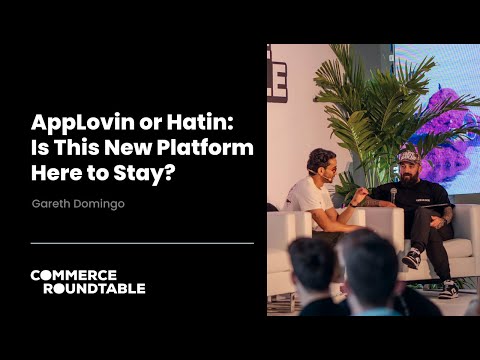
Gareth Domingo and Nick Shackelford discuss AppLovin’s mobile-game inventory, BRĒZ’s testing experience, creative adaptation, and measuring a new acquisition channel.
Gareth Domingo and Nick Shackelford discuss AppLovin’s mobile-game inventory, BRĒZ’s testing experience, creative adaptation, and measuring a new acquisition channel.
For ecommerce media teams evaluating a new channel and adapting existing creative to it.
Speaker roles and platform examples reflect the session’s original context. This is an archived conversation.
Review the actual ad experience before deciding which assets to bring into the test.
Read this part · 01:20 ↓Set a new-customer objective and decide how you will evaluate it before launching.
Read this part · 05:32 ↓Agree on a test budget, review point, and decision criteria with the team and channel partner.
Read this part · 14:03 ↓Test distinct customer motivations rather than only reusing the single best ad from another platform.
Read this part · 16:18 ↓Include the end card and destination in the creative test plan.
Read this part · 23:29 ↓A quick editorial guide to the key ideas. Read the complete transcript below for the examples, details, and discussion in the recording.
Original recording on YouTube ↗The session explains advertising within mobile games, including formats where a viewer spends more time with an ad before returning to play. That is a different context from a quick scroll through a social feed.
Gareth connects the inventory to the moment a person is receptive to an offer. The takeaway for a buyer is to understand what the customer is doing around the ad, then design for that experience rather than assume every placement behaves like the channel already familiar to the team.
Nick describes holding the BRĒZ test accountable to new-customer growth. The question was whether the channel could contribute useful acquisition, not merely report conversions from people the brand already reached elsewhere.
That objective gives the test a clearer basis for evaluation. Agree on the measure of success and the information needed before spending. A new channel becomes easier to assess when the team knows what business result would justify continuing.
A test uses money that could be allocated somewhere else. Nick discusses that tradeoff and the importance of communicating how much the brand is prepared to spend while learning.
The amounts mentioned are part of this historical case, not a universal recommendation. What matters is a defined testing commitment, an agreed review point, and support that helps interpret the results. Without those, a team can stop too early or keep spending without a clear decision rule.
The creative examples show different ways the same product can matter: an athlete, a person interested in alcohol alternatives, or a founder explaining the mission. Each communicates a different reason to consider BRĒZ.
Gareth argues that simply transferring one winning social ad misses that range. Existing assets are a useful starting point, but review which customer situation each one addresses and where the test needs a new angle. The creative is part of learning about the audience.
The discussion includes end cards and the transition from viewing to action. An ad’s message needs a clear next step that fits the product and the viewer’s level of interest.
Treat the complete experience as the test: the story, length, offer, ending, and destination. A channel result is easier to improve when the team can identify which of those elements it is learning about, rather than label the entire platform a success or failure after one creative approach.
From the recording’s auto-generated YouTube captions, with filler words removed and paragraph breaks added for readability. Names, numbers, and wording may contain caption errors; refer to the recording for exact phrasing. Chapter links jump to the text below.
Original recording on YouTube ↗0:00You already have great assets from Meta, from TikTok. Bring them here, test on our platform, but don't just like leave it static, right? You got to be watching what is doing well. Okay, cool, promote those and let's find iterations of that. What's not doing well, pause those down. That sort of constant cycle of testing new hooks, testing new formats, testing call to actions, testing copy that really helps get you there. Because our inventory is unskippable for as long as 30 seconds, it really is important to try different ad lengths, right? Folks from Meta and TikTok are so used to like these short almost forgettable ad experiences that you don't really get an opportunity to speak to a customer. On Apple 11, it's way different.
0:40All right, check one, two. How you guys doing? Full room. Who am I talking to? Yeah, quick round of introductions. My name is Gareth, I'm the director of e-commerce strategy at Apple 11. I've been with the company for 5 years, originally joining on our M&A team, and now I lead go-to-market for the new e-commerce business. So, you you knew about us before we knew about you? We knew about everything, man. But, like I I love how you introduced that. We've been around for so long, there's been so much hype, discussion in the market that I wanted to spend 5 minutes just doing the doing the overview, putting it out there just so people have better context of what it is we actually do and where we came from.
1:19Okay, so we are one of the
1:20fastest-growing advertising companies in the planet, okay? In the last 5 years, we've 16x our revenue to $3.2 billion, and importantly that's a a net figure, right? So, there's actually $10 billion of ad spend that flows through our pipes each year. We got here by building the most advanced ad recommendation system in the world. These app advertisers pay billions of dollars to the platform to drive measurable performance-based outcomes, okay? They actually see ROI, and I think that's something that's often overlooked. Everything we do is performance-based and grounded in dollars and cents impact to the P&Ls of our of our brands.
2:00In September of last year, we brought this technology, we brought this inventory to e-commerce. Right. through a closed beta program, there was probably only around 600 advertisers that spent between September and December. Breeze included. That was us. Yeah. And you actually helped contribute to achieving a run rate of roughly a billion dollars of of gross ad spend. Importantly, we're also a very small team in e-com. There's only around 30 of us. So, exceptional growth, exceptional performance very very quickly.
2:29Now, when I'm talking about AppLovin and what it is we do,
2:33very simply, we are the largest performance ad platform for mobile games, okay? So, there are tons of performance ad platforms out there. You have Meta, Google, TikTok, Snapchat, Pinterest, what have you. We work very similarly. The only difference is instead of your ads showing up inside social apps like Instagram and Facebook, Yeah. they show up inside tens of thousands of free-to-play mobile games. Okay, so Candy Crush, Wordle, Solitaire. if you're on an airplane or subway, you see people playing these games, that's where the ads are showing up.
3:03What What blows people's minds is this audience is utterly enormous, okay? So, each day we see roughly 150 billion US cons- sorry, 150 million US consumers. to put that into a relative terms, Sensor Tower will report that that audience is roughly two times the number of people that use TikTok in the US. it's 50% larger than Instagram, and it's about 5% smaller than Facebook, okay? So, gigantic social platform scale.
3:34the key difference, and this is what makes us unique, and I think why it's worth spending a bunch of time talking with you about what you actually do really well on the platform, is that our ads are unskippable. Okay? So, super quick on the screen, you can see the little flowchart of how it works. Essentially, in these in these apps, it's very common for ad breaks to occur between levels of games or in exchange for in-app rewards. Let's say you're stuck on a really hard crossword level, you can actually choose to watch an ad and get a hint.
4:03When that ad break shows up, it's a full-screen video takeover. 100% of the time, it is unskippable for 5 seconds. So, when you think about hit hooks, you think about thumb stop, that doesn't exist in our inventory. People are seeing these commercials for 5 seconds at least. 30% of the time, it's 30 seconds or longer. Okay, and that's an important concept we'll have to come back to. Okay. Now, whether someone skips the ad or they watch the whole thing, there's a second screen that pops up. This is We call it an end card. Really, it's a customizable interactive HTML file.
4:36Again, 100% of people are going to see this ad unit because they actually have to interact with it to close the ad experience and go back to the app they were working on. And then, most
4:46recently, and I think especially brands with high SKUs are going to love this, but we added dynamic product ads to our default ad experience. this is a testament to us wanting to continue to innovate in this category. the the feed you're seeing there on Brunt Workwear is actually being dynamically populated and served specific to that user. Okay, so the model is trying to learn, okay, you haven't interacted with the video, you haven't interacted with the end card, what other SKUs can I show you to try to get you to convert?
5:15Regardless of which ad unit a user interacts with, they will get redirected to your web browser or sorry, to your your website in the user's default web browser, whether it's Chrome or Safari, to ultimately check out. So, with that said, I I do want to Oh,
5:32yeah, yeah, yeah. me on this is like I when I was hearing this, again, I didn't believe it. I didn't understand it because if someone's playing a game, they're probably wanting to play a game. And so, I'm going, why are they why are they going to go shop? And I felt this in my heart, and I was like, this is no way, like meta Twitter TikTok, we're spending on all these places. Like, I know how to get conversion. We we know how to make this stuff. And they're like, okay, fine, just trust it and run it. And it was it works. Like, we spent $10,000 literally yesterday and there's no reason for us to be spending this. Why are they taking action? Cuz they're they're clearly you're we're clearly forcing them to see it.
6:07Yeah. Look, it's it's it's an interesting question. The reality is that people are are playing these games in their spare time, right? They're commuting on their way to work or they're you know, waiting at the airport for something to you waiting for their flight. So, they're in a mind state where they're relaxed, they're enjoying their favorite crossword puzzle, and then they they get served an ad. And and this is why you know, buying through Apple App Inventory so powerful is because we're really good at at targeting in this inventory. That's that's the secret sauce, right? We just we're really good at figuring out what ad should we show to what user in which game at which time.
6:38And it it it's a an opportunity for you to say you know, hey, I'm playing my word game. Oh, actually, this this is a really dope pair of shoes. Let me go click on it and check out. So, it's no it's no real different than you know, strolling scrolling through a a Facebook feed or watching a YouTube video and seeing an ad, right? Ultimately, consumers are just that's why we have advertising. It's to get in front of them when they're in that state of mind and would be compelled to make a purchase. It's truly top of funnel that way, too.
7:04And that's and that's the part I was going to say is cuz we were measuring it on new customer acquisition cuz anybody can be like, yeah, they're just going to show you the same to the people that are on all the other platforms. We only care about new customer growth and like that is where we held you guys accountable to and that's kind of what helped helped us. What's what what was shocking to me was the ability to take any of the stuff that I I already did and run it on the stuff that's it which you're going to you're going to obviously show right now.
7:29Yeah, yeah. Okay, so this is this is actually one of your top performers. I want to show the the the crowd. This is what it looks like in the wild, okay? So, if you're playing a game, Wordscapes, this is this is a very popular word game. you could actually probably turned 21 and already quit drinking alcohol for good. Instead, I drink Breeze. Breeze is a micro-dosed social tonic that's non-alcoholic, which gives you the same happy, euphoric, social, and overall light feeling without the hangover and regret. It has a lemon flavor and a little bite at the end that makes it taste like an actual adult beverage, making it the perfect mocktail mixer. I was tired of waking up hungover, groggy, and regretting my decisions from the night before. That's why I always choose Breeze every time over alcohol. Click the link above the caption to check it out.
8:11So, unskippable video for in that case that was around 30 seconds. This is the end card that I'm talking about. And then, Breeze also integrated with our DPA. So, what you're seeing here, who I actually have an analyst here record this video for me. This is being served uniquely to them based on what the model thinks they'll be likely to interact with. The cool thing about this ad unit, by the way, just as an aside, the other two, if they clicked on it, it would take them straight to a URL that you'd given us.
8:37With this, it'll actually send them straight to the PDP. Okay, so it's a very low friction experience from seeing an ad to now I can go and shop and and buy it right now. Yeah, this again, this is wild. Also, that southern draw that southern draw does fantastic on ads. If you have that like little southern earthy draw, that does There's something more believable about it, right? Very believable. Like again, I hope AI can never copy that cuz I just it makes me feel super American when I hear somebody like that.
9:05It's funny you mentioned that cuz it is really true. So, what Nick, you've been an incredible partner to us and and supporter from very early on. and and the what I love most is you guys just talked about it, right? It was you're building in public, you're very transparent, sometimes for better or worse, especially with your learnings on Apple 11. So, I did want to spend some time just understanding Breeze, where you guys came from, the history, and then eventually moving into the marketing experience, and ultimately working with us to achieve the success you have. So, to start, what is
9:37the history of the brand? You haven't been around for a very long time, but I'm sure it was like hatched and it's interesting. Yeah. So, Aaron actually came up with this idea on a flight from Costa Rica. As you just listed, you can imagine that's how it came about. he We've already been in this space because we have a large agency called We Are Lucid, which just serves in this specific niche. So, we already knew the the ballpark, we knew who to kind of play with. I've always been paid media, I've always been performance, which is why most of the people that you work with on our team, we're like, "Oh, we'll do it."
10:04Yeah. We're down We're like very down because we know where the winds are and the alphas and the betas. And since we've been spending It's my 11th year in this. Aaron's been in this 16. So, that we don't need to have questions around should we try it an ad platform or should we try new Yeah. That's where it initially started. Then, this product I think this is We're in a moment. I really do think we have a good moment. The product is pretty good cuz normally I made my first set of money on fidget spinners.
10:31Yeah. In like 2016, 2017, I made a bag on fidget spinners. And all of a sudden, but the reason why we're winning on fidget spinners is because kids in school that had autism were buying in bulk. I didn't know that. And if I was a better marketer, I would have figured out a way to communicate this. But, now I understand why they're consuming this. I understand why they can play with it. And what I want is I just need new people to continue to see it.
10:54We I I Again, this came at a time that when Adam, the person that introduced you guys to me, was like, "I know you're spending money and I just tweeted, 'Meta won't take my budget.'" Mhm. Yeah, yeah, yeah. I literally tweeted it and then Adam was like, "Hey, I think I have an opportunity for you." And it again built We're very, very public in what we build because I know I need help. Like, we've never done it at this size. So, the more I talk about it, the more I yap about it, the more I think I think we're going to get help. And then this is how you guys hit me up.
11:19Yeah, yeah. Well, so okay, you you actually had a good point there about audience, right? And it's like you're talking about the autistic children buying your fidget spinners and it's about, "Okay, if I knew that, I could communicate to them and then expand my audience." Or expand my my reach. It would have been interesting. That would have been an interesting would have been a yeah, I'm not exactly sure how that would have worked out. have got that approved.
11:35But but the the point that I was trying to make or kind of move into is like do you have that understanding of your audience for Breazy? Yes. Yes. Yes, very specific. Is it a gender specific gender or just specific specific age group? Like what who is it? I think it's many, but we have our garden girlies which are the girls that partake in cannabis, but are very flower lily about it Okay. communicate it. we have the the guys that are like y'all want to feel some type of way and I want to like take the edge off. We have the ones that are like I don't and can't drink alcohol anymore.
12:07Yeah. And the ones that are like the the mom that enjoys wine, but she knows she has to wake up tomorrow cuz she's got to be at soccer field. Okay. we have these demos and they're all across the different types of people and we need again that's why we use meta. That's why we use Twitter cuz we know we have to be in different places. Okay, so when you were you're trying to categorize all those people, you're building this brand. Did you have any very distinct memorable creative breakthroughs or brand messaging that that you noticed when you know kind of took you from here to a step change up.
12:34Like what was cuz look at your your brand is beautiful. Like straight up it's beautiful. It's it's a vibe. Yeah. How did you get there? This this is actually our So his name is Armand. Armand did all of our graphics. So if you see the site everything is like 3D rendering. We do all that in house. We don't use any agencies for any of this stuff. You can see all the ads when they when it comes up.
12:52When you look in the shelf it's you have like pastel. You have really loud annoying colors on the energy drink side. Yeah. And we use like this is a dream like state that we're trying to put you in. So the can itself resembles a bubble. So the can is a bubble and so when you look at it it's iridescent and it changes as you look at it from a different angle. We just went through this as we're trying to develop brand new boxes that will sit on shelves.
13:14We're like how do we show the can cuz the can itself is very beautiful. We've invested heavily in it Yeah. to develop that. So that's kind of where the other initial The can. It's it's it's a it's a very unique brand. Okay. That that's that's I kind of I I that in some of the creatives you run, right? It's very product focused. Well, but the one that popped off was UGC phone, straightforward, talking about the product, Aaron selling what's in it, and then he's by a fire.
13:39That was like the one Yeah, yeah, yeah, yeah, I know I know what you're talking about. okay, so so so look, the reality is by the nature of your product, you always have to test new channels. That's just how it goes in this business. you mentioned Adam, that's how you got introduced to us. What like what were the the like the decision-making around, okay, hey, this is a new channel, I'm going to go spend some money in it, but I also have all these five other channels that I could allocate budgets to. Like how do you
14:03think about where to put your your dollars? I think every single person here is trying to get as much money as they possibly can off of Meta because of the reliance there. Yeah. They're the big dog. I can't I can't move budget away from that just to justify a testing of a new product. So, when I told Alex, which is our mutual friend, and then Michael who who supports us on the actual side, I was like, hey, I I can allocate this certain dollar amount. How long do you think it's going to take before you understand you guys are all like, well, trust us.
14:32Please try to spend at least $10,000. And I go, okay, I I will spend more than that, but I needs to see something sooner than later. And that was kind of the address was I needed to understand the tranche of dollars I was willing to spend because I knew I had to take it away from another channel, and I just needed the communication support. Okay. That's That's actually on the topic of it moving budgets around. I do want to I mean, we should actually take that offline cuz I have a a pushback on that, but we we we we we got topics to cover.
15:00Okay. So, the reality is like you have amazing success, right, on the platform. You spent a ton of money in Q4, even Q1 was like pretty pretty strong. What were the like two or three most surprising like WTF is happening when you started testing Apple Eleven? Women. More way more women. We we thought we were going to get guys that are playing Clash of Clans. Like that was like the joke we were saying inside. We're like we were going to get a bunch of dudes that are playing it or we're going to get two old people playing Tetris.
15:30Okay. Or solitaire. That that my honest opinion was like we're not going to hit the demo and then when I started I was like okay, customers are pretty similar profile to who we're already acquiring. Subscription take rate was pretty consistent. I was going like okay, this is very real. And then Brandon was guys we need to spend as much money as we possibly can. Okay, good to know. Now, on that topic on the the point about like women being in the audience, there's a misconception that it's only older ladies playing these games.
15:55That's what I thought. Do you I mean I mean you mentioned you see a lot of women doing this. Is it Do you have a sense of who they are, what they look like? a quality like actually purchasing Breeze through AppLovin ads. That's what I'm asking about. don't have the post purchase of we have where you heard of us, but I don't have like the demographic breakdown of specifics, but I do know that it skews women.
16:16Okay. Okay. I want to riff on audiences
16:19just a little bit for folks in in the audience. when you think about what does well, the reason why I I'd asked you that is there is that misconception as to like, you know, it's older women playing these games and that's the only thing that works here. But the reality is we have very large brands across every category finding scale on the network. Okay, I'm talking furniture, other high AOV products. We have beauty that does really well, pet products.
16:42I know that the the the guy up earlier was as a pet food brand. I want to talk to him afterwards. Yeah. apparel does really well, supplements. The reality is all these brands are targeting way different audiences. Like they're they're not all going after older older women playing these games. And the way that they actually do that and find that within AppLovin is through their creative. And that's I want to spend the next like Sure.
17:03bunch talking about that with you. but that's how they do it. And and what we mentioned to most of the brands that come and test us is look, you already have great assets from Meta. You have great assets from TikTok. Bring them here, test on our platform, but don't just like leave it static, right? You got to be watching what is doing well. Okay, cool. Promote those and let's find iterations of that. What's not doing well, pause those down.
17:26And it's it's like a a sort of constant cycle of testing new hooks, testing new formats, testing call to actions, testing copy that really helps get you there. And I know that that's what you guys have done really really well. So, maybe you know, if you're targeting men in their 40s, right? I got that's your target market. You sell a great pair of shoes and that's who you want to reach. Guess what? Your hooks on Apple 11, because you have that 5-second window to communicate a message to a specific segment of a of the audience, it should probably mention something like, "Hey, are you a dude in your 40s and you know, you're you want cool shoes that are comfortable? Like check these out."
18:01Right? That that that style of content does exceptionally well on the platform. And and you guys actually have a lot of that, which we'll get to in a sec. What we loved about it cuz it's a the it's I like the fact that it's enough of direct response, but still keeping brand. Yeah, absolutely. So, we can still play along. Well, dude, we'll go to your founder videos, but like that's entirely branded in my opinion. okay, really quick.
18:21When you started seeing success, okay? So, again, brands like we got to keep spending money here. How did you as an operator, because you know, there are folks in the crowd either you're an agency or a brand where you you'll test and it'll actually show a lot of signs of life and you want to keep investing behind the platform. What did you do from a resourcing perspective, time investment, creative flows to actually support the growth of your brand on the Apple 11 platform?
18:45It's those really to me it was pretty simple. It was we actually did three things. So, we already knew how to get set up and run. So, from the onboard to onboard to up and running, I think it took me like less than a day and a half. I think we needed just needed to make sure we had the budget and we just shifted budget around this first one. We did We didn't do any unique landing pages. We had one subscription page that we ran it with you guys.
19:07we rebuilt that page, so it's I don't even think we were were running it anymore. And then we did two port we just took all of our best performing ads that we had in the initial drive and we were just live. I don't think it was a lot of like extra that I needed to do. Yeah, yeah, yeah. Okay. that's interesting. Okay, so I I want to talk about your team a little bit. give a shout out to Brandon who we talked about. Daniel and David also on the paid media team exceptional. Like I guess that I guess one of them's on content, but Same team.
19:38Same team. This team has been awesome to work with, okay? And and it's important to know that there's just a degree of responsiveness, nimbleness, a willingness to test new things that I firmly believe culturally makes you successful on testing new channel like AppLovin. Like you guys have three different campaign types right now. They're running CPP, ROAS, and some of the new alpha stuff that we have coming out. You know, logically someone someone would think, "Great, are these are these campaigns all cannibalizing each other?"
20:05But the reality is on our system they're actually all different models targeting different audiences and helping you find more scale. We already talked a lot about creatives and actually I probably should skip a little ahead, but you guys are rolling out new creatives weekly and they're exceptionally high quality and allows the model to like take those creatives and keep pumping it into the audience to find new users. why we didn't have to change anything cuz we're already doing that.
20:26Yeah, exactly. You're taking it from from what you're doing on Meta and I guess you're just pulling it over, right? Correct. Yeah, I think so quick pivot. up on the screen right now, these are three of your top performing video creatives right now on AppLovin. They are all very, very different and this is why I wanted to just go into what really works, right? So on the far on the far left of the screen, you have a product voiceover.
20:48That that person it's the same ad I showed earlier. It's a younger woman, she's talking about she just turned 21. She loves Breeze. it's a she's she's not really interested in in alcohol. That is targeting a younger generation, they're already sober curious. We already know the non-alcoholic beverage market is one of the fastest growing markets in in in the category. way different consumer and way different persona being targeted than the person in the middle. That's a a UGC testimonial of an athlete. She's talking about how great the product is, how she has to perform at a peak physical state, and she can't afford alcohol to damage her body. Therefore, she drinks Breeze to still fit in the socials. And that's way different than what I was mentioning earlier, with the founder video, right? It's it's Aaron talking about the brand, talking about the mission, talking about like the real aspirational thing. That type of video is targeting a user on our network who is already a consumer of of of alcohol alternatives, right? And now
21:44they get to see Breeze as a brand and think, "Oh, that's actually really dope. I want to support this brand. I'm going to go buy their products." This type of persona-level targeting is what people people that just, you know, they take their best videos and then they bring it over. They kind of miss that opportunity to actually speak to different audiences within these games. But that that's not a platform thing. That's a how you do good marketing thing.
22:05Well, I was going to ask, is this is this like part of your creative strategy? 100%. Okay. Because we're again, we're very intentional with the volume. We know we need volume for every other platform, and our current growth mechanism for even retail is digital. Yeah. And so we if we didn't have the system that that's Daniel, that's Corbin, that's Brandon, that's all the guys are going, "I need to get this." That's Sarah even now on our influencer outreach. So I think this is a a good amount of content, and that I I do think that's a unique for us to win because we have to have that creative diversity, but it's not different from the that we're already doing on the other platforms.
22:37Okay. That I mean, I love that because I I I do want to I Look, people have a lot of different ways of running their their marketing strategy. I would do want to say I think that that style is rarer, right? You Like I see a lot of different advertisers, and it's, it is really brilliant when you can actually think about the personas that are buying your product and then speak to them in the inventory.
22:57up on the screen, I have just a bunch of tips that make, you know, creatives and and especially video creatives really sing on AppLovin. the one that I want to call out that's especially important that people that port over ads from other networks don't really think about is because our inventory is unskippable for as long as 30 seconds, it really is important to try different ad lengths. Right? Folks from Meta and TikTok are so used to like these short, almost you know, forgettable ad experiences that you don't really get an opportunity to to speak to a customer. On AppLovin, it's way different.
23:29Okay. But I do want to spend some time talking about end cards only because this is probably the most unique part of our inventory as compared to something like Meta or TikTok. Okay. a lot of brands are very video-focused. But the end card, again, because people land on this page after they see the video, in many cases, this this section of the inventory drives over half the clicks. Okay, so it's super critical and your team is especially good at working through concepts with our team. You're testing copy, you're testing images, you're testing call to actions. The the one or the example I have up here, this is actually basically a screenshot of your homepage.
24:05Yep. and the With the with our opt-in for offer. Yeah, yeah. Well, that's what I was going to say. So, the the the control that you see on the left, that's that's a straight-up screenshot of your homepage. The the swapping the call to action from experience it to claim $5 actually drove lifts to your click-through rate. And and that claim $5 came from where? Well, that Yeah, that's opt-in for email. Yeah, yeah, so that's just an email pop-up.
24:29Well, and and what we did on top of that, we we actually took traffic from AppLovin, segmented unique pop-ups by traffic source from Alea. And so, now the offer is like we know where you're coming from. I know how to build LTV models off of it cuz all the traffic I'm trying to understand how long you guys are going to stay. That's incredible. But I guess it's it's a simple tweak. You're not reinventing the wheel, you're just taking an experience that they would have already seen on the landing page, pulling it into this ad experience because this is unique to Apple and it worked wonders for your campaigns.
24:59So, super quick on on thinking about what works and how to think about end cards. I think that the biggest takeaway here really is two things work really well. Promotional copy, promotional like discounts, things like the claim $5. Yep. It just incentivizes a user to want to click on the ad, right? If you're already running, you know, an evergreen promo, right? I have a lot of pet food clients. Everyone does like a 25% off your first order 50% off your first order. Like just just show them that, right? Like show that in the ad. Make sure people actually know that they should click on it and go go and do it.
25:32The other thing that works really well because we are top of funnel, a lot of people will see your ad or see your brand for the very first time. Make sure to include social proofs, things that make them want to actually interact with the website and learn a bit more. And then lastly, comparisons work excellently. And I want to give another tip that I I learned from one of my pet food clients, but they had done this beautiful branding where they compared Cheetos, right? Like like cheese puffs to kibble.
26:01Okay. And and the messaging was like you wouldn't want to eat like processed foods like that every single meal, every single day for your entire life. True. So, why are you giving that to your dog? You should feed them like raw food. You know, it was such a I don't know. I thought it was great branding or great great great marketing. Agree.
26:16All right. So, I have a couple wrap-ups super quick, but one parting thought from you, Nick, to the audience. You've had a ton of success in the platform. What is like the one piece of advice or recommendation for someone who's interested in trying AppLovin? What would you pass off to them? I just take what you already have running at any sort of reasonable scale at target CPA and apply it with a little bit higher CPA because you got to learn a little bit at the beginning we found.
26:42Yeah. but it's it should be apples to apples. Take what's already currently working. The end card I would say copy what we just did on screenshot your offer. Yeah. I think that's Landing page. Yeah, a lot bring up the landing page into the end card. Correct. Yeah. I think that's what why we're still at what we're still at and I think that's why you got to just it's worth the cash, especially if you come into low seasons now. Q4 will probably it'll be a heavier part of our strategy and if whether we launch with it more aggressively or we kind of keep pace with Meta, but it's taking a budget for sure.
27:12Yeah, yeah, yeah. some parting thoughts, guys. You obviously out of necessity have to test new channels every now and then, but we believe that every brand should be doing this. They need to be doing this. the world's an incredibly uncertain place and so like relying on one channel like Meta is just not smart business, okay? On top of that, like you should be in front of your audience wherever they are, right? People use Instagram, they also use TikTok. Like we're all consumers, we use multiple apps and there's a good chance that people that you want to buy your product, they're also playing these games, okay?
27:43So if you're not in front of them in different audiences or sorry, in different inventories, your competitor will be. Earlier as as you just mentioned, it's super easy to do it because most of the time these assets actually work quite well across networks. and then in the case of Apple 11, we actually we're still in a beta, so it's entirely free to get started. we we actually I'll I'll kind of pull this up. If you guys want to scan that QR code, you can submit an application, but any brand that does over $10 million of GMV in the US can apply. The acceptance into a beta program includes $10,000 of ad credits. Really what that serves as as Nick kind of mentioned is it helps feed the model, it helps you see over time like, okay, is this thing this platform actually going to hit my goals, hit my CPA targets?
28:30Yeah. and then if it does, fantastic, keep spending. Importantly, there's no spend commitments associated with that, so if it doesn't work, just turn it off and someone actually earlier a couple couple of conversations ago mentioned like just test it again in 6 months, test it again in 9 months. Like this thing is a is a machine learning model that gets better every single day. so, with that, I don't I don't have a whole lot of time for questions, I guess, but I'll be at the back with a couple of my colleagues.
28:54Come find me if you have questions on the platform, questions on if your brand would do really well. I would love to get to know you guys. G, thank you very much, brother. Yeah, man, thanks. This is awesome.
Join Commerce Roundtable in 2027 for focused learning and conversations with people working through the same challenges.