 31:56
San Diego · 2024

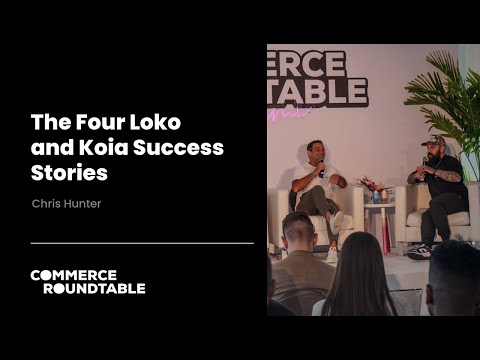
Chris Hunter reflects on building Four Loko, navigating intense scrutiny, and applying hard-earned lessons to Koia. For founders thinking about product feedback, distribution, and the consequences of rapid growth.
Chris Hunter reflects on building Four Loko, navigating intense scrutiny, and applying hard-earned lessons to Koia. For founders thinking about product feedback, distribution, and the consequences of rapid growth.
For ecommerce founders, marketers, and operators working on brand building.
Speaker roles and platform examples reflect the session’s original context. This is an archived conversation.
The first version of the product was not the version that ultimately succeeded.
Read this part · 01:33 ↓Rapid cultural adoption can bring scrutiny as well as demand.
Read this part · 04:35 ↓A new category can require a different operating mindset.
Read this part · 18:15 ↓A quick editorial guide to the key ideas. Read the complete transcript below for the examples, details, and discussion in the recording.
Original recording on YouTube ↗The first version of the product was not the version that ultimately succeeded. Chris describes listening to consumers and watching the market rather than assuming the original idea was correct. His account connects product iteration with the practical realities of building a beverage brand through retail.
Rapid cultural adoption can bring scrutiny as well as demand. Chris recounts regulatory pressure, media attention, and difficult decisions during Four Loko’s growth. The discussion is a founder’s retrospective on those events, including the responsibility that comes with creating a product people use in unexpected ways.
A new category can require a different operating mindset. The conversation turns to Koia, consumer feedback, and the transition toward digital channels and Amazon. Chris explains how experience from one company can inform another without making the two brands or their customers interchangeable.
From the recording’s auto-generated YouTube captions, with filler words removed and paragraph breaks added for readability. Names, numbers, and wording may contain caption errors; refer to the recording for exact phrasing. Chapter links jump to the text below.
Original recording on YouTube ↗0:00Most entrepreneurs and probably many people in the room can attest to the idea that like you don't know if it's a great idea. And so we just followed our personal preference at that time and said we think that there's an opportunity for this. Then we listened to the consumers, paid attention to what was working in the market. Here was the learning. We would go into a distributor and they would always have an opinion. We'd go into a distributor and they would say this is high alcohol so it's going to work in inner city. This is flavored. It's going to work on near college campuses. Someone would say something else. So what we ultimately decided is like just get it out and let people decide what it is.
0:36Has anybody had this drink today? Thank you. Thank you. Hopefully you liked it. This wasn't the first drink
0:44that you Where where did it begin? Because I'm I'm curious how we ended up here from where we started. Little bit of history. How much time do you want me to take the room still? So, the first drink was really started by my personal preferences. I was 22 years old. I was doing nightclub promotions. Red Bull and vodka was really the drink of of that time. And I simply thought like somebody should just put this stuff together. And so me and two college buddies decided to start a brand that became known as four loco.
1:19Who's had an experience with this? Please. This is This is a double hand from the kid in the back just gave away $100,000 of age. I have a bigger beard. That's definitely dad energy. So, the reason
1:33why this is important to us is like we're trying to build a cultural movement too with the combinations that we're doing. How why did you like there's no way you thought that this cultural movement towards this would be that great. How did you get to the point of going this is an incredible idea. We're going to continue to do this. Well, I I think most entrepreneurs and probably many people in the room can attest to the idea that like you don't know if it's a great idea, right? And at first it wasn't a great idea because we came out with a brand called four and it was a different iteration of what ultimately came known as four loco and it didn't work and so we just followed our personal preference at that time and said we think that there's an opportunity for this. Then we listened to the consumers, paid attention to what was working in the market. And by the way, this all is fascinating to me because we don't do anything DTOC. I
2:22mean, we're brand new to it with this product, but like none of my experiences DTOC. It's all retail. So, hearing a lot of the stuff here is is fascinating. But anyways, we listen to consumers at the store. Like we're in the early days of social media, so we're just like listening to feedback. People were kind of taking these products and creating content in those days around them. and we just heard what they were saying and weated. How did you know that the culture was ready to take this and drink this low? It was everywhere. I was I was a ' 90s kid. I drank it on the way to the game concert. I got absolutely destroyed and I was like, I don't know what to do with my life. I don't know that we I don't know that we knew the culture was ready and I don't know that we could have known. It was kind of one of those get it out and see. And and maybe you guys are experiencing the same thing right now with Breeze, right? But
3:06we focused on very simple attributes. It was like once we heard that people wanted more alcohol, it was like ramp up the alcohol. They wanted a bigger can. And to be honest, I was against that. I said, "Nobody can drink 24 ounces of this stuff. It's not going to work." What was the iterations of that? Was it? So, it went from 16 ounces, a 16 can at 5% alcohol or 6% alcohol to then up to 10% alcohol in a 16 can. And then we kind of threw a Hail Mary out because we were on the verge of going bankrupt. We said, "Let's throw a 24 ounce can out there at 11% alcohol."
3:44And and honestly, we noticed there was one competitor that was out there at 9.9% alcohol, and they were kind of working a little bit on the West Coast. We were Midwest based. And we said, "Okay, let's just go out higher than them, so let's do 11." And once it started working, like like what used to happen is we would send product into a distributor. I would call them two weeks later. I would plan to come in. And I would do a kickoff meeting. I would launch the brand in the market with their distributor reps. Okay. I would leave. I'd call them, you know, a month later, hey, do you guys need more inventory because we didn't have data systems checking their inventory and stuff or just bootstrapping this thing?
4:20And they would always say, "No, we're good." And we sent the first truckload of four loco, at least in my territory, into North Carolina. And before I even got there to kick off the brand, it was gone. And it was the first time I'd ever experienced something. It was crazy. So
4:35once we knew we had something there, we just we just went fast and deep and we started looking at the regulations and we realized that you could actually go up to 12% alcohol in most states and still be considered a beer, which was important for us, right? Because the tax is lower and the distribution is wider on beer than it is on liquor if it was considered liquor. How did the how did the beer industry like react to this?
4:59Were you like, "Oh, cool. Bring more." Or they were like, "You're not us." I think that yeah, they were definitely like you're not us. I remember specifically at a a beverage con like it was the blue blazer crew. Like you'd go there and everybody's older and they're all wearing blue blazers and khakis and that's like the the old boys network and we were these young guys coming in not we don't even know the rules. We're just not following any of them. We don't give a [ __ ] right? But it's working and when you're making people money, they don't care. And so we were welcomed in. But then when everybody was with their kind of like their boys network, we were kind of on the outside, right? Yeah. Right.
5:33Which is kind of how it worked. And the brand like the branding was I I I remember it. Yes. The taste, the effect, but the branding was very different. It was very like aggressive. Yeah. Was that you? Was that your brand? Where did you come with that? That was that was actually one of my partners. So we were trying to figure out how do we we had no money, right? Luckily, we had no money because every thing that we did that people told us to do to build a success successful beverage business didn't work. And so, if we had more money, we would have spent more money doing [ __ ] that didn't work. Right? So, it was out of like necessity that we're at the very end of the rope where literally my two partners, I'm like, "Go get your jobs back. Get back into your industries.
6:14I'll I'll run this thing and try to earn some money back for our families." Like, because there are families that put money in, right? and we'll see what happens. And so we're like, what can we do to stand out? Because you go, we we're mostly in convenience stores or independent liquor stores. Like, you have two seconds. What makes this different? And one of my partners like, I don't know, let's throw a camo pattern on it. And at that time, nothing looked like that, right? Nothing looked like that. So, that was the first thing. We said, that's kind of crazy.
6:42Let's just call it local. It was very like unscientific. Just like back of the napkin, like finger in the air. I don't know. this seems right. Let's try it. Nothing to lose. And and it worked. Didn't Mexicans love it? it does really well in Mexico now. Okay. Okay. So, when I when I my experience with this was if you didn't have much time to get on a level that all your other friends were when they were already pretty pretty toasted, you drink a four loco as fast as humanly possible.
7:13Yeah. I think that's what happened. And so so you're hitting this experience and so everybody when you're finished with the bottom when you're the joking art so I live in Orange County, California and I drank more illegally than I did legally. And I'm sitting here and I'm going like oh man I got to really do this and this is the thing that we all grabbed and at the bottom we always made the joke like as soon to get to the bottom was the first one to fall asleep to fall asleep. This must be post caffeine. It was post caffeine. Yeah.
7:38Okay. And so the though the the mixture of that ingredient when did you get what the fear I have is you create a product like this parents see this they might have their kid might have a negative experience on this. Did any of this like weigh on you? Did you start realizing like what it was doing to culture because people were drinking this. This was big. No it's a good it's a good question. I have three kids now and I'm not in the alcohol industry anymore. I mean I still own and my partners still own for loco but I don't actively manage it anymore. And I've had to had to think about that question now with kids approaching the age that they could potentially drink. And and here's the reality and what I was always centered.
8:14Let me add another wrinkle to the story. My mom suffered from you battled with addiction since the time I was 12. Oh boy. And she got sober 12 years ago and I'm who the guy that was up here before said he's old as [ __ ] I'm sure I'm older than him. So it's been a long time that she was struggling with addiction. She said that she would go into, she's been sober, she'd go into AA rooms and every week she would hear the story like, "Oh man, I hit rock bottom."
8:41When I I knew I hit rock bottom, I was drinking four locos. And she, oh my god, she would just be like, "Anyways, the the point is it always goes back to me of like we did everything legally. Every state, the federal government, everybody approved everything we did literally until a month before they banned the product or they banned the formulation." My take was always like, look, this maybe is shitty, but it's the reality. If it's not this, it's something else.
9:07If you want to drink, you're going to find something to drink. You could chug a bottle of vodka. You can house 12 beers. You can drink a four loco. There's options, right? And and it was also if this is not safe, then change the rules entirely. So, we can play with it. We can play within whatever rules you outline, but just make them standard for everybody. And unfortunately what ended up happening which was the first time I like kind of got to be a little bit untrusting of government and and any big agency is they made a very narrowly defined rule that only affected us. What year was there on this? This was 2010. So they said that art so logical discussion right caffeine and alcohol is not safe.
9:49Okay. What about Red Bull and vodka? Oh well that's behavioral. People are mixing that. Okay cool. So if it's premixed that's not safe. Yes. Okay. Okay. So, what about caffeine in these like chocolate or or coffee stouts? Is that not safe? H we don't know. Ultimately, what they came back and said is that artificially added caffeine to a malt-based beverage was unsafe and therefore illegal. But that left this giant loophole. You now see canned espresso martinis and all these other and I applaud those entrepreneurs. I think you should play with whatever rules they give you, right? You guys are in that space right now. But it was just very narrowly defined and and unfair.
10:28Yeah, I know you're gonna ask us. Go ahead. Hold on. Hold on. Ke, can you grab the honey? Hey, first off, can I we just for being vulnerable and talking about it? I just want to clap real quick for Chris. I really appreciate you going this way. We're going to keep going. But like seriously, thank you for being here and just sharing the story. I think there's so many entrepreneurs that just fear opening up about these kind of things and I I know it's super valuable for me and for our team. so but you know, you make an interesting point like there's what you can do and then there's like what should you do and like I'm sure you've thought about that countless times and like like what were you thinking then? Like it was it that like I I think it it kind of seems like people are already taking Red Bull and they're already taking vodka. They're already doing espresso martinis. Like why don't we just create the first ready drink that facilitates what people are
11:14already doing themselves? And like where what what was the ethical line or like how did you think of the ethics of it? Because you know I've pondered this a lot myself. Yeah. So so for me I would not put out anything I wouldn't drink or consume myself. So I was a consumer. you know so I felt okay with that. Now I was also very young and life was very different than it is now. Right? So maybe my ethical line or moral compass might be a little bit different. I will say that we for me I won't speak for my partners for me personally like I come from a lower middle class blue blueco collar family like we didn't have a lot of money this was my shot and I was going to [ __ ] take it and I was going to I was going to make it work right and so when something was working we're going to keep going with it right my justification was we are within the
12:04rules and regulations and they're they're set out to protect us this is a three tier system if you're worried about underage drinking and we went to the government agencies and said this, if you're worried about underage drinking, let's go address it at the bodega or the sea store that's selling the stuff. Where they getting access to it? Yeah. Where are they getting access? Right. And and we all know the reality, right? People are going to find their way to things no matter what. But like I I just felt like it was really unfair to put that whole, you know, the the onus of the entire thing on us. So what I will say though is by pushing that boundary we further alienated oursel from the entire industry. Oh wow. No no no one we were going all the way with it. Okay we can do and my partners have done this since like therefore is now 13.9% alcohol. Like it's really strong because you can legally go up to it and that's fine. That's the brand ethos. But
12:58yeah the the industry kind of like tried to find a way to protect themselves and insulate us and I think that that probably There was a good and bad. How did that play out? like they try to dis they tried to disassociate your brand from their existing ecosystems and infrastructures like so dur so dur you know the alcohol industry is is highly involved in regulatory issues right very big in lobbying and all that stuff and and we I literally had a it's in my book so I'm fine saying it but I literally had a conversation with Jim Cook the founder of Boston Beer right before they made the ruling and I knew he weighed you know he had a heavy voice in that industry and I said what what do you think what how are you going to weigh in on this and he gave a very self-serving answer. He's like, "I don't know. We'll see." He's like, "I think what ultimately happened, artificially added caffeine to mold is going to be unsafe." And I said, "Man,
13:48that's [ __ ] convenient for you, isn't it?" But, that's how they their market share in the process. So, it really wasn't about the product or the outcome. Like, that was already being facilitated by maybe Vodica's product, but because you were literally taking away their market share, eliminating you from the market was the best bet for them. I can only speculate, but yes, I think that that look, there's only so much cooler space. every facing I get they lose. I mean we were in the big beer distributors Anheiser Bush and Miller Kors you know they would not they had played in this space a little bit and they got a little bit of pressure and ultimately they had bigger fish to fry and they voluntarily stepped out of it and we came in and just there was a time where we were taking over entire cooler doors in in sea stores. I mean especially in Southern California. We were all over dude. It was every every amm was all over the place down by us.
14:34Yeah absolutely. If I can ask one more followup and I but I I think this is I think that you're super like un like I think that the idea and what happened before logo seems to be like really heinous how it actually played out like the idea of you bottling what people were already doing at scale is just like facilitating what they're doing. So criminal that that I think that it it participated. I think that you playing within the rules is fair too and and I see how you're saying even with like the ethics like we're just facilitating what's already happened. But I guess my question is like there's that and then there's also the brand and the culture that you shifted and affected and like I'm how did you think about that because like it's I I don't disagree the distributors are the ones who get to decide whether the products become available but aren't you creating the ethos of what the brand is and what were you guys creating and what it turn So we
15:23were very again put yourself back in the time right this is 2008 like MySpace was kind of a thing like YouTube was a thing but nothing else really existed and we tried to play a a little bit in some of the on on MySpace and some of those platforms, Instagram early days, and then they weren't age verified. So, this is like really early days for that stuff. And then we decided like we're not going to do any of that. We're not going to what we thought is we're going to let this be a discovery product and we're going to let people decide what it is for them. And what what we found most val here was the learning. We would go into a distributor and they would always have an opinion. We'd go into a distributor and they would say, "This is high alcohol, so it's going to work in inner city." and we'd say, "Yeah." We'd go to another distributor and they go, "Ah, this is flavored. It's going to work on near college campuses." Yeah.
16:11Someone would say something else. And so what we ultimately decided is like just get it out and let people decide what it is. And they kind of created the ethos themselves. And I think what happened is like maybe you can attest this, the first person in your group that discovered for Loco, they went and talked about it like you guys got to try this stuff, right? It was a thing. It was a game. It went viral among your group, but you guys discovered it and owned it. We didn't tell it. We didn't tell you it, you know. We didn't we never put a picture of a person on any point of sale. We never had this isn't white. This isn't black. This isn't Hispanic. This is like what we did realize is the older people got, the lower their socioeconomic status went.
16:52But when they were younger, it was like pretty ubiquitous. But we never defined that for anybody. And so what was happening was you'd get a a hip-hop group called the Guap Gang in Cleveland create a whole video that got millions of views back in 2009 or 2010. You'd have I can't remember the guy's name, but the guy who did the White Claw Summer video, you know, who creates one and that's to the to the bros, you know, like everyone was creating their own you had T. Payne buy and create his own 24 karat gold giant for loco pendant. Like these people were making it their own.
17:26We weren't paying for that stuff. crazy. You just plugged into culture and you let people do whatever they wanted with it. That's right. You know what's also criminal? Last thing I'll say is Box just came in here and did it way [ __ ] way more aggressively, way more like intentionally and not in that same way and it's like totally kosher and we're all cool with it and every investor and every distributor wants a piece of it. I mean, there's cartoons on the [ __ ] Yeah, I know those guys and they've done a great job riding that.
17:48That hasn't been a short journey. I'm sure they told you. But look, I think we paved the way and gave a lot of air cover for a lot of brands. Like no one's going to be cra no brand's going to be crazier and no one's going to have the perception of higher alcohol than for loco even though their alcohol content by volume is essentially the same. Thanks for innovating. It's so true and it's it's kind of crazy because now we get to this. Yeah. Yeah.
18:13Yeah. The hard left. Yeah. Yeah. How did
18:15we end up here? Is this is this the redemption tour? Yeah. Yeah. I' I've been told Well, it's a good guess. It's it's part partly along the way. So, I I'll add a little because you guys like that being candid, I'll go deeper. So, what I what I didn't realize is for the last two years of my time at Fusion Projects, I was miserable. And I didn't I didn't re I knew I wasn't happy, but I didn't realize how unhappy I was. And so, I was now married. I had I had just had my second son. And I was trying to figure my own life. Like, who am I, right? and how old were you at this?
18:51So, it would have been third 34. Okay. And so, or 33, something like that. And, I I come home one night. I I was coming home so frustrated because I just felt trapped in this company with these guys that I used to be best friends with that we weren't best friends anymore. And it it it just felt really bad. I was drinking a bottle of wine by myself on the couch, sitting so I would get relief and like laughing, waking up with no hangover. My wife's like, "What the [ __ ] is wrong with you?"
19:21but anyway, she told me, she's like, "You haven't been yourself for two years." And that was like this eyeopening, holy [ __ ] I really lost myself in this entrepreneur journey and then in this company. And so, I knew I had to make something happen. We couldn't figure it out. And I woke up one day at a trade show, got an email that I was fired from my company. My partners had outed me and had they were able to do this legally, removed me from the board. And I was like, "Holy shit."
19:47The craziest thing is the first emo emotion I felt at that time was relief and then anger set in later but but you know that was I was like okay what am I going to do now after getting past that what am I going to do now and I spent like six months just doing a bunch of stuff I'll spare spare you all the details but trying to figure out what I wanted to do and I invested in a couple early stage brands and one of them was Koya 1.0 0 it was called Raw Nature 5 and these entrepreneurs were in Chicago was very small was in like 20 stores but my second son was born he was dairy intolerant so we became a dairyfree household so so you were right but at that time like dairyfree meant soy it w it wasn't there was no oatly there was no like this plant-based movement and so I was kind of the local entrepreneur that when they had questions they would ask me and within a couple months the
20:37company was on the verge of insolveny and so I came in funded it we shut it down for six months. We pivoted to to create Koya and we launched it in in 16. So that that's the quick. And now where we're at, how many doors we're So now we're out in 35,000 doors across the country. our biggest win recently in distribution is we're in all the Starbucks across the country. yeah, we recently launched on Amazon with our new shelf stable stuff and yeah, and we're we're going This is crazy. So I mean that's that's pretty tight.
21:14Now, now that now that you're not a big digital dude, like this is all digital. There's a lot of other things. Is there anything like interesting like kind of parting words because you've done it big on the retail side, you're not you starting to understand like we do need to have a a digital presence. We are on Amazon. What's something interesting to you that you're like I think this is really curious. Our brand should be paying attention to and what's your book called? my book is called Blackout
21:40Punch, an entrepreneur's journey from chaos to clarity. And I I think for me one of the things that I was a little bit scared to go into onto Amazon because I was worried we would the retail game is cutthroat, right? And if your product is not performing, it's gone and someone else's is in. And I was worried that if we launched on Amazon, we were going to cannibalize our brand. And this may be intuitive to all of you.
22:05It was not to me. We launched on Amazon. we launched at almost the same price. We we offered a multiack discount, right? So we're let's just call it five bucks at retail. We're four four and a half dollars per okay box on Amazon. And we noticed that we had not only took off immediately in a very competitive category, but our velocities at retail went up significantly. And so I was kind of kicking myself like what the hell did took me so late? Yeah. because all the stuff that you guys are talking about about the effect on, you know, all of it was I was afraid of but was totally true. Yeah, that's and we learned this every single day knowing like we need more retail doors which means we need to continue to grow on the DTOC side and it's just a very full circle but I'm you're Miami local. You're here. Yeah, I'm here. I live up in BME and loving Miami and as you said looking to build a a bigger network here. So yeah, I mean
22:55I' I've followed this. I read the book. I I understand you're obviously paving the way for stuff that means a lot to us and so I'm thankful for you to be here and talk to us. Anybody in Miami, he's building network. Thanks again, Chris. Thanks, guys. Yeah, thanks for having me. Thank you so much. Absolutely. Awesome.
31:56 40:38
 31:31
Join Commerce Roundtable in 2027 for focused learning and conversations with people working through the same challenges.