 28:49
28:49Austin · 2026

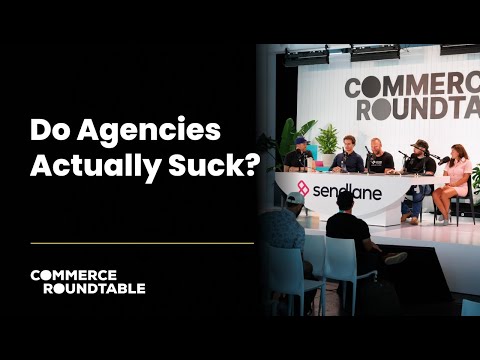
Melanie Balke, Andrew Faris, Liam Veregin, Nate Lagos, and Jordan West debate agency fit, incentives, talent, and the decision to keep work in-house or bring in a partner.
Melanie Balke, Andrew Faris, Liam Veregin, Nate Lagos, and Jordan West debate agency fit, incentives, talent, and the decision to keep work in-house or bring in a partner.
For brand leaders hiring an agency and agency owners building stronger client relationships.
Speaker roles and platform examples reflect the session’s original context. This is an archived conversation.
Write down the specific capability and outcome the brand needs before evaluating agencies.
Read this part · 02:38 ↓Compare the people, cost, and management demands of both options for the same scope of work.
Read this part · 10:00 ↓Clarify staffing, ownership, and the review process before the engagement starts.
Read this part · 16:15 ↓Tie accountability to the work the partner can influence and document each side’s responsibilities.
Read this part · 22:47 ↓Reassess the engagement as needs change, using agreed expectations rather than accumulated frustration.
Read this part · 41:29 ↓A quick editorial guide to the key ideas. Read the complete transcript below for the examples, details, and discussion in the recording.
Original recording on YouTube ↗The panel begins by challenging the idea that agencies are one uniform category. Different services, people, and operating models produce different experiences. A poor relationship can begin with an unclear expectation of what the partner is supposed to solve.
Start with the capability or constraint inside the brand. Buying media execution is different from buying strategy, production capacity, or specialized channel knowledge. Define the missing work before evaluating a proposal that bundles several of those things together.
The conversation considers what a brand can reasonably build internally and where an agency offers access to expertise or capacity. The speakers do not agree on a single permanent boundary, which reflects how much the decision depends on the business.
An internal hire also carries cost, management needs, and talent risk. Compare the actual people and responsibilities on each side, rather than assume in-house automatically means more capable or an agency automatically means more scalable.
A good fit includes how the team communicates, what it owns, and whether its strengths match the client’s stage. The people doing the work matter more than a broad promise that the agency can grow any brand.
The panel’s examples emphasize that services are delivered by humans. Their experience, attention, and capacity affect the relationship. Ask how the work will actually be staffed and reviewed, and how the brand will contribute the information and decisions the team needs.
The compensation discussion explores the difficulty of aligning incentives when an agency controls only part of the business. A performance metric can be influenced by product, pricing, inventory, and other decisions outside the partner’s remit.
That does not remove accountability. It makes clear scope and shared context more important. Decide which outcomes the partner can influence, how performance will be assessed, and what each side needs to provide. A fee model alone cannot substitute for those agreements.
Creative control and outsourcing choices can change as a brand grows. The panel includes strong views about keeping customer understanding close to the business, alongside examples of specialist work that remains useful to outsource.
The closing discussion covers evaluation and exit decisions. Review whether the relationship still solves the original problem and whether the team’s needs have changed. A clear conversation about performance and scope is more useful than letting frustration build without a shared standard.
From the recording’s auto-generated YouTube captions, with filler words removed and paragraph breaks added for readability. Names, numbers, and wording may contain caption errors; refer to the recording for exact phrasing. Chapter links jump to the text below.
Original recording on YouTube ↗0:00every single person should learn how to Media buy and understand the principles of media buying of like the different levers to pull the different things to look at and I really do believe that every single brand owner should know that like yes there are certain levers that you can pull that are a lot more advanced and I know that there's incredible people on this panel here who know how to do those things but the basics everybody should know the best thing about putting mics in front of people on stages is that when you ask them questions and they don't know anything about what's about to come their way they like literally have to answer it and then the you get all sweaty and you start seeing them sweaty CU we have all these lights that point at you and so I'm excited that you guys a said yes to this I don't know why you would ever say yes to this and B this is a topic that I always hear especially at events this cor is like do
0:51agencies suck and as I get into this I sit on a very unique triangle of we have a little bit of tech we have a brand and we have an agency all at one so have a little bit of perspective across all
1:02three of these but before we get into this from Andrew down to Melanie I would love to know who you are and what are you doing today money I'm Andrew Ferris I run a boutique agency mostly doing meta spend and then some financial consulting type stuff with leaders I keep about five clients of managed services at a time and I'm not really trying to grow up so it's a boutique agency thing and then have a podcast the Andrew Ferris podcast yeah thanks Aaron Liam Varan we run run an app Group with two partners over here one of the founding partners of it we we're a growth firm so we focus on paid acquisition socials and search retention email SMS and we do some work on the financial side as well so we do General modeling forecasting cash flow forecasting as well as inventory planning awesome my name is Jordan West I've been on the brand side and the agency side I've often said agencies suck likes on my shirt here and
1:56I've also had a podcast for years not not to Andrew's size but maybe in episodes I'm almost at Episode 600 now so you got me definely Le I'm just going for it you know seers to scaling so I'm Nate I'm the VP of marketing for a regional grain watch company and I'm the only one on this panel that doesn't own an agency no no no don't be it I'm Melanie and I own an agency we do email marketing for Ecom this is actually AA it's a agency is anonymous that's that's what this is today oh I'm at the wrong AA my bad you need to be on the golf course with that kind of attitude [ __ ] okay this is a co question why why does this
2:38rap always happens cuz it's funny thing is this is what we did at s lane on this event specifically is anybody that's a brand is welcomed with open arms and then you got us where we're usually contributing to the growth or we're driving new revenue or retaining more Revenue yet we have to pay exorbitance amounts of dollars to just get in the door why do you think it we have that rep why why do you think that is the thing that we get the most I'm going to start with the man that is is always screaming about agency suck why do we get payment gated and we aren't always welcome to the party I think the issue is that a lot of so like when we talk about agencies there's a lot of Facebook ad agencies right and so a lot of them came out or came up when ads were easy and so a lot of people think about agencies with that one like sort of you know 20-year-old in his basement that just sort of figured
3:28it out and I think that's why people hate on agencies I think at the same time people think that agencies are these massively high margin cash machines and there's not enough transparency around how people actually charge and so there's like well what exactly am I paying for and people think that they can also do it on their own as well that like well I would just do what you're doing and I think that people just don't want to be sold to and so when you come to an event there's that sort of idea of like like yeah yeah exactly like talk to me anybody else want to give any context there cuz we there's so many directions I'm going to take this into but I want to know why do you think that stigma exists amongst us I think it's hard to take advice sometimes when it might be coming from a biased Source right I can sit up here all day and talk [ __ ] about Rolex but at the end of the day I'm only talking [ __ ]
4:23about Rolex because I have a different watch that I'd like to sell you instead so I think a lot of time the conversation with agencies are Tak taken with a grain of salt from people on the brand side of like yeah that might be what's best for my brand or that might be your specialty that you're trying to sell me on the backend so it's just kind of hard to separate the truth from maybe a sales pitch sometimes when do
4:42you think it's the right time for a a brand to kind of engage with an agency Andrew yeah well I think this is one of the reasons agency relationships go really wrong is that people don't know what they're looking for with an agency and that's because they haven't learned some of the Baseline skills themselves I would say in most cases in most cases in not all cases in most cases if you're under I'm thinking of meta ads agency specifically if you're under 50 Grand a month in spend the economics simply don't work for the agency to make money and you to make money at the same time unless there is a very clear path to your spend growing so at that stage of business you you're going to get not great service at that level in MO in most cases because there's just no margin left for the agency to be able to charge you a lot and at the same time for you to actually make money in the transaction
5:34so it's just it's not a very good value proposition at that stage for either side on top of that I think one of the main things people can do to stay out of the agency Carousel that many people have been on and hate is to learn some basic skills and some basic blueprints themselves that way when they go to manage an agency they have a better idea what they're looking for instead of just sort of hearing somebody say on the other end of the line oh we're testing this this week you know one thing that Andrew said that's interesting I think is worth a call calling out on the agency side and why agencies might have a bad rep is that I think one thing that happens a lot is often times when a brand is looking for an agency in many cases they're looking to solve for something that they don't have a core competency for internally and often times what that means is they don't necessarily know what they're looking for in terms of what competency what
6:17competency actually looks like in that space so they start looking at agencies and assessing agencies but they don't necessarily know how to vet the agency for what they're looking for and I think often times they'll rush into making a decision because that agency might have a lot of case studies rep Etc but that doesn't necessarily mean that's going to translate to their situation as a brand so I think often times because of that you have a situation where they might end up not necessarily having the greatest experience because they don't know exactly what they're looking for and can't vet for it so I think it's important if you are looking for an agency to have somebody in that process assist you that understands what compeny looks like in the space that you're looking for servicing so I think this is interesting because then it goes into like the bilding model how you would charge to get this thing kind of the Rel ship started cuz we we're trying to on my end I'm trying to maximize
7:03utilization rate of my people and I'm looking at like okay one or two designers can do these specific things and then that means I can group them with four different brands and they're going to get enough time to share across these Brands and like when you say that to a brand you're kind of like wait wait so I'm only paying for a parttime of this person that's doing the work for my brand that I'm paying them exorb amount of dollars for and when in reality like when you have a full fulltime person on your team they're not doing that one thing all the time they're doing a bunch of things within your actual company itself so how do you guys think about like allocation of your human capital our resources that we have to support a brand I can I can share I think what
7:48what most brands need to understand to be really successful in working with agencies is the structure of an agency how does an agency make money what what do they need to survive and I I think one is the the margin conversation right like agency gross margin 50% that means whatever they spend with us we should be making 50% after we play for our services rendered most agencies don't hit that like that's the base minimum you should be at as a healthy agency most agencies don't hit that most agencies don't hit a 20% net profit margin and that is when they are giving you really shitty service because Brands don't want to pay that much so most agencies play the game of Race To The Bottom higher cheaper Talent put cheaper Talent on more and more Brands right so I think one that's really important to understand and then the best most successful Brands we see are the ones that understand how agencies work are the ones that understand for every one thing they add they're taking that time away from
8:56another thing for email for example if every time you come back and you go I know we already implemented this email but can we change the word but to and because we want to be more positive you have to understand that those 30 minutes that go into a small change like this get taken off of 30 minutes where we could be doing really heavy deep Strate strategic things and so I think you know one if you understand agencies aren't print most agencies aren't printing money like actually is a somewhat tight margin business for most people and two there's only so much time in the day and everything takes about 10 times longer how do you how impactful do you want the work you give them to be Nate you we had a relationship we were supporting you on the emo side and you you came to like look I love you guys there's nothing wrong I'm I'm going to take this an house what was that what came to that decision why did we get to that point
9:55other than you absolutely hating us right yeah it was a little bit that
10:00now we when I took over marketing for OG three years ago we had five agencies that we were using for a lot of our marketing like what like you had email you had paid paid media on Facebook paid Google creative email and then like a whitelisted advertorial Facebook agency four of those were fired within 6 months of me getting there and I'd replace them with an in-house team cutter cost made our team more efficient structured was one that survived 18 months because survived survived survived this is how they talk about us and it was because you guys were doing good work and as our strongest agency partner I knew I had to fix the other ones that weren't providing us with as greatest support and I'd kind of tackle that later and trust that you guys were doing what you needed to do to help us grow and you were at as we continue to to grow and you know we grew 30% that that year and since then we've
11:04tripled the business we needed a higher quantity and higher quality of work and we had a conversation about could you guys do that for us and you could but it would have gotten really expensive for us so we finally brought everything in house and now I've got a a small lean team of killers that really care about the brand and when our goal is to grow a brand that's relevant in 50 years I want to be working with a crew of people that really give a [ __ ] about it so this is important bro this is like a topic that I want to drill in for all of us to kind of think through there's a time and a place to have a partner and there's a time and place to no longer be with that partner yeah is there are there areas like in us on the agency I'll go us I'll go US Agencies then we'll go back to Nate Jordan when you're looking at and go like I shouldn't be doing these
11:51things for this brand yes what is that conversation start with or look like well it's one of the biggest reasons that we've moved into new blue ocean opportunities and trying to like figure out so like Tik Tok shop right the reason why we're going so hard as an agency on it is because some of the other areas are getting commoditized as a service right and so I understand buying C totally I understand that like that media buying is going to be AI atiz within the next 2 or 3 years right there's just not going to be the need for media buying in the same sort of way same thing with creative right and so we see all of this happening and then I see a blue ocean like social commerce with YouTube shopping coming on board with a shopping coming on board at some point soon with their affiliate Network and I think here's something that Brands actually will need help with and cannot bring in house right the amount of staff that I've continued to hire for that has
12:41actually blown me away I wouldn't have done it if I would have actually planned it out and realized how much it was going to be that's something that people actually need help with internally that they can't just prop up on their own that's where an agency comes in and that's where yeah that that's what I'm seeing in the space so this is a small small world it's actually like full Circle moment for me when I started out in pton media I worked at common threat Collective and actually Andrew was my boss Andrew was the first person who was like oh [ __ ] you're kind of weird but you're good at what you do let's see what we can work on it and so Andrew is a part of a common threat as they were growing really fast Dan went over from being ahead of strategy to go lead all of brand at 4x400 and that got to a point where he was like I'm going to go agency Boutique route you went through all three of
13:28those things and then you landed on this thing which in my head I was like no way he'll do something by himself how did we get there why why did we go that route and actually before CTC I was an in I was an in-house media buyer at a brand so like I I've sort of I think seen this from every angle as best as I can I mean the reason I left 4x400 is partly cuz I was running into the ground and they needed a CEO change and so that was part of it honestly and then and then I wasn't really sure what I was going to do after that but I I suddenly had a a couple of clients kind of fall into my lap and I was like I guess I'm a freelancer now and then I and then as I was servicing the needs of those clients it was like I guess I have to hire somebody to help me service those needs which as soon as I hired
14:11somebody now I'm an agency I guess but so so I mean this is very me like it was not a long-term strategic plan for how I like approach my own work it's it's just been very like solved the next problem next and and so that's that's kind of where I've landed but what I've come to believe about this problem general for Brands is that like there's like like Nate let me let me ask you about the this the story you just told about what happened to original Grant do you think if those those agencies that you had hired like let me ask you like this were they doing a good job not all of them no yeah I mean so do you think you fired them because they were doing a bad job or because you have like a like a principled opposition to agency no the the value to Output was not right even from the ones that were doing a good job so do you think have you ever fired employees for that reason
15:01yeah yeah that I think boils down a lot of this conversation which is like what you should actually do is hire the best people you can get at a rate that makes sense for all parties involved and then you should not let them go and you should continue to keep them involved in your brand as best as you can the Dodgers just paid $700 million to sh Otani and it was pretty expensive and he's breaking baseball and making them lots of money like they couldn't have paid him too much cuz he's so good at what he does and there's there was no like ooh I don't know if we can have he doesn't even fit positions like so like there's there's you just you should go find the people who are going to make a massive impact on your business but the the reason people are bad at this is because that's actually super hard people don't know how to vet this in the hiring process they don't know how to vet it in the agency hiring process they
15:48don't know what they're looking for they don't know how to write job descriptions and by the way I am people like I have been bad at that too right so I'm not casting dispersions on anybody here it's just really hard to do and so in my view like that's the you should approach this so I ended up in an agency spot kind of because like I had alignment with the right people and I think could provide value and excess of my cost to their business and they thought the same thing and I think it's worked out and so I've continued to do that and that's created value back for me but yeah that's the way I'd assess basically the whole thing is there an area anytime in your
16:17business when a brand comes to you and you're like that's not a good fit absolutely we all have intake questions what are come of I want to know some of your intake questions of as someone approaches to potentially work with you guys yeah well well for me there's areas that I'm not that good in like I think if a brand comes to me that's like over $50 million in revenue and wants to build out their operational team and process to go to the next level you need to go hire somebody else and so I regularly refer clients above that really even above 30 it starts to get to that stage for me where it's just like not really what my core skill set is I have a no [ __ ] policy as well I just don't want to make a lot of money for somebody who I think is going to make the world worse so that's somebody who I would say like if they get rich so that's somebody who I would say
17:02is not a good fit for me and then I would also say and this is something Liam you were talking about a second ago when we were just chatting if somebody if the fundamentals of a Brand's business like their unit economics are not set up for Success if they don't have at least one element of their basic like essentially structure of their p&l the way it's going to work that's going to be able to create leverage on their growth in e-commerce it doesn't really matter how good I am I can probably help them some but I can't really help them that much and so there needs to be some Vision that I have for the future of the way the brand works I know you were saying you'll take smaller Brands if that situation comes to you right exactly and and what Andrew said is is very much what we look for as well as the unit economics of the business and the situation that they're in and if they're a smaller brand and things look
17:41promising then we'll take them on and explain what the path looks like to you know reaching their goals but I think one of the the biggest things that we also look for number one the operator and the people that we're going to be working with because from an agency perspective that's very important in terms of if that relationship is going to work out so really vetting for competency within the the operator just understanding who we're going to be working with the other thing that we'll look for is what is the core competency that the the brand has and are they bringing somebody on like let's say they're let's say the founder is extremely good at media buying and that's their bread and butter and they're bringing us on for media buying that's sometimes can be a red flag because it's sometimes like well why are you bringing us on and what are you going to be micromanaging us is it just going to be a bad relationship I was the worst client ever when I had an agency
18:23for that reason so so that's one thing we look for is just making sure that we're fitting into the structure of how they're operating the business in a positive way that's constructive and making sure that the unit economics Mak sense and then if those line up then things have have potential so yeah what are you looking at Jordan what what questions are you asking as they come on in so I'm I'm constantly looking at it from a brand owner perspective right and and really thinking about and I know this sounds super trit but I'm always thinking about like win-win how do we actually align these two things together with small Brands you cannot create win-win it doesn't work so when somebody comes to me with a brand Under 5 million unless they have funding there's just no possible way that that relationship is not going to end within 6 to 12 months unless they somehow have massive growth like Nick you know what it's like going through that insane growth trajectory that you guys went through
19:20with Breeze and you know how much how much effort it takes and an agency can't they cannot commit to that much time you need either an accelerator you need or sorry not an accelerator but like a a venture Studio or somebody to take you in that level and an agency is not going to solve your problems yeah and I totally agree with if if you're good at media buying do not whatever your your the like your superpower is if it's sales if it's media buying just never give that up like that that is always the mistake that I've made that's why I'm still doing consulting and media buying with small people who cannot not small people small Brands like height like really short people he said I was above his weight class I don't know six and under no because I still enjoy it so much and so it's just don't give that part up the thing that you that that is your superpower I would never hire that out there's no need to ever do that this
20:18this was probably the hardest year for me on like breaking my Paradigm of agency world I've been doing this for 11 years on all areas of it and then once we got into de breeze and we're sitting here growing I fundamentally watch us absolutely destroy two agencies just from the communication from the expectation from the speed from the revenue goals and I'm like this is terrible this this is so unfortunate yet we're winning and we're growing and we're getting to this point and you have to realize like the size of your business has to match the partner that you pull in and there's a lot of different ways to make these deal structures work usually as the agency gets a little bit bigger and they grow they get very like how would you say structured deal structure packages right where you're like you make this you pay me that and that is how we work that incentivization of alignment usually is not conducive for Mutual success do you think I think that's totally wrong I
21:15like I I I think I'm I'm actually really curious to hear Melanie weigh in a couple of these comments about like when's the right time to hire on the email side because I'm very much thinking about this in the meta side but I actually think the number one thing I'm looking for with an agency is Playbook and what you're describing is play including like the the like the the output like at some point the deal structure may need to change to support the Playbook but the thing that an agency can and should be good at and the thing you should be shopping for with an agency is a formalized Playbook you should reject the test everything mentality you should reject that every brand is different mentality and you should instead embrace the things that are going to work at the most scale and then you should you should the agency should be priced to support that in a way that makes them and you both money so that that's that's the way that I
21:59would that's the way that I would think about that question because for me like the like an agency is so much better positioned to develop an internal Playbook that has context from a bunch of Brands because all of us are lying to each other about what's actually happening in our brand all the time and so the agency actually can look at the numbers and see what's going on across these now that is extremely hard work for an agency to do so there's the idea of like somebody having knowledge at the top of the agency but then they have to operationalize that knowledge down through the agency really really really hard and that's the thing you should be vetting when you go H an agency is is to go do that but like I said I'm thinking about that very much from a from a meta ads growth agency like there's been a couple of these questions that I'm super curious to hear Melanie Weighing on from the email agency side because like it's just a
22:41really different set of expectations including when's the right time to hire and like what do you how do you create leverage for Brands so happy I don't
22:48have a paid ads agency sounds exhausting well I think you know like a couple things to touch on one of the questions I look for is is this brand gonna look at me as a service provider or a partner when they look at me as a service provider I can almost guarantee it's going to be difficult because if you want to succeed with an agency you have to work together as partners and that requires that also people have like one of the things I ask people is like do you have the bandwidth to manage an agency I I work with other agencies I know I don't have the bandwidth to to manage those agencies I go you know what 80% done is better than 100% like 80% done is 100% awesome like Dan Martell's thing 80% done is 100% awesome so I go that's cool like I don't have the time to manage them I just need it 80% done but then and I think especially in email because it is very creative it's very copyrighting
23:41heavy it is about talking to the audience people have a lot of feelings about a lot of things and when you have a strategic partner you work together to figure that out when you have someone who thinks of you as a service provider there's a lot less patience and collaboration So to that question is that and then in terms of pricing I mean like agencies don't price based off of spend so it's kind of predatory I would be so much richer if we did like if I priced based off of how much money we made you I'd be swimming in money you know you wouldn't be and the reason why is you'd get fired for doing it yeah so everybody everybody's so afraid of this with agencies that they're going the percentage of spend or percentage of Revenue deals are so bad but there's a there's a reason why it's bad for agencies to do this and why it doesn't work in the long term which is that you will fire us so we don't actually make
24:27money and especially if it's based on percentage of spend and you just like go light 10 you know $500,000 on fire in The Meta ads account you'll just get fired and probably your bill won't even get paid at that point so it yeah with email it's also not quite fair right because totally so many other things played a role in that sale right like your ads played a role in that sale your your social media played a role in that sale and then how do you how do you even attribute it right that's a whole other conversation we can get into are we looking at clayo attribution should I be looking at triple wh North beam or ad Beacon or whatever like that's a whole other problem of the equation m n your sides are there other partners that you do want like you do you are prioritizing team first internal first but there's times you're like I don't got the time to do this I need to go get XYZ when are those situations happening yeah so I
25:18think I disagree with the fact that or the statement that the Playbook or the strategy is the most important thing an agency can bring to the table I think the reason why a lot of us feel like agencies suck is because they sell themselves as the Strategic expert and they're not and I'm not saying you're not you're great but I think a a lot of agencies claim to have the best strategy and and guidance and then they're Drop Shipping Services basically to junior level employees that aren't good at their jobs PA who feels that thank you Jesus okay so you should fire that agency that's that's my Point fire them if they're doing a bad job but so what I'm getting to is like when there's a time where I need help it's not always on the strategy side it might just be on the bandwidth side so when I think about adding a resource to our team I think do I need a brain or do I need an extra set of hands because
26:14there's sometimes where I'm full of myself enough to think I'm smarter than everyone and if I just need someone to make more creative the way I tell them to or send more emails the way I tell them to then I don't want strategy I don't want guys or consulting or even the calendar cuz I think that me and my internal team can handle that part better we just don't have the bandwidth to execute it so I I think there's a time and a place for both but both the brand and the agency have to be aligned on whether they need strategy and brains or they just need an extra set of hands I agree and disagree with you go for it I think you're totally right by the way like and listen I as an agency I care about my clients more than anything it's what I think about when I wake up in the morning and it's what I go to bed with if we have money problems no [ __ ] problem I'll sleep like a baby if a
27:03client's unhappy I'm awake okay like I care so we don't we don't fall into the category of like we don't give a [ __ ] we're just trying to make money excuse my language and we've sucked before like we've sucked really bad because agencies are based on humans and humans are the most fickle thing you'll ever have if you guys have like an Ecom brand and you think fulfillment is hard because like the Fulfillment didn't work and a the water content in my gummies weird so I have a whole batch that sucks try doing that with humans humans like their parents die they have mental breakdowns their boyfriend breaks up with them they decide they want to quiet quit like it's you're scaling an agency is based on humans and humans are hard so yes Andrew I'm not letting you comment on that cuz I already know where you stand on the statement what's that you don't like you don't want humans in any decision that's being made well I mean I agree with both of
27:54what you just said in a lot of ways it's just that like first of all there's no difference between that and hiring somebody internally right like the reason Nate you can do that is cuz you're way better than most people like I know you are in fact I hired you to deliver a Consulting service service for another client of mine even though you're like outsourced or whatever cuz I know you like you're really really smart dude so the reason you can bring it in house is cuz you know you're like in the Otani camp like you're you're really really good and and at the same time like I think everything melan's describing absolutely happens internally at the Brand level too like have you ever tried to hire people and manage them it's super difficult which is why the key for hiring an agency or internally is getting as clear as possible not only on what the idea and the Playbook is but how that Playbook gets operationalized and like you're running a much bigger thing than I am
28:40you have done that too this is the whole reason I'm not trying to expand my thing is because I suck at operationalizing playbooks and I think too like it's back to what Melanie said too just alignment on what the agency's actually coming on board to do is at the beginning is the most important part like that's why I saying how we vet for you know what's going to be a good fit is just being very aligned on how we're fitting into their or structure and if we can get align on that and understand how we're supporting the brand and what they're doing and where we fit into that then typically can work out well and that goes that goes for both hiring employees and hiring agencies and as an agency we hire tons of employees and our entire product is people so we're doing that both on the brand side and and employee or agency side and employee side and sometimes it doesn't work out if there's not alignment but that alignment is key in the beginning I think do you think
29:21the incentive and know agencies as a us as a clan and the N do you think the incentive is stronger for the in-house team or for the agency to win in what sense in in terms of the sense of how do you want me to ask this question here you can do it is the incentive structure to perform stronger for the agency side or the in-house full-time employee MH if it's a Founder then it's definitely if it's like a founder-led marketing team so if the founder is the marketer and that's why they've been able to scale their brand then I would keep Marketing in house as long as possible because no one's ever going to live up to your expectations and if you already went say 0 to 5 million you're pretty smart you already know what you're doing and so the incentives are way they're they're way higher because you actually understand that right if you're not then I think that agencies especially smaller scrap your agencies their incentive is to get case studies all the time and get
30:26referrals as much as possible and so they do not want to do shitty work because sales is really hard it's very difficult to get a brand on board and to trust you and so agencies have massive incentive to do good work they don't want to do crappy work they they want to do well for Brands yeah and and I think too that also depends on the size of agency you're working with and where you fit into like if you're working with a massive agency with hundreds of clients and you're a very small brand then you probably have a good idea of where you fit in terms of hierarchy of of Competency and level of employee within that agency so I think that's also important to understand as a brand looking for an agency is okay what where do I fit within their client base and am I going to be prioritized and that that's something too that will depend on how how actually kind of involved they are and how much how important it
31:10is to them I think and the people you're working with within it yeah I think sorry you going to go I was actually going to ask you a question oh can I address incentives quick I think
31:19incentives are really hard to align whether it's with an ageny or with an employee like I'm a full-time W2 employee of a regional grain I get bonus based on a percentage of contribution margin and I have stock options that if we ever sell will work out for me yeah so by the way so by the way you're really expensive that means like this idea that agencies are more expensive is like I'm very expensive yeah you're extremely I would argue it's more expensive not to have me but I totally agree yeah hire than this person with with how aligned my incentives appear with the company it's still not perfect yeah we could sell original grain for 100 million and my CEO and coo would retire forever and live the rest of their life in peace I might take 6 months off before I need another job like it's so hard to get incentives 100% aligned even with a full-time team so I think it's also super hard with agencies obviously my my question for you was I
32:17think agencies are more incentivized because they're more scrutinized I free agency I worked in house first marketing hire for an Ecom brand all the way to acquisition dude that [ __ ] was chill like yeah I basically did a good job and everyone was happy with a but me working with the agency oh my God it was like my whole job was to be up their behind so oh why is this you can cuss it's okay yeah I know why is this down what are you doing there you got to do more why aren't you doing more it's like they're doing a good job I'm like no you got to do more and you know Karma now it's coming back to me but I I have yet to meet a brand that scrutinizes their in-house employees the same way they do their agency that's so right this this is this is the Inc that talks about the incentive that nobody talks about is like if you have a single Channel employee inside your business as a
33:13full-time employee they are never going to tell you when they're twiddling their thumbs and they're also never going to tell you that things aren't going that well you have to go grab that and and pull that out of them you know whereas agencies do get like some more scrutiny so that ends up being a cost in businesses that people just don't think about very much and then the other
33:28problem is that very often internal teams don't want to pay teams what they're worth So like well I won't even use your example because it doesn't matter but like what'll happen right is that somebody is really really good internally and there's a massive amount of demand especially on the growth side like probably everybody sitting here needs people who can grow their business effectively right like it's like the most in demand skill in the market so the supply and demand Dynamics work in such a way that like that person can just go get more money somewh else so fast and probably all of you have seen that you have a talented person who starts to show it and grow the brand in a year or two and then they get 2,000 followers on Twitter and boom they're gone you know yeah or they join an agency they get really really good and they go hey I want one or two clients I'm getting paid more than I was at the agency that's right and and so many of
34:14the internal employees are already you're worried about them splitting their time and having 100% of their mind share they're already taking side clients if they're good and that's because the side clients are paying them as much there as as you are if they've built any social following because and and that's just a reality of supply and demand and again incentives like there's just money sitting there for the taking this is why we ban all employees off of everything we control all LS yeah well and I think what we're getting to going back to what you said about employees not being as scrutinized I think the punchline of this is some agencies suck and some Ecom Brands suck and a lot of people suck that's right so like my new tagline for the next year was going to be clients suck yeah and like I'm sure I'm sure at times Nick and John who's my account rep there thought I was a sucky shitty client to deal with you can stop nodding now it's all right
35:06a lot you should have said no I no no but like I think these relationships are hard and I think business is hard and I think nailing these is you know hard I think you're right any any questions oh let's go [Music] okay John you nodded way too hard for that all right can you you guys hear me yep okay so maybe I try to stir the pot a little bit as agencies and then the Nate help us all clean up the reputation of agencies what is the number one service if you were starting a brand that you would never hire an agency for because the cost to replace that either in competency or just in compensation inside of the company is just too easy what's the number one overrated service you wouldn't buy for your own brand I'll
35:56I'll start with media buying just just plain media buying every single person should learn how to Media buy and understand the principles of media buying of like the different levers to pull the different things to look at and I really do believe that anybody that every single brand owner should know that yeah right that that is not that is no longer a like yes there are certain levers that you can pull that are a lot more advanced and I I know that there's incredible people on this on this panel here who know how to do those things but the Basics everybody should know sorry yeah no I think like if you're if 80 or 90% of your your revenue is coming from meta then you should probably understand what you're doing there as a business if most of your revenue is coming from Affiliates or influencers whatever whatever Channel pick pick one but if that's the case then you should probably have competency in that domain and not necessarily hire out or if you do hire
36:47out make sure you really know what's going on there before you do so so like I think to answer your question directly it completely depends on the core competency that you have as an operator and also how your business is structured but yeah I think if if most your revenue is coming from one place you should probably know what to do there and not necessarily rely fully on an agency Jordan do you to that question do you think media buying is a full-time job no no absolutely not so then internally how would you staff it then if you if you're saying you should not staff it to an agency how how would you staff it I would put that with your with whatever performance person you have in there so I would put it like it depends sort of what size company it is yeah but whoever's in charge of digital $25 million a year yeah so that should be whoever is outsourcing to other two agencies right so whoever is the point person so say
37:34that's like VP of digital or whoever that is that's who I would put in charge of of at least knowing what is going on whether they're buying or not so like we like so then media buying does get outsourced at that point right like you're saying you'd hire an agency as long as you know how to manage it I mean it's just not the thing that I'm paying for though so like like a this publicly traded Wine Company came to us and they want us to do a bunch of stuff on meta and yet they're going to do the media buying and we're going to charge them the exact same because the media buying is the thing that takes the least amount of time it's the strategy and the creative and the copy and we're doing yeah it's going to be a bunch of different things but it's that's not the thing that brings the value the media buying like yes there are certain things you can do that are going to be a lot
38:18better and we're all going to fight over it on Twitter of whether you use cost Caps or not whatever it it doesn't that stuff doesn't matter comparatively to just basically putting it out there so I so that's that's exactly what I think is wrong frankly like I I think there this is exactly the Playbook idea like I think I think it's funny cuz I agree with you about the time expenditure on media buying but I think it has a tremendous impact like it's the second biggest line item on most of these Brands pnls and so this idea that it isn't that big of a deal I think is like way wildly wrong I think people are just blowing so much money with under like under optimized media buying to the point that it like it just blows me away sometimes and I just see I see a guy just got another one that actually fired me and then went to an agency and then went in house and then hired me back and look I haven't had poured some magic
39:09dust on it and like completely fixed all their problems or anything like that but it is amazing how much money they blew on media buying trying to save a few bucks on my fee what do you define as media buying exactly well maybe that's maybe that's what we need to figure out is yeah like building campaigns and adsets and things like that in in Facebook ads so like nothing on the creative side in terms of being inv no I would separate media buying and creative but I do think your creative strategy UT to align to your media buying strategy in a way the media buying dictates that like for example there's like a massive incentive with one media buying plan to drastically increase your quantity output of creative and the the like I don't want to get too down too far down that road the point that I think is like while it it while it isn't a huge time expenditure it is a huge financial expenditure and so getting it right and having some point of view there I think
39:55is like a gigantic differen makers for Brands pnls and they and they need to know that now I have a particular perspective on which one of these I think is right and I don't think the idea that like one is right and one is or like that all of them are equally valid approaches is right either I'm right or I'm wrong and I could be wrong but I but I and that's the why I would approach it and you should hire out towards that so at least for me the answer I'd be fine Outsourcing media buying as long as it was done effectively and by people whose point of view I trusted whose Playbook I trusted well cor look what you did so who wouldn't you hire I actually I I'm actually curious for your answer about this you just like you you no I want your answer I I want to know from the agency side I got plenty of opinions but I have to buy your opinions don't have to buy M cuz there's nobody that comes
40:39to mind for me as as as I think of like who would I absolutely not hire an agency for like I don't know if all of the best people I could find were agencies on those things like I'd have a really lean you know internal team and hire great agencies if they were there I think but I don't know I haven't run a brand for a little while so I I don't think I have a great perspective on that right now like we we just did this like I I own three agencies and I have one brand that's growing very [ __ ] aggressively fast I will never have PR in house I do not want that ever I just took Tik Tok affiliate and Tik Tok back in kind of like brewmate because I need not 100 a day I need a th a day and so that volume and like I can't push them fast enough to do it other than me sounding like an absolute dictator so like and the levels of like I have to be
41:23closer to this or things I need to be measured upon things that I I'm curious what Nate would answer that question and Melody as well but Nate for specifically
41:30from the brand side oh if there's anything you would not hire in house I would never Out Source creative yeah I think that's too important to the Brand's identity and too important to the customers's identity and their ideal outcome when they buy from you what happens when it gets stale what happens if it's the same over time what do you do performance creative you're saying performance creative yeah okay yeah no I mean other than like we hire s Sarah to coach us on that is she an agency do you run an agency now she's a little she's quasa I mean I'm hiring Sarah too you got to hire Sarah Le so like the way that I prefer to use outside resources is I tap them for you know Consulting and advice on things when they get stale and then they're executed by my internal team and say hey guys things got stale performance is dipping let's go talk to someone and sometimes it's McCoy and sometimes it's Connor at hex and it's
42:27people in the industry that are doing things bigger and better than we are I'll tap them for their e expertise and then let my internal team execute on 100% that's it's a numbers question too say it again just going to say it's not just a competency question it's a numbers question too if you look at private Equity companies a lot of time when they come in and do a turnaround they rely heavily on agencies to make these things profitable again yes most brands very bloed internally like most most brands including agencies you could probably go in there and cut 30 % of your staff if you're really profit oriented like if you really wanted to double your profit you could probably go in Cut 30% of your staff and make d double the profit with everything else staying the same so they come in they cut a lot of these people and then agencies come in and it's a math question and sometimes it just doesn't make sense for you to pay an agency
43:16because at that point you could build an in-house team and build that core competency and scale a th000 creatives a day versus 100 so I think a lot of it's also just a numbers question good question throw it to the the back oh let's keep going we'll go to you after oh that's a good catch Jes that was beautiful right play soccer bro you a goalie or what so this I have I have kind of like a brand side question and an agency side question so on the brand side when you're looking at someone to hire to do your media buying do you have different expectations for hiring a experienced freelancer versus an agency and then from the agency side when when is the best time to go from freelancer to agency and hire on someone on your team is that for me brand side first yeah the brand got it sorry I I like Freelancers because I I know who I'm working with so we've used them
44:23when we have a a gap in Services we need to execute on and I like it cuz I know the person I'm talking to is the person running our account the person I trust he's he or she is closest to the work that I'm paying them to to to do I think some of the bad habits that agencies get into is you might have a point of contact who's not touching any of the work on your account that's where speed is destroyed that's where quality of work I think can suffer so I'm a big fan of I guess in order Freelancers then like Boutique agencies and then bigger agencies I love Freelancers Freelancers are awesome I think they have a great place I I would just say one thing to that which is the benefit of a and I I I freelanced for a really long time the benefit of agencies is if you need scalability and if you need a large set of knowledge cuz like we pull from a vast
45:25amount of email accounts right I can tell you exactly if clavio benchmarks are [ __ ] because I see like 30 other accounts that are exactly in your Niche and I know those benchmarks don't make sense as a freelancer there's only so many accounts I can touch so I think there's there's that or send Lane benchmarks or so I'm what is clavia sorry Jamie one one thing to kind of one more and then we'll have one more question you have one thr it right behind you and then we'll come over here last two over the day just I can't tell yo hey my name is Nathan I own an agency so I have an agency question sorry everyone I have
46:06Brands too but as how do you look at an evaluation of an agency just curious on any of your thoughts I don't know if you guys have been through any exits in the past I I own an Amazon agency so this is I love being in like outside the Amazon space thank you all for inviting me but just curious cuz we have a like some potential merges with some of these like marketing agencies that want to build off an Amazon arm so yeah I'm just curious on where you guys look at kind of your exit strategy the market the multiples Etc I yeah I I can take that one for for now so so agency multiples are like all over the place right it's just whatever somebody is willing to pay for you if you're in a commoditized market it is going to be a lot less if you are in a very specialized market and there's some sort of strategic Advantage your multiple is going to be way higher if your eida is above
47:1110 million your multiple is going to be a lot higher it just depends who you're like who you're selling to and who you're merging with and what you're getting for that so I'll tell you yesterday Taylor was telling me he said hey why don't you build your social commerce thing up big and I'll buy you and so now I know that's it's going to be a nice multiple you know that's so we're just putting that out there I'm going to remember that but he Taylor holiday you said yeah he's going to roll he's going to roll your your IA into his and he's going to he's going to get a bigger multiple fine and so that's the that's the value proposition that you are doing because you're going to get a bigger multiple on a larger number and that that I think is a really strong value for ages you're going to get a 3X multiple on anything under 10 million and then 10 million and above you're going to get like an 8 to 10 it's just
47:52who's buying you at that point and that's that's very very broad but definitely SE bigger than three on on low on sub 10 but but your Point's basically right yeah we'll talk about that we've bought three agencies and all of them in like more or less we've rolled them in as boltons probably won't do that again but I have a lot of War stories to share last question [Music] here okay so what can brands do to
48:20be better clients and specifically what can they do to get the most out of their client agency relationship [ __ ] any advice that's a great way to end dude this is my favorite question ever thank you do you have an answer yeah I I have a [ __ ] novel okay so got time for that got time for that one look at your agency as a strategic partner like I think a lot of with working with Brands sometimes it's like they come to and it's like dating someone who's only been cheated on before like they're already like how are they going to [ __ ] me over now I make sure they don't [ __ ] me over I is this this is not moving fast enough so it's like their strategic partner like they make money if you win that's the only way they make money like don't forget that they're a strategic partner involve them like give them information like I know this sounds crazy but like share information you have internally with the
49:13brand you know like we just recently did a ton of emails and then the person came to someone was like oh man we forgot to tell you we're revamping the entire brand this is all done I'm like cool do you have brand guidelines no but here's a website do it like do it kind of like that like set your agency up to win the way same way you would set an employee up to win and look at your agency as as like an an in-house team because they really are an outsourced in-house team have the right expectations yeah bet them properly yeah I think the last thing you said there is very true is just they're obviously not an employee and they're different than employee that's why I've hired an agency but you have to somewhat treat them like that in a sense like really don't micromanage them understand there's systems and how they operate so for example on the email side obviously I'm sure you might have some sort of expectations laid out about how late edits can come
50:04in before something's sent out or how far in advance you need to have something planned like respecting that and understanding how the agency operates there is very important because they have a lot of clients that they're doing this for and they have systems built around outputting x amount of creatives or whatever it may be with those boundaries in place and I think understanding that and respecting that and having an understanding of that before you engage with them is important as well I think I'm going to win the agency guys back for a second here oh I I thought you were going to just say this is why I don't hire agencies to Le because of like expected output and stuff no I something I'm really passionate about is I think you should pay people well and I think you should extend that to agencies and I know a ton of Ecom Founders and CMOS that'll try to negotiate down their agency fees and then expect top quality work and if
50:50you're nickling and diming someone they're not going to be pumped about working for you so I think a lot of the same principles that make you a good manager to an in-house employee can make you a good manager to an agency Melanie Andrew Liam Nate and Jordan thank you for closing us out guys well done thank [Applause] you thank and we're all still friends oh yeah yeah even better thanks Nick we actually agree on a lot the final Shenanigans Jimmy close us out my man we're to close you guys out thank you this thank you guys thank you guys dude this was fire thanks Jim thank you thank you thank you thank you nice job guys
51:26all right guys let's finish this thing up I'm about to give away as you guys heard earlier in the in the first day mentioned that we're doing a $100,000 giveaway and that means and it's I'm not giving him $100,000 we're giving him opportunity to give away $100,000 as a brand so to before we give this thing away I wanted to bring up Eric he's the co-founder of shared sweeps many of you guys may have heard attended a party but I want to give you 60 seconds to share what you do and then we're going to go give away Grand so if you're out in the bar right now and you're a brand and you want $100,000 you should probably come in here cuz if you're not in this room you're not going to get it just put in a warning out there goe awesome thanks Jimmy hello everyone it was great meeting new faces these last two days like Jimmy said my name is Eric I'm the co-founder of shared sweeps one thing
52:16I've noticed in the market U I'm also head of brand at Gas Monkey Garage is that people do small giveaways and they're afraid to do big ones what's the main reason it's a threat of legal not doing legal the right way also if I'm an Ecom director and I'm like hey I want to give away $100,000 I better get 900 to a million in revenue or I'm fired right and nobody wants to put their ass on the line in that way and so we created shared sweeps where I've already registered the giveaway legals I've set the rules the time frame all the ways to get methods of entries and I've also paid for the giveaway so you can actually launch a $100,000 giveaway with me at shared sweeps only paying through Success Through purchase driven incentives so instead of hey give me an email or phone number for an entry you're going to get hit with couponers you're going to get a terrible list say hey every dollar you spend get you an entry to win a trip to Greece and 60
53:16nights of airbnbs plus $440,000 and so shared sweeps is a way for you to essentially do what the hex clouds of the world have done do what the Prime is done with a million-dollar giveaway but work with me at Shar shared sweeps and do that so at every event we try to take that giveaway component and add it as something fun so we're going to go ahead and announce the winner of the 100K giveaway here from Karma Round Table amazing thank you Eric and very cool way to kind of end this event so what we did was we took every brand name that had registered for ticket and we threw it in chat GPT and we said pick a winner and we randomized it and you know I I picked this and I got video proof here which is really exciting just because he told me legally I have to do something about that or else you get sued so again he was being very compliant and I'm excited about this cuz the winner of the $100,000
54:13giveaway drum roll drum roll give me a drum roll guys drum roll there we go the winner is fresh Chile Chris come on up dude let's go let's go come on up come on up fresh chili was at the taco bar yesterday so if you enjoyed the salsa that was compliments to Chris over here but Chris dude dude congrats Dude any words yeah I've been looking at shared sweeps for a long time and this is an awesome opportunity to to grow a brand and give our customers something special and help us build community so thank you thank you Chris man thank you man and you guys work it out all right we're going to go through the closing real quick I'm going to zip it out I know you guys want to get to happy hour so let's get through this so first things first big round of applause to Shaq everybody I couldn't have done this without Shaq you guys know Shaq kept energy up kept The Vibes going couldn't have done any better Shaq
55:16so thank you again brother thank you couldn't have done this again second time in a row buddy all right thank you buddy all right also big thanks to our sponsors big round of applause to our sponsors it's been amazing guys have done a great job not going out and I haven't had a single complaint from a brand about getting Shield to too hard so good signs last thing our speakers here gez we had such great speakers big round of applause to your [Applause] speakers and then we got the team guys the whole Sun Lane team I could I can't do this on my own these beautiful people made this thing happen so I'm really excited about this [Applause] and of course to all of you guys here today thank you guys for spending your time coming out flying out driving out making your way out here guys it's been an amazing pleasure and honor to give you guys this great event today we finished this off with appetizers and open bar out there sponsored by chw
56:13Andis they're going to be out there and they're going to be do and people are already at the bar so please head on over get some food get some drinks enjoy the sunset and we'll see you guys next year adios a [Music]
Join Commerce Roundtable in 2027 for focused learning and conversations with people working through the same challenges.