 40:24
Austin · 2026

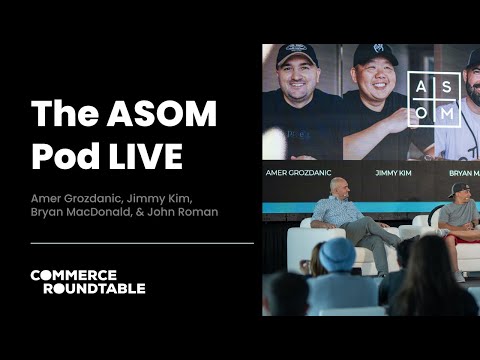
The ASOM panel debates customer ownership, convenience, creator economics, and preparing a DTC business for an exit. Jimmy Kim, John Roman, Amer Grozdanic, and Bryan MacDonald bring different operator perspectives.
The ASOM panel debates customer ownership, convenience, creator economics, and preparing a DTC business for an exit. Jimmy Kim, John Roman, Amer Grozdanic, and Bryan MacDonald bring different operator perspectives.
For ecommerce founders, marketers, and operators working on leadership & operations.
Speaker roles and platform examples reflect the session’s original context. This is an archived conversation.
Compare customer access, cash flow, and operational needs instead of choosing channels by slogan.
Read this part · 04:04 ↓Compare referral incentives with what you already spend to acquire a customer.
Read this part · 11:56 ↓Think about the operating quality and durability a future buyer will evaluate.
Read this part · 19:03 ↓A quick editorial guide to the key ideas. Read the complete transcript below for the examples, details, and discussion in the recording.
Original recording on YouTube ↗The discussion questions a simple owned-versus-rented distinction. Direct relationships are valuable, but a marketplace or other intermediary can also serve a commercial purpose. The panel considers situations such as moving inventory and reaching customers, emphasizing that the decision depends on the business rather than a universal rule.
The influencer and affiliate debate expands to existing customers. A brand may spend heavily to acquire a buyer while offering very little to the customer who recommends it. The panel challenges that imbalance and discusses the value of recognizing real advocacy with incentives that reflect its contribution.
The final discussion shifts from marketing tactics to the business behind them. An exit is connected to the quality of the operation and its revenue, rather than simply a moment when the founder decides to sell. The panel encourages founders to consider those questions while building, not only during a sale process.
From the recording’s auto-generated YouTube captions, with filler words removed and paragraph breaks added for readability. Names, numbers, and wording may contain caption errors; refer to the recording for exact phrasing. Chapter links jump to the text below.
Original recording on YouTube ↗0:00There's definitely a place for renting. Whatnot's going [music] to be just like eBay, Amazon, Tik Tok shop where you're not getting the customer email. You're getting their address, but you don't own them. It's a no-brainer. Owning is better, but there's absolutely a place for renting. >> Almost fried sustainable company. Yes or no? Of course, we are. Okay. And being a stable company by offering monthly subscriptions, [music] you offer convenience to your customers. But you can't use convenience to offer sustainability. It doesn't exist. Being a convenient to somebody becomes in a sense a commodity. So [music] you are providing sustainable products with convenience attached to it. So with sustainability you can do both. With convenience you can't. Our customers are doing this already on their own and that's just a part of their natural organic [music] posting habit. So they're becoming a free affiliate influencer and within 10 years it's going to [music] be a tough space to compete with because that's the natural evolution of consumers on social media.
0:57It's a cool little intro. >> It was so fancy. I had replayed it. >> Came out great. >> All right, let's go ahead and see that there. >> Whoops. Coming back. All right, we're
1:11here today and I'm going to introduce everyone. Make sure we go over everything. But we are doing a little podcast here today. A live podcast here today with the Awesome Podcast. And for those who do not know what awesome podcast is, it is a pos podcast about perspect perspective. A for agency, S for SAS, O for operator, M for marketer. That's what we stand for. And what we're going to do here today is I'm going to bring everyone around. But before we start, I want to start by introducing everybody on stage here. I'll kind of go around the room
1:40here. So in the middle over there with the hat backwards is John Roman. He's the Androidloving Survival King. What's up, John? He's the CEO of Battlebox. You guys saw him yesterday. Say hello. Hey, I saw most of you all yesterday live shopping. excited to be here. >> Yeah, >> that's pretty decent. >> Pretty decent. >> And then all the way on the right over there. Thank you. >> With the hair with the bald head over there, >> is the prince of Bosnia and the mayor of Chicago. He thinks Chicago's number one. Anyone think Chicago is the best city in the world? We got You got fans. Those are your fans. There you go, buddy. You got it. But this is Air Grassnitch. We welcome him. He's the CO PLA.
2:18>> hi guys. First of all, I just want to thank everybody for being here. You guys are what make this amazing and choosing to spend two days with us and a few minutes with us on the stage. super cool. So, thank you all for coming out and having some fun with us. >> Awesome. And last but not least over here, we've got a self-proclaimed funniest dude on LinkedIn. He's the meat guy. He runs an amazing raw food pet company that everyone should buy their food in. So, that's my plug there for Adam here if he's listening to me in case he gives me a discount. So, with that being said, Brian McDonald.
2:47>> Yeah. Hey, everyone. But I'm not going to waste your time like Amir did. So let's get started. >> Look guys, you know what's exciting about what we do here? Awesome. Awesome is actually a part of Commerce Roundtable. This is one of our media arms of Commerce Roundtable and one of the ways that we get people to this event and different things are doing and I kind of lead this thing as the moderator. But now today we didn't want to just sit up here and babble and talk to you. And anyone's who's seen us on live stage, we like to make a little presentation because we want audience participation. and we want to have fun together and we want something that's relevant here together. So today we are
3:20playing Hot or Not Ecom Edition. How many people remember what Hot or Not was? Yeah. Okay. We've all aged oursel here. So So who doesn't know what Hot or Not is? Oh, it's got people. That's good. That's good. Well, Hot or Not was what was it? 2010 200 Yeah, it was 2011. Yeah, maybe 20 Yeah, thanks. 2011. we there was an internet phenomenon where people were raiding people but we made an ecom edition because we want to talk about different topics in the market and what we would like to do and the kind of way that we'll run this is I'll start off I'll announce it I'll talk about it for a second and then we'll let the audience vote is it a hot topic or a not topic and we'll go there and then we'll turn to everybody and get their perspective. So coming up number one coming number one is owning verse
4:05renting customers. Now this isn't really a hot or nod so we're going to we're going to use an owner rent thing. So, owning your customers. Who's into owning your customers? I would hope a lot of you guys since you're in direct to consumer. And then we got renting customers. Wow. Some people love that. >> Talk shop. Amazon. >> Yeah, exactly. Okay. Very cool. Well, let's go around the room, guys. Let's talk. I'm going to start with you, John.
4:27John being with a brand having a $20 million subscription company in the outdoor survival space. I'd love to learn about your spectrum because you believe in one side very much so. >> Yeah. So, I absolutely believe in owning your customers. Now, there's definitely a place for renting. I mean, yesterday I was talking about whatnot. Whatnot's going to be just like eBay, Amazon, Tik Tok shop where you're not getting the customer email. You're getting their address, but you you don't own them, right? You can't market to them. You can't drop them in your marketing ecosystem. So, to me, it's it's a no-brainer. Owning is better, but there's absolutely a place for renting.
5:06I think you just have to kind of weigh certain aspects of it. So, again, not to hate on Tik Tok shop. It's a seven figureure channel for us, but very transactional. and I think you have to be profitable on that channel in its own accord for it to make sense because you're not you're not getting a lot of people back to your site for direct purchases. and I I think that matters, right? So, you know, you have a lot of people talking about Tik Tok shop. Oh, it's great. It's revenue. It's revenue. But you got to look at it. You got to be profitable on it. You got to be single first transaction profitable because you don't own them, right? And the the reality is owning is 100% better.
5:49>> Yeah. But can be top of funnel for you. >> Yeah. And and I think about the the own rent thing in my head comes to running a business versus a brand, right? So our brand's fourth generation. We've been around since 1950. I mean, we've had customers that have been feeding our food for 30 years across all their dogs growing up. And the way I think about own verse rent, not is isn't necessarily the channel, but the way in which their journey begins after first purchase, right? So for us, a food product's really sticky. If you have a if you have food, you're not going to have any retention. No one's going to no one's going to keep buying from you. So when you create a brand, you create a great enough product in order to make your product sticky in the lifestyle in which the consumer lives in. Right? When you're running a business and you're chasing all the that you saw this morning, you're never going to build a brand. When you have a brand, you have a
6:37product. So, when I own a customer, I have testimonials from 30, 40 years ago that have I've lived in the own space because I know that customer is always going to keep coming back because of the quality in which of the product that I make and then the brand experience that I give my customer. I'm not necessarily worried about chasing revenue. I'm worried about chasing an LTV and bringing someone alongside our family and product that over the lifetime we have people that spend a 100red,200 $300,000 from us on an LTV base because we own them, but we own them in the channel and product that we live in and not necessarily how they buy, but treat them like it's sad to say. I don't want to say I own them, right? But when you do have a customer that purchases from you, focus on the product and the way you treat them. And that is what a brand is all about. So that's the way I think about owning them versus renting them. But what did you
7:36think? There's different ways to skin a cat. Like you don't have to have to only do it one way. It sounds like you're pretty. >> Yeah. And so there's ways and some people shared ways that they're doing it in the market. It doesn't always mean that it's the same way that you think people should do it. >> Correct. and mayor. >> I'm aligned a lot with with John. I I I think though renting customers is not necessarily bad if you're doing like a Kickstarter, if you're doing eBay, if you're trying to validate a product really quickly and then go to owning kind of like rent to own model, I guess.
8:08but owning is owning and having a relationship in a community is the I think the only way to scale a sustainable business, whether you're an agency or a brand. And I would never rent my John who happens to be a client to somebody else or rent him from somebody else. I I want John from myself as well as Brian and as anybody else. So if you guys are interested in being purchased, let me know. But so you know, you said something there, sustainability, and I think that's that's a key a key element, right? So don't get me wrong, I I I don't have a problem with renting. I'd prefer to own, but renting if I'm profitable day one or renting if I have a a path towards ownership, it's it's great, right, to stop a funnel.
8:50>> But I I don't think it's even like a pathway if you have a ton of inventory that's not moving in your website and you can throw it on a third party channel where you don't own the customer. Is it better to move merchandise that way or to have money sit on the shelf and collect dust? I mean, I think there are certain scenarios where renting is not a bad thing. I just don't think it's a >> No, I think that's a great example.
9:12>> Yeah. >> Yeah. It's a business choice more than anything else at the end of the day. So, there's no right or wrong answer to it. I think it's a preference. Trying to do both is harder, but obviously there's always a desire on one side. All right, let's move to the next one here. We're
9:25moving over to sustainability versus convenience on positions, right? So, sustainability people, who likes that? Oh, no one like Oh, we got a handful. Okay, we got some. And then we've got convenience. Who likes to sell convenience? Okay, we've got some mixtures here, guys. What do you guys think? Where are we at on this side of things? I think Amir and I are going to go back on this. I'll I'll let you go first. There you go. You go. You called me out. I called Yeah, I called you out cuz you love sustainability. Now, don't get me wrong, sustainability is great.
9:54But at the end of the day, the reason why Amazon is Amazon isn't because they're sustainable. It's because a customer gets their product after they order it. And then the expectation that your customer has when they purchase from you begins their journey, right? So the journey begins long before that they receive and try your product or in our case their dogs eat their product right the the the journey begins on the convenience in which the channel we live in. So for us the convenience is they purchase they receive the product in the window in which they should expect the product and that is all about the convenience of our product before the journey of it begins right so yeah you know can you create a sustainable product that's delivered in you know 48 hours of course but I'm willing to bet in whatever space that you want to challenge me in I know especially coming from the frozen CPG side of it and pet space the studies and surveys that they've done over the past 24 months,
10:48convenience outweighs sustainability by more than 90%. >> Okay. >> So, go ahead. Do you start or no? >> Oh, much pride. Sustainable company. Yes or no? >> Of course, we are. >> Okay. And being a sustainable company by offering monthly subscriptions, you offer convenience to your customers. Correct. But you can't use convenience to offer sustainability. It doesn't exist. being a a convenient to somebody becomes in in a sense a commodity. So you actually and the way Adam and you run the company, you are providing sustainable products with convenience attached to it. So with sustainability can do both.
11:30With convenience you can't. I mean that's fair. That's fair. John, help me out here because that is a fair point. It's that is a fair point. There's there's like four times a year Amir makes a great point. Someone tracked this. Today's one of them. >> Write it write it down. >> I mean, that's that's pretty good, Amir. Yeah. I got nothing to rebuttal that to be honest with you. >> I'm going to take the L on that. I'll take the L.
11:51>> Okay, we're taking the L. Look, this is a rare moment when Brian takes an L here. That was a good jump. >> We're going to we're going to jump over
11:56to the next one here. We're going to talk about the future of influencers versus affiliates. That being creators versus affiliates ultimately. John, like let's start with you, man. Like you use a lot of on both sides. You've got your YouTube channel. You've got a creator inhouse already and a face and a brand already, but you guys are also tapping into affiliates at the same time for a reason because it helps you spread it out, right? What are your thoughts here around the future of influencers versus affiliates?
12:21>> Yeah. So, I think it's changing a lot and it's changing very very quickly. It's not the same landscape it was 12 months ago and it'll be a different landscape as it continues to inches towards what it is in in the next 12 months. the the days of of paying influencers simply for the content at the the the levels and the rates that they're at is is not sustainable and it won't continue. Now, with you know, Tik Tok shop, one of the things they've done really well is they put a lot of opportunity in the hands of creators and influencers to to dictate how much they want to make, right? No, no cap, no salary cap, make as many videos. I at Battle Games last week, we had a full-time creator knew, had just done it, had just jumped in, had a full-time career for two decades, and he's popping 50 Tik Tok shop videos a day. Pure numbers game, but he's making ridiculous amount of money because he gets paid
13:22commission on the actual sales. And I think Tik Tok shops done a great job of that, empowering these creators and influencers. But at the same time, it's there's been a lot of self-realization from brands where it's like, well, I'd rather pay based on success than than just hopes and prayers. >> Yeah. And I'm guessing the way you think about it, just to clarify, just so I understand, when you think about someone, you're on TikTok and they're promoting your product and they're paid for performance ultimately, those are affiliates to you, right? Yeah. Okay.
13:51Okay. And then you've got the people that you're paying and seating and you're saying, "Hey, here's a box. Make a video about it." That's someone you would consider more of an influencer. >> Yeah. But I think they they're pretty blurred. >> It is. >> So So what you described, I would agree to both, but you could also sub in examples of each and it would still apply. It's a super blurry space. Creators, influencers. >> Yeah. And I I I also think that eventually over the next 5 to 10 years as a consumer base gets younger and younger, you're going to have your customers become what the current affiliate influencer is. because everyone now, like my wife for example, when we go on vacations, something's shifted in the millennial age group especially, and it's going to continue to shift to the Gen Z as they continue to get older. But when my wife goes on a family vacation, she'll edit the clips of the vacation in Cap Cut and post an incredible reel. That never
14:49happened 10 years ago. People weren't making content for fun. Now your customers are becoming almost better than the influencers and affiliates that you're paying 20, 30, 40% to. They're just doing it because they love your brand and product. And it's just a natural evolution of consumerism and the way in which we treat what we love. Because years ago, 10 years ago, my wife would post a Facebook album on Facebook. Here's 20 pictures from our vacation. Now, she'll take reals. She's good enough in Cap Cut now because most people know how to use that. So, what we're seeing at is our customers are doing this already on their own, and that's just a part of their natural organic posting habit. So they're becoming a free affiliate influencer and within 10 years it's going to be a tough space to compete with because that's the natural evolution of consumers on social media. So you're going to be able to to attack and grab so much free content.
15:45All the money people are paying the white list, all the money people are paying Tik Tok affiliates, the younger the demographic becomes for your consumers, I'm predicting within 10 years, that's just going to be a natural occurrence across your customer base and you're just going to be able to have free content. Grab reach out. Like I'll reach out Nina who runs our affiliate channel. Hey 30 people last week posted some pretty amazing videos we love to run. Hey give throw an extra bag of food in next week. Let's get that video. That whole era is completely changing and within 10 years it's going to be wild.
16:15>> You think it's going to continue to grow. It's not going to change. I think it's going to disappear. >> I that's what I'm saying. So I think the way in the way in which the current affiliate and influencer structure is on live shopping or Tik Tok shop that's just we're we're paying up the wazoo because they're great content creators. Everyone is naturally becoming a great content creator. My wife using her as a case study and all of her friends they just naturally now post cool looking reels and videos and talk in front of the camera. Like my wife will go on selfie mode and be like oh my gosh I can't believe and she's like has her kids in the background. I go, "Babe, we're not doing this to you. We're not becoming a YouTube family. You got to What are you doing?" But it's just natural to her now. All her friends do it. All the mom she follows does it. So that what we're paying for is naturally occurring and evolving just in organic
17:02social media right now. It's wild. I my one takeaway I want everyone to do when you get back your brand do a search on Instagram, Tik Tok, YouTube and just see how many people and have purchased your product or service that are already creating free amazing content and do what you can to reach out to them and then flywheel that because it's it's an untapped market right now and I don't think people realize how many people are naturally doing it.
17:31>> And Gary Vee said it earlier like it doesn't matter, right? It doesn't matter what your follower account is anymore. It's about your content and how you're resonating. And for someone like a dog food company that has a very a very unique subset of customers, right, who is looking for that type of product, people who have that usually have friends and followers that are following into that spectrum, right? So, it's like a really like a micro influencer, but again, it's done in a almost like a loyalty or they're just proud to have a product.
17:55>> Correct. Correct. >> Any thoughts on there before I move on? >> No, I I agree with Brian. God, that's so hard. >> That sorry. Say that one more time. Turn the volume up. >> You record it. You can listen to it when they post. >> what's going on here? >> I agree with that. Jay Myers from Bold actually had a great presentation a couple years ago about referrals and how you can scale kind of these new age referrals that we do on social media organically recommend companies. My my problem that I have when I work with brands is they will spend 607 $80 to acquire a customer, but they only give $10, $15 for a referral. How does that make sense? Put the same amount of effort and energy from a monetary value into both channels and make your customers be your champions. They're already doing it. Just thank them for it.
18:42>> Absolutely. All right, let's move on here. Someone even clapped to you on that. There's a good point. >> Did we or was that was that is winning right now. Amir is like two and0. Was that clap? We're just going to clarify. Was that clap? Who's that clap for mayor? >> For me or air. >> Okay, he's he's putting you down on the list. >> All right, let's go to the next one
19:03here. We've got exit strategies in DC. And this one's a really broad one. Who Who put this who put this up? You did. >> no, I so I think what we were coming up with ideas, I believe Chad GBT told me to do this one. >> what is it? Explain it. >> Yeah. So or not. >> Yeah. Yeah. So exit strategy in DOC. We're we're talking about can you exit as just a DTOC only brand or what are the ways in which you can evolve a DTOC brand in order to exit?
19:27>> Well, why don't we turn to John over here and talk about it real quick because John has had an exit and then he rebought the company back and I'm sure one day you'll do another exit and you are mostly a DOC brand. I guess you would 90% probably. >> Yep. >> Yeah. So there there's definitely the the exit, right? I battle box is proof of it existing. I think the reality is a lot has changed from from 2021 when we sold it to even to obviously now but even 2023 when we bought it back that the market had changed significantly. We you know we sold it for a 6xida we bought it back for an effective 1x. it's a big big big difference in numbers. The the reality is that there's always going to be the poppies of the world. there's always going to be the you know Curtis like what you guys are building right you have that ability to get to that next level where you can get that huge billion dollar valuation and
20:24for those brands you absolutely can can do it right the reality is not to hate on Battlebox at all but we have a a a not easy path we have a path but we have a not easy path to get to nine figures and then 10 is very very very very difficult if you can't get to that that billion dollar though the valuations are going to be based on IBIDA for to oversimplify it. How profitable are you?
20:53>> Yeah >> profit matters and you know the earlier speech on the 0.11 return on ad spend. If you can get to that scale like like he is right like he's he's creating a monster juggernaut brand. And if you can get to that point, then yeah, it's great. But for for the 99% of the rest of us, myself included in this audience, like profitability matters. And if you want any kind of nice exit, it's going to be a multiplier opa. And it's going to it's going to be based on how profitable you are more than likely in your trailing 12 months.
21:30>> Yeah. Yeah. I I'll piggyback on that, too. So, I would say like the past 12 really like 16 months, Adam and I, we always like joke around social media becoming like the back to like blue blue collar hard hat. So, like when he came out here, I'm like just stay in my room, right? And that's sort of like the like the energy we bring where yeah, we're lean. We're a you know, family business, but but ultimately IBIDA is what should keep you up at night. Unit economics should wake you up in the morning. Like we we spent an hour this morning, you know, we have three corrugated, you know, shipping sizes.
22:02our boxes, right? And and and how can I fill each order dependent upon each corrugated box to limit the dunage inside the box, right? Decrease the shipping window and time in transit to my consumer and ultimately improve the customer experience. Well, that could open up our margins by 7 8 n 10 points. Those are the things that we obsess over and talk about and those are the things that constantly Adam's working on. He handles all that. I'll handle on the ecom marketing and branding side of it.
22:32But ultimately, that's something that our company has adopted. a way in which that unit economics and IBIDA should be one of the only things that you think about and obsess over because every single inch of dunage that I get rid of in a shipping box over the course of 50,000 orders, I'm saving $120,000 that goes right to IBIDA. Okay. Well, now when you scale that in the same manner, you are in a much better situation. But the issue is all of that gets ignored because all the other stuff is the shiny wheel fun stuff. Let's become obsessed with meta, which is great, but you have to look at the actual unit economics of your business and ways in which you can pull money to the bottom line without disrupting the customer experience cuz that's how you make money. What would you say like when you watch social media and you see other brands that are going 0 to $60 million in a year or two like Breeze for example and you're seeing other companies that
23:24are doing this in the market it kind of gives you that like oh I should be able to do that where that's not really reality in most businesses ultimately right talking about IBIDA is something that I think just more recently people are starting to talk about realizing like and it's not a new thing right IDA has been around forever but like people talk about it because it's no longer about topline relevance there's no multiples on topline. That's a very rare case that you're seeing and you know even media it's much more cooler to say oh that you know Poppy got a you know 6 7x on multiple on revenue than it is to say you know he got a 90 5x on ibida because well the reality is that would never or rarely happen unless there was just a thing to it right any thoughts behind that?
24:04I'm for me like listening to a lot of people I actually follow Curtis on on LinkedIn and and the story and a lot of entrepreneurs here. I think the biggest mistake when we look outward or even listen to a lot of people on stage is we look at a company as one stage 0 to 100 million. There are so many stages iterations in a company that you have to adopt. Sure. Can somebody like Breeze or somebody hit a home run and be one of a million to exit? Who was it? Poppy that exit recently.
24:39>> sure. realistically speaking, cash flow is a big problem. How you going to sustain and buy inventory? you know, are you going to borrow money against it? Are you going to raise money? I I I was told when I was younger, the the faster you grow, the faster and harder you fall. and when you try to do the next evolution, the next stage of a company, you should make sure that the next step can hold your entire weight of your company, of your goals, of your aspirations. Because if you take that step and that step can't hold your weight, the fall is going to suck. And I'm speaking from experience because I've been there trying to scale things too much, letting people go prematurely or too late, whatever the case is. And when I was younger, I I I chased brands.
25:29It was about working for PNG, Mars, like all of these big corporations. And I think us as founders, as aspirational as we are, the biggest thing we owe to ourselves and the community and the people that we're building is people trust us when they sign up to work for us. People trust us when they buy the product from us. We owe every single person that we invest into the recognition they're investing back into us as well. And I think a lot of these companies when they're trying to go 100 miles an hour, I'm not saying they forget that. But I think if you stumble, you won't be able to catch yourself and then you won't be able to catch them as well.
26:10>> That's a good breakdown. And I think also you also nailed something that's interesting is that, you know, I know that there's stages in the zero to 100 million, but overall at the picture of it, it's not that different when it comes down to it until you get to a certain stage, right? Where in like, you know, other industries like let's go to SAS for example, right? It used to be 0 to three, 3 to 10, 10 to 50, 50 to 100, whatever. And AI's changed that game now. It's 0 to 10, 10 to 25, 25 to 100, right? The game is changing just like it is changing for brands. Investor money is changing. And you know, obviously depending on where this world heads in the next 12 months. I think this is going to kind of dictate where it all comes down to capital and the dollars and and money that is well in the market, right?
26:50>> Yeah. Cool. Love it. All right, let's wrap this thing up. We've got one more
26:54slide that we slid in here. We need your honest opinion here, guys, because this one's a really important one. Brian McDonald, is he hot or not? What do we got? We got hot. >> Show hands for hot. >> Well, I still have a thumbs down. We got some. Not not >> four. Four. >> Yeah. >> I don't know. About two questions ago, I made it pretty cold. >> You know how many people came up to me yesterday? They were like, "You look just like Ben Affleck."
27:15>> None of them. >> Nobody. >> I don't know. I don't know. >> No one came up to you about that. >> I said it. You You'll see later. They were drunk. You >> They were drunk or high. One of the two. They had too many breezes. Very fair. >> Yeah. And they were seeing double. >> Yeah. >> Yeah. Nick, they work. >> We like to humble him every time. Make sure that he's humbled on these things.
27:34But with that being said, guys, this is the awesome pod. We have new pods every Thursday. We're on YouTube. We've got about 31,000 subscribers today and we drop a new episode every Thursday. So, come check us out. Thank you guys all very much. Thank you.
Join Commerce Roundtable in 2027 for focused learning and conversations with people working through the same challenges.