 32:57
Austin · 2026

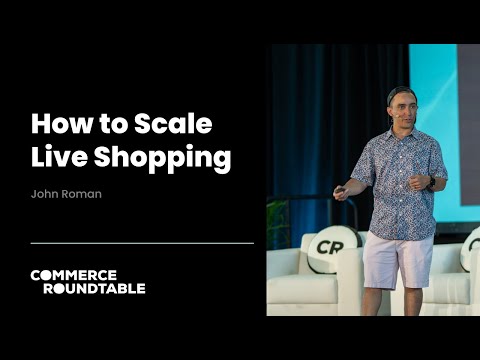
John Roman explains how BattlBox tested live shopping and built it into a revenue channel. The session covers Whatnot, hosts, team structure, entertainment, and measuring the full cost of the operation.
John Roman explains how BattlBox tested live shopping and built it into a revenue channel. The session covers Whatnot, hosts, team structure, entertainment, and measuring the full cost of the operation.
For ecommerce founders, marketers, and operators working on creators & social commerce.
Speaker roles and platform examples reflect the session’s original context. This is an archived conversation.
Use existing resources to learn before committing to a larger live-shopping operation.
Read this part · 08:47 ↓Give hosting and supporting operations clear responsibilities.
Read this part · 13:44 ↓Keep a consistent presence while testing hosts, themes, and formats.
Read this part · 19:30 ↓A quick editorial guide to the key ideas. Read the complete transcript below for the examples, details, and discussion in the recording.
Original recording on YouTube ↗BattlBox began with a limited number of selling hours and existing team members. The early test was designed to learn about products, presentation, timing, and auction formats. John describes protecting the core business while collecting evidence about whether the new channel deserved more investment.
Live commerce requires more than placing someone in front of a camera. John describes the team structure that supports a consistent experience and the importance of the host’s personality. The operation has to serve both the audience and the practical work of selling and delivering products.
John encourages brands to think of live shopping as programming. People need a reason to return beyond a transaction. New themes and hosts keep the experience fresh, while profitability should account for salaries, commissions, and platform costs rather than rely only on the revenue displayed during a show.
From the recording’s auto-generated YouTube captions, with filler words removed and paragraph breaks added for readability. Names, numbers, and wording may contain caption errors; refer to the recording for exact phrasing. Chapter links jump to the text below.
Original recording on YouTube ↗0:00whatnot is greater than Tik Tok shops. Tik Tok shops where they're just hard selling. And the reality is we're selling products, but there's two things we're not doing. We're not overly selling them. And we're looking at this more as programming content. Just like in the same way we would build out our monthly schedule of social media content. We're doing this with the live shopping, too. Certain times and days are going to be themed. And we're curating this in the same way we curate content. If you're on whatnot, it's literally a platform for purchasing. So, if you're there, you're already a high intent buyer. You're looking to make a purchase. And if we can position it as entertainment, it kind of takes care of itself. The consistency matters. And the reality is this is no different. So, if you're going to go live every Monday at 8:00 p.m., you have to go live every Monday at 8:00 p.m. You have to be consistent just like any other part of the business.
0:51Cool. So, everybody, my name is John Roman, CEO of Battlebox. If I'm going to put the group today into a segment, three segments. Some of you guys know of me, know of Battlebox, probably had a conversation today. Some of you guys might know of me, might know of Battlebox. I don't formally know you. And then the third group, you have no idea what Battlebox is. You have no idea who I am. So, a little bit of social proof.
1:20Who the f am I? So, let's jump into it. This first stat, I absolutely grotesque using it. It's the how much total DDC revenue I've done in a long period of time. To me, it's about recent stuff, but a lot of people in X love that. So, there's that. Had five exits, four acquisitions, a little bit about
1:43Battle Box. So, started in 2015. outdoor gear brand as I said earlier. So survival outdoor camping, hiking, really anything to do with the great outdoors. our core business is the membership. I don't like the word subscription box, but you know, at the end of the day, a large element of the business is the subscription box. So that membership monthly box accounts for a little bit greater than 20 million in ARR. So it's a it's a nice nice chunk of our business. weird journey for Battlebox. So we started in 2015. In 2021, perfect timing October we sold the business 6x which was pretty good for then publicly traded company via spa.
2:34If anybody follows the markets at all, you know the story of the spa in the last couple years was not a very good one. So that allowed us to call an Audible and we bought the business back in 2023 for a oneexit up. So we have it again. notable element is the Netflix TV show. So as I'll say on the next slide, we're really into social media and content more so than maybe some other brands and we're taking what we know of content and we're applying it to live shopping.
3:09So on the social media side,
3:14we have Tik Tok. It's our largest channel at 1.1 million. YouTube 875,000. Facebook 692K. And Instagram coming in last at 180K. So jumping into one of our goals this year, we wanted to get an additional channel, a marketplace, another seven figure stream for us. So we already had two. We have Amazon, which has been a seven-figure channel, and we have Tik Tok shop, which is a seven-figure channel. Wanted a third live shopping. We thought, you know, maybe we're going to go Tik Tok shop. maybe we're going to go somewhere else. Pure timing, whatnot. BDR was emailing us prospecting and it was offer we couldn't refuse. So, we checked out checked out the platform.
4:02So, we launched in April 2025, which I'll get into a little bit. The the fact is for the last 10 years we've been talking about live shopping. China's doing so much live shopping and why aren't we? And you know can only hear about it so many times for 10 years before you're you're a little numb, right? Like I honestly didn't think that we were ever going to get to the point we're at today with live shopping in the States. The reality is China is a different market, different consumer behavior, different consumer purchasing, just not truly the same.
4:41But the reality is, you know, we're just kind of laggers. We're about 10 years behind. We're never going to be the same size when it comes to live shopping as China, but we're we're growing and we're growing rapidly. So, you can look at some quick data. you know, this year, China's going to hit a trillion in live shopping. We're nowhere near that, right? We're going to barely get into the the the hundreds of billions, but as you can see, we're we're going to honestly in 10 years, we might be at a trillion dollars. And I wanted to show this because the reality is it's when you talk about something for so long, for 10 years, you start to think maybe it's just not going to happen. And it's it's actually happening. So, actually, let me go back for a second.
5:27So, I'm not benefiting at all from from talking about this today. I'm a big believer that everybody can win. No one has to lose. And my goal of today is for you to have some actionable insights to be able to say, "Hey, I can launch on whatnot or insert other live platform and and add, you know, decent, significant, considerable revenue to your business." So with certainty, I believe that if you're a decently sized brand, your your past proof of concept, let's define that a baby 5 million in annual revenue and up to, you know, nine figures or or greater. With CERN, you can add seven, eight figures to your business in a very short order with live shopping. It's still early. even though we've been talking about it for a decade, the reality is this is this is the Tik Tok of, you know, when it had just been named Tik Tok for musically.
6:22We're talking 2020 COVID time, but for live shopping. Now, a lot of people talk about Tik Tok shop and how great it is, and I'm a fan, right? Tik Tok, Tik Tok's great. It's the largest organic channel, seven figure channel for us. not hating on it at all, has its place, but the reality is I don't think it's as of right now today the right choice for live shopping.
6:50So, I'm going to tell you why I think whatnot, which I have no skin in the game, just why I believe whatnot is greater than Tik Tok shop. So, this data I'm going to share with you is just battlebox data. your data might vary, might be different, but for us on Tik Tok shop, AOV is about 20 bucks. kind of give you a comparison on our website. AOV's if you're including the membership, we're we're we're over $100 on whatnot. So far, AOV has been $88. So significantly better. Tik Tok shop, you know, after you're paying a creator, they're 15 20 points. after you're having to run a promotion and discount the product as well to get any sort of traction with sales. Our average COGS ends up being about 65 to 75% which is quite hot but you know again volume game you got to sell a lot of $20 items to get into the millions. What not side is interesting. So, you know, I said AOV is 88, so more than 4x. COGS is 45 to 55%,
7:51which is not the most ideal number for us, but it's 100% in our acceptable ranges. But the big difference here is the repeat buyers. I'm going to define repeat buyers today very differently than anyone else is going to. And it's only for this exercise on Tik Tok shop. When someone buys from us, we have ways where we're trying to, you know, cross match and and see if they're actually making additional purchases directly with us. And about 2% do, which is not a great number. And that's 2% on a good day. with whatnot. Right now, we're seeing about 20% make additional purchases from us directly outside of outside of the whatnot platform, actually becoming our traditional customers where we own their information, where we get their email address, where we drop them into a normal flow. So, comparing the two, there's as of right now today, there's really not much of a comparison.
8:47So, live selling isn't just for Pokemon. Pokemon and sports cards are by far on the whatnot platform on eBay. They are the largest categories. They dominate. and it's just simply because they've been established. They've been doing it for a lot longer. And we're talking about whatnot here. You know, precoid, I think they had maybe 12 to dozen, maybe maybe 18 under 20 employees. small shop, they did their raise this year. $5 billion valuation. They have over 600 team members now and they're attacking every single category, every major category. I mean, not to discredit outdoor gear, adventure gear, but it's probably pretty low on the the list of categories, you know, compared to beauty, beauty and wellness and and health and stuff like that. So, they're scaling and they're putting a really conscious effort into growing all these additional categories. And we're quickly finding out that not only is the audience already there, but it's it's there in large amounts. Now, there's the collectibility aspect. Sports cards and Pokémon have this, and there's ways to
9:56use gamification to kind of bring it into the entertainment of of your live shopping. So, entertainment that converts. you know, the first thing you think about is like, well, I don't have someone to do it, right? I don't have someone that can be this this person in front of the camera selling. And there's a couple examples here in the pictures. There's a lot of we we call them hand models, right? They're only showing their hands.
10:24They might they're going to be talking, but it's a very low barrier to entry. You're not having to have a studio, a stage. You're you're just showing what you're selling with your hands and talking. And it's super super easy. Then you have the full gambit where you have people showing themselves. You have people using you know additional integrations to show graphics and a better entertainment experience. So this is just a random video of ours. We do the full frontal. We have at this point multiple We have five hosts that are running live shopping. We have several full-time creators. It's part of our whole content thing. Oh, I was supposed to play. All right. so definitely took a a conservative approach here. I know a lot of people want to raise money and hire without really filling a solution. So we started with what we had. So we kicked it off with a test and in April of this year we ran a total of 10 hours selling. we didn't know what we were doing. We were
11:25going to figure it out. Lots of variables, right? everything could be a variable from products you're you're running, how you're presenting them, time of day, types of auctions you're running. It was literally a test just to get data. So 10 hours in April, we leveraged existing team members only. So we didn't want to take away from our core competencies, our core business, what we were already doing successfully. So the way we treated it is everybody that was involved, we just gave a commission bonus to. Right? This was extra work. A lot of times the selling hours are a out of the nineto-five traditional hours. So, we're just kind of giving multiple team members a little bit of a side hustle, if you will, while we try to figure this out. Walter sending a a random funny picture while we're like literally live selling. Walter's in the back. He runs marketing for us.
12:19So, every show was a test and a lesson. Like I said, days, times, auction length, show length, products offered. Honestly, the host, we've tested several different hosts and a lot performed different than others. We just were testing to get data and there's a lot of data to get in such a short period of time, but we stuck with a model. One of the models we came up with is, you know, I kind of talked about the COGS piece with Tik Tok shop. if we were going to spend any time any kind of resources on this live selling we knew we had to protect our margin and we had to ensure that we were growing and scaling this in a profitable way. So off the top we made a rule that we were putting a 52% markup on all of our products and that accounted for fees right so we talked about Tik Tok fees earlier whatn not fees 8% plus 3% plus 30 cents per transaction called 11% and then we were giving and we still do about 8 and a
13:13half to 10% to our team. So you're talking about 20 points you're losing off the top. So we had to protect and we wanted to have accept some kind of acceptable margins when the dust settled. So we quickly identified really there were there were three parts to live shopping that that matter and you go on whatn not right now you're going to see a lot of people that are doing all three roles and and maybe that's what you want to do and that's okay right you can have the same guy that does all of these and and and that's just how you're figuring it out. We ended divide and conquer.
13:45So we had two people doing the three roles at first and now since we've scaled this we have dedicated people multiple in each ro some even fulltime specifically for these roles. So the first role very simple it's the host right? It's the person that's in front of the camera or the hand model showing the product in the hands. They're engaging with the audience. The the live shopping piece on whatnot is very communityish, right? You're engaging. you're having full conversations. It's it's actual entertainment and and it's true content unlike you know some other channels. So energy consistency matter.
14:25Now we've t we've we've termed this other role showrunner. So we have Cameron who is the showrunner and then the role I'm going to show in a second when we jumped off. So, building, managing, running the show. Think of this as as scheduled content, right? Just like you would look at planning your social media and planning how you wanted to communicate messages, we're doing the same thing with products. So you can see this this spreadsheet had like 200 tabs and we were until we built we vibe coded a app to replace this but we were using this and this was kind of the cheat sheet for both the host and the showrunner. and see the product, what our cost was, the minimum selling price was adding the 52% markup.
15:14Starting beta is kind of rounding up so it wasn't too obvious what we were doing on the margins. And then the retail price is a cheat sheet for the host to kind of keep keep everybody honest. Channel owner, for us, it was Cameron who was also the showrunner. And it's just owning it like you would own any any channel, right? You might have someone that owns the Tik Tok shop channel. currently or social selling. you've got to have at the end of the day one one person that owns it, right?
15:44Because if a bunch of people are touching it and no one truly owns it, it's tough. It's tough to have any kind of accountability, right? How >> John, how do you how would you hire for this the social commerce? Like someone that runs live like what's the hiring process? How are you finding these people? >> So, you know, up until that point, the first month, we're not hiring anybody. We're taking the existing team and we were just trying to figure this out together. we had our creators, we had Walter who runs marketing. He was showrunning some. Cameron was our marketing coordinator. So he's doing a lot of the scheduling of emails, talking to the social team. Like really there wasn't anyone at all. Now we're hiring full-time showrunners. We're hiring full-time hosts.
16:28>> What's their normal background? Like they're like they're are they needing to be in front of camera or more just like very operationally, organizationally sound? So, so on the show running, it's it's just understanding how to use a spreadsheet, how to honestly just have basic critical thinking skills. Nothing >> harder to find than you think, my man. >> Yeah. but to be fair, we've we've actually you know, some of these roles we've actually gone off short for on the showrunning side, and it's it's truly working out on the host side as you're trying to get into that. It's a really good point, right? It's not just easy to find that specific person. we've tried some and they haven't gone well and we've we've found others, but with the the the commission structure we came with came up with. So, we're giving these hosts 5% of topline revenue with the >> on their day on the day >> on everything they sell. So, you know, we're building that into our modeling and the reality is that can start to be
17:23a very very nice amount of money. Brandon, the first guy, showed he went through a stint where he was probably averaging 4,000 in revenue an hour for a large amount of hours. So you're you're ultimately, you know, making a a significant payday. but you quickly find out based on hourly rate if someone's a fit or not and how hungry they are and if they're good in front of the camera. So it So let's go over to not selling products, right? So, I've watched a lot of Tik Tok shops where they're just hard selling. And the reality is we're selling products. It's really obvious that we're selling products, but there's two things we're not doing. We're not overly selling them. And we're looking at this more as programming content, right? So, we're just like in the same way we would build out our monthly schedule of social media content. We're doing this with the live shopping, too. channel. certain times and days are going to be themed and we're we're curating this in the same
18:24way we curate content. Kind of a cool image here. So, this is in the last seven days. This is our top 10 buyers on the Whatnot channel and by by revenue and orders. And it's pretty wild. We have one guy that spent 2400 with us in the last seven days. And to be on the top 10, you almost spent $1,000. So, the the difference between whatnot and Tik Tok shop, and I've said it, I'll say it again. Tik Tok shop, you're doom scrolling, right? You're not necessarily looking to buy. Algorithm does the algorithm thing and it hits you with an $18 item that you're like, man, this is pretty cool. It's a cool creator talking about it and you're not looking at the brand. It's very transactional and you you swipe and you buy it. If you're on whatnot, you you came there to buy, right? It's literally a platform for purchasing. So, if you're there, you're already in high, you're already a high intent buyer.
19:20You're looking to make a purchase. And if we can position it as entertainment on a site where the high intent's already there, it it kind of takes care of itself.
19:31again, show follow structure, consistency, days and times, right? you heard Gary Vee talk about it today and probably anytime I've seen anything online about the consistency of social media, right? He's telling you to post more times just like Jimmy's telling you to send more emails. The the consistency matters and the reality is this is no different, right? So, if you're going to go live every Monday at 8:00 p.m., you have to go live every Monday at 8:00 p.m. You can't decide, I'm going to do this Monday and I'm going to not do it for 3 weeks. You have to be consistent just like any other part of the business.
20:09So very very very simple. We have two calls that drive everything. Monday now that we're we and we were doing this in the beginning too. We're having the leadership calls coming up with a game plan stay keeping the schedule ahead and planned. So we'll try to have the schedule for whatnot built out several weeks in advance. and there's a bunch of reasons. There's the community aspect. You can have people bookmark the upcoming shows. You can ask them to bookmark while we're on. And then Friday, we're meeting with the entire whatnot team. And we're just open communication. What's working? What's not working? What are we seeing trendwise? How can we, you know, have learnings to apply to the following week.
20:49and these are actual numbers that we that we started with. So, we kept it really tight. the red stuff. We hadn't really dialed in all of our expenses, which which we have now. So, hosting showrunner your core channel owner keeps the strategy. There's no need for a full-time role at all. So, up through all of this, none of this was full-time. This is the month that we're going hard and we're going all in and we're we're now scaling, right? We're adding multiple full-time resources to it.
21:20We've kind of taken the road map. We know what the playbook is and now we're just applying it. But you can see at the end of the day putting up some decent revenue and and this is all inclusive of everyone's salaries on the July and August and all commissions, all platform fees, literally everything. That's that's our walk away on the the average margin. So always continue to improve. So lots of learnings. we're constantly trying new hosts, new themes. Think of it as actual content, right? Like the reality is if you're not keeping it fresh, if you're not trying new things, if you're not entertaining people, people are going to lose interest. So, it's just a constant.
22:08You can see this is four upcoming shows. You can see three different hosts. We're going in October to Miami giving away a Samsung 70 in TV. like this is true entertainment. so yeah, the the community piece is really interesting. So whatnot. there's a lot of features on there that are wild. So we'll be running a show. We'll have 120 users in there. We've been on for three hours. We're ending the show. We don't just end the show and kick everybody off. We say, "Hey everybody, stick around. We're going to do something called a raid." and we take us and 120 people and we literally show up to someone else's channel selling and we've just given them us and 120 people.
22:53So, it's like super community. There's no like affiliate commission or benefit to do that except whatn not built this platform and like everybody can kind of win mentality which is very energetic. So, gamification is is an interesting piece. We'll run all kinds of games and and we just make it fun. kind of, you know, pulling the curtain back a little bit on how big can one channel get. So Pokemon sports cards are the two established markets on there. Running a full gambit of of I would say regular programming, call it 30 to 40 hours a week on the Pokemon side, the sports cards, and honestly the collectible side. you don't have to do a lot to quickly hit eight figures in annual revenue which is to me absolutely wild.
23:43I would say the rest of DTOC brands again I'm going to define proof of concept five to you know up to nine figures it's a very easy low low barrier to be able to hit 2 to 5 million. So single channels range from 2 to 20 based on the category. we'll hit on the single battle box channel optimize about 5 million in revenue. We're launching next week a second and a third channel. The second is going down even on a deeper niche in the outdoor space and then the other channel is kind of going going more general and broad.
24:23so we have this account manager who has been very very helpful. One of the amazing things is just kind of like telling us what's working, what's not working. He has multiple companies that in the last year are doing nine figures on whatnot alone. And these are established brands that are, you know, doing nine figures directly on their on their site, but in a very short 12-month span, they've been able to do nine figures. And they're doing it in different ways. There's a Pokemon channel that runs 24/7. And then there's a lot of hybrid models where it's one brand with a bunch of different products and channels.
25:04So the gamification is is a big piece and whatnot has a lot of stuff that's native to the platform. So you can see this wheel right here. It's literally in the platform you can do mystery boxes. You can do this example is sports cards. So it's teams but they add all these gamification elements in which when you're using them it can take your margin and double it which is pretty pretty wild. it's pretty much it. So, open it up to
25:34any questions and yeah, love to get connected and love to answer any questions if anybody has any. >> There we are. There we go. I'm on clapping. Thank you, John. It's it's newer thing. It's very tactical. I really wanted him to share because like the numbers are more important for some of the operators here or some marketing department leads are going like, should we invest? Should we not invest in it? So, if there are any questions, I'd love to throw you the mic and kind of go back and forth on it. Thank you.
26:03>> Oh, it worked. Hey, my name is Lad. thanks for the presentation. The question is, did you have to push any traffic to your whatnot store to get that traction? >> Yeah, so it's a it's a great question. So, we in the start, we did a couple of posts, but we quickly held back on it because we didn't know what we didn't know. We were a little concerned with, you know, possibly cannibalizing ourselves, right? We have this this this flagship products that that's a membership with an LTV of $1,000 that is our core business and we didn't want to sell a $30 item and that's all they ever bought. So, we were a little hesitant on there. It's just like, you know, just like an Instagram reel or a YouTube short or a Tik Tok where if something is engaging, people people show up, right?
26:51and the algorithm pushes it and you're scrolling just like on all the other platforms, but you're scrolling actual shopping. So, short answer, no, we didn't. And we still haven't. We're going to use that as a additional le lever later to pull. We haven't we haven't leveraged our social media at all. >> Nice. Thank you. >> I was I'm going to ask this as I'm walking to the back. What about personas? Like you had you showed some demographics of like some burly dudes with beards. Does it make sense to like kind of split test who your host is and that is that person your showrunner as well or you want talent to be the talent?
27:27>> no. It's it's it's a good question and we've we've done a lot of different personas, right? So, you saw a couple guys with beards that does perform well, but you know, one of our big initiatives, one the next host we hire, we we want them to be a woman. We we want to check attempt these other personas. We've got a couple guys, clean shaven, not at all the outdoorish type that we've tried. We're literally trying them all and just trying to find what works. And the reality is I think almost any persona can work just because people are there showing up to buy to be entertained. So it it it truly doesn't matter.
28:05>> Are you are you an outdoorsman? What's that? Do you consider yourself an outdoorsman? >> I'm a I'm prepared. >> Oh, prepared. I I put myself more in the prepared category. >> I I I have a full beard, but I don't consider myself prepared. >> Hi, my name is Chris Richardson with Becoming Uncommon. And Gary mentioned earlier that there's a way to potentially have services be a part of the online shopping community. And I've just been my been brainstorming like crazy as I've been here talking to people. Where do you see th that potential of having a services tied to the whatnot, you know, selling platform?
28:49>> Yeah. So, so I definitely think services will find a place. I I truly believe that right now live selling is is and I know we haven't talked about it for 10 years, but we are in the actual infancy, right? This can go a million different ways. but all those ways are up into the right. So, I I I think there's a place. I don't know if WhatNot is necessarily the right place. I don't know if WhatNot's the right platform in two years, right? the reality is Amazon has has AB tested like seven different iterations and they still haven't figured out, they will figure it out. And if if Amazon isn't figured out, they will acquire someone that has. Same with eBay. eBay has they're doing a probably their hardest test right now, collectibles and sports cards. They're pushing it hard. In January, they're doing a a hard launch on a bunch of other categories.
29:39Services will be a part of it at some point. I think they're all trying to get their baseline ran out >> right here. >> What does your show look like? Is it Q&A? Do you go through a slide deck? How do you structure your your live selling calls? >> Sure. So, so it's ba typically our shows are running two to three hours. So, we'll build about 50 50 products. on average we we can go about 25 products an hour. So if we think we're going to go three hours, side of caution, 75, 80 products and just engaging, talking to the community, talking to the people in the chat, you know, it could be 80 people, it could be 150. but we're going product by product and talking about the product, not hard selling it. but but selling it with certainty, right? So, we'll we'll go through the knife, we'll talk about the features, and then the showrunner will kick off an auction to start it off, and we'll sell we'll sell
30:37multiple sometimes of the same product. So, we're using a Shopify integration. So, at the end of every show, it's pushing that it's whatnot pushing into Shopify and then we're fulfilling it like a normal order. >> For for a brand that maybe doesn't have 75 products, do you guys ever do shows where you're talking about a single offer or product just over and over again? So, I I will say that that whatnot has the same type of consumer behavior that causes us all to just constantly doom scroll. People people do want variety. People do want to see multiple products. we've done some testing of longer runs and we're actually going to roll out some shows where we're where we're doing like a longer session. Right now, all we've really tested is spending three minutes, four minutes typically max on a product and moving moving on.
31:30>> I'm c I'm curious if you have say if I'm selling like a supplement like I'm trying to educate about breeze. There's very important ingredients there. Could you take it like a more educational stance of like here's what the product is and you break it down by how much what the ingredients is, what the effect is, how you drink it, how you do it. Is there a way of doing a lot of education with the cell? 100%. So, I actually saw there was a really good video. It's one of your Tik Tok shop affiliates, creators that is just constantly running live selling your product and they're very educational on it. That 100% would work on on on whatnot as well.
32:09>> Final funnel. John, thank you very much, brother. Thanks, Jack.
Join Commerce Roundtable in 2027 for focused learning and conversations with people working through the same challenges.