 42:39
San Diego · 2025

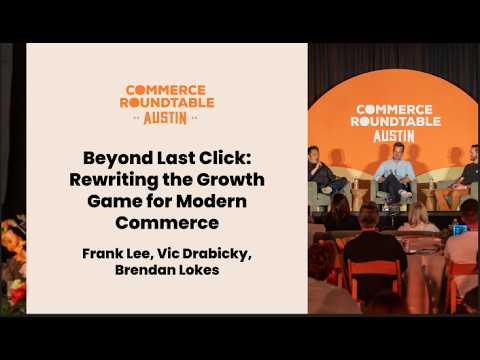
Frank Lee, Vic Drabicky, and Brendan Lokes discuss channel diversification, authentic creative, and measuring growth beyond last click. The panel connects experimentation with the internal work needed to change how a business evaluates marketing.
Frank Lee, Vic Drabicky, and Brendan Lokes discuss channel diversification, authentic creative, and measuring growth beyond last click. The panel connects experimentation with the internal work needed to change how a business evaluates marketing.
For ecommerce founders, marketers, and operators working on paid media & measurement.
Speaker roles and platform examples reflect the session’s original context. This is an archived conversation.
Create a testing plan rather than chasing every new channel at once.
Read this part · 09:43 ↓Use creators and different media formats without losing the brand’s core identity.
Read this part · 25:12 ↓Combine incrementality, media mix thinking, and a clear reporting cadence.
Read this part · 37:06 ↓A quick editorial guide to the key ideas. Read the complete transcript below for the examples, details, and discussion in the recording.
Original recording on YouTube ↗The panel describes a fragmented landscape in which teams are expected to move quickly on everything. Intentional experimentation creates a more useful alternative. Budgets, learning goals, and an appropriate evaluation period help distinguish a promising channel from activity that merely adds operational complexity.
Brendan discusses Carhartt’s connection to real workers and the way that foundation can travel across formats. The panel also emphasizes meaningful variation in creative tests. Producing many nearly identical ads creates work without necessarily producing distinct learning about audiences, messages, or products.
Last-click measurement can miss the contribution of channels that create demand earlier in the journey. The discussion considers broader measurement approaches alongside regular business reviews. Changing the model also requires explaining it internally so that stakeholders understand why budgets and expectations may change.
From the recording’s auto-generated YouTube captions, with filler words removed and paragraph breaks added for readability. Names, numbers, and wording may contain caption errors; refer to the recording for exact phrasing. Chapter links jump to the text below.
Original recording on YouTube ↗0:00Okay? Everybody, we're kind of in a tough spot right after lunch, don't we? my name is Frank Lee. I oversee the Indie Agency program at Snapchat. and I'm really excited to have two like legit folks here to talk about growth. we have Vic from January Digital, CEO and founder of January Digital, as well as Brendan from Carhartt. And so I won't Why don't you guys do your intro cuz I don't want to do you a disservice.
0:29Brendan, go first. Sure. Hey everybody, Brendan Oaks. head of brand media at Carhartt. I've been there for 14 years. So I've had the the pleasure of being able to see and support all of the growth that we've experienced over that period of time. And through our partnership with January Digital, being able to take our brand and business goals and translate it into strategic media plan and being able to drive growth and new consumers for the brand.
0:54Mine is not as interesting as that. I'm Vic. I'm founder at January Digital. I started the company about 14 years ago as well. prior to that I worked running global media for a bunch of different fashion brands in New York including Tory Burch, J. Crew, those guys. and January Digital, we are a retail and beauty and CPG consultancy, media agency, staff augmentation, all that kind of fun stuff. Awesome. You know what's crazy? Brendan, when you said you were there 14 years, I thought that was super long.
1:23But then you told me Carhartt's been around for 130 years? Yeah, over 130 years. And I think the big thing for us is just making sure we carry on that legacy. Right? It's unbelievable. And you guys both started the same year. So you came into the league That's right. >> year. That's right. all right. So let
1:39me set the context and the stage here for today. So first off, I think it's fair to say a lot has changed just in the last 12 months. Like buyer consumer journey has changed dramatically. one thing that really comes to mind is like with LLMs being so pervasive now, you actually need to as a brand, you need to provide an answer to a question. It's no longer things like let me show up on page one of the SERP as an example. But really fundamentally changing things on that side. And then second thing that is has been around but is even more pervasive is the fact that you have to focus on new customer growth across all your channels, right? And so, you know, increasing that customer to file that first party data on new customers is so critical. And so both of those things are true, then the way you measure, the way you think about how to define contribution to those two areas dramatically changes as well, right? And so those are like top of mind thoughts
2:36that we have at Snap. And so I'll start off with like a major like let's get to the point question for both of you guys.
2:43What is the single most challenging thing about driving growth right now? You have to do everything all the time immediately. And I'm like I'm not sure if you guys if that resonates resonates with you guys or not. But I think just being having dealing with a whole wide range of of clients everything has been sped up exponentially versus where it was a year ago, let alone where it was pre-COVID. And so now you have the situation where everybody feels as though everything can be automated. So the the results have to be immediate and the actions have to be immediate. But the real world hasn't actually caught up to that. Consumers aren't real real time.
3:24We we fool ourselves into thinking that because we change this one little thing at this exact moment that the next outcome is specifically derived from that one little thing. And that's almost never the case. And so it becomes this sort of like thing where we have to do all of this all at once. It's just kind of ends up being a bunch of noise except for when brands can really slow down, be really conscious about what they're doing, be really intentional with what they're doing. And that's those tend to be be brands and not to like not to pat you on the back too much, Brennan, but like that those tend to be the brands that do really, really well. They're very consistent with where they're aiming, they're very intentional with their actions, and that tends to be where growth comes. Yeah, absolutely.
4:02And I think that's for us when we think about even just the the fragmentation beyond that and thinking how consider we have to be of every single channel, it's the same thing for creative. And for us as a brand that has been around as long as we have, we we we take all of those stories so incredibly seriously in making sure that we are translating the consumer experience on the job site and the work that they do into the stories that we put out across all of our channels.
4:27And we really have to be considerate about what that looks like, what the format is, what the you know, the mix of content is. And I think for us that's an area that we take incredibly seriously. And it and it's a challenge. It's a challenge to be able to take a story that you know, for one channel can be a little bit more long-form, something that's really interesting and and our consumers can really tap into, but in a world where people are spending a handful of seconds and swiping to the next thing, how do we take that story and and provide entertainment or engagement with the brand on the same level? it's a challenge. But this is where you guys have been so good about this. And like and I know this might not be the case for every single brand in here. So well, one of the things I think Carhartt in particular does exceptionally well is despite being a having a a pretty clear tie to pop culture, they didn't just chase it.
5:13They've continued to stay true to the things that are their core product, their core differentiation differentiators, their core spots in the market. Sure, they pay attention to the rest, but whenever you're just constantly chasing what the next thing is, you inevitably are setting yourself up to fail because those things fall in and out of fashion. But their core work product is still the basis of almost everything that we do, everything that they do. And I think that's allowed them to be really authentic to themselves, which comes across to consumers, which builds longer-term growth, which gets rid of a lot of those variations that you get when you're just kind of chasing the next shiny object. Can we talk about
5:45that a little bit more? No. No. Come on. Just one follow-up. So I I am really intrigued because like we talked about that this morning and how you guys just stay focused on your core principles around your addressable customer, but you have had this like lightning in a bottle of like you've increased your TAM, right? You have more customers and you know, you may not be talking like if you were to try and explain that for you guys cuz there's other brands that have had the same type of philosophy. Let me just stick to my core. Let me speak to my customer and then but for you, you've kind of veered off and got a lot more. Like my 16-year-old son loves your brand. He is not your core demographic that you're marketing to. I guarantee >> building railroads? No, he's not building railroads. Yeah, I mean I think that's something that's so interesting that remaining true to who we are is is really continued to prove out, but it's also when you take a look at the market
6:34that the what work is and what work means to people continues to change and evolve over over time. And so that's something that we've had to really stay very much on the front end of so that we're not only speaking to the consumers most effectively, but we're designing products really tailor-made for what their needs may be. And so when we're listening to the consumer throughout the entire process and delivering on something that truly helps be a solution for something that is a pain point, that's really where we start winning and I think that is something that can take and drive a really broad halo against a different audience that maybe that's not who we're reaching, but the values, the functionality, the value of the things that we're producing really come through.
7:17All right, Vic, question for you on this front. So you had mentioned earlier things are just getting faster. Some of it's a bit noisy, but it is I think we all agree things have gotten faster. What are you doing in your agency to make yourself just a little bit faster you know, every quarter, every year? Like how are you thinking about that to get velocity going a bit more? yeah, so I have all of my gray hairs because of this. Just try and shut up.
7:42>> [laughter] >> He and I have known each other for like 25 years, by the way, so when you didn't have gray hair. yeah, so so there are a couple things. I think we tried to be very conscious not to just chase whatever comes next. not in the same I I know I just said that about the brand, too, but we built a series of very logical systems in place. We took a very a very tactical approach to evaluating where every single person in the organization spends time, which of those are repeatable tasks, which are not, which are tasks that clients find valuable or results find valuable versus what's work. We put a dollar value against each of those, and we worked our way from biggest chunk of dollar spent to lowest value all the way up. And so through that we built a whole series of systems that automate low-value, high-time-intensive work, a ton of AI agents, blah blah blah, all the other that you guys hear all the
8:33time. It's like it is all built on those same same principles. and so once we started building those, the same time we put in a very clear cultural requirement, not only in hiring, but in people that were there now to go, "Hey, your job here isn't to do tactical work. You didn't go to marketing school or you didn't become a marketer because you want to work on Excel all day. Great. You have to refocus and do things that are either creative, materially move us forward, challenge status quo, something that we something that is that gives more value than a repeatable task." And so that that change is hard because you find out that maybe some of the people that you really like in your organization maybe aren't necessarily the people that are going to be there in a year or two because they want to keep doing the same thing over and over. And unfortunately, we just don't live in a time now where you can do that, arguably ever, but like now more than ever where you can have
9:23that. So we had to have some of those hard conversations. But on the opposite side, you also found a bunch of people that were going that said, "Oh my god, thank you. I was so sick and tired of doing that Now that I can automate I can go do this really amazing piece of creative, or I've got these really crazy ideas. Let me see how I can bring them to light. And so it it required both of us to have a very tactical approach to the business as well as sort of a cultural change to our business, too. I
9:43love that. So, I'd love to get into my next question here, which I think will I'm asking for an example. So, a lot of complexity, a lot of challenges, your approach to media planning has changed in 2026 as a result. So, when it comes to allocating budgets, when it comes to optimizing those budgets, what are you looking for in like that broader channel mix today? That's a question for both of you guys. Yeah, I mean, for us, we're really looking to find ways to use our channels that they are best suited for. And so, we're thinking about from the brand standpoint, obviously, we're trying to reach new consumers and bring as many new into the fold as we possibly can, but it can't be done without ensuring that the channels that we're investing in are invested in such a way that we're able to continue the full consumer journey to be able to connect the messaging all the way through from, you know, first touch point all the way through to conversion. And so, for us,
10:34really finding ways to creatively tell those stories and connect the dots for our consumer to make it as easy as possible for them to choose Carhartt, whether that be through our our online site or any of our wholesale partners. Yeah, but one of the things that you guys do great and and and like we were we were we're very lucky to work with a ton of clients and I love all of them equally. Don't get me wrong.
10:55However, like one of the things that's really been amazing about Carhartt is they simply they they have a cultural like subset within them that goes great. Our business is wonderful. Let's disrupt like 5 to 10% of it a time. Let's be methodical and always testing, getting uncomfortable, pushing beyond doing just Google Meta. We could be doing Google Meta for forever and then the best we could do is as good as everyone else doing Google and Meta is. And we can all just sit back and take the 10% tariff that they charge us every single year.
11:25Or we could go test some new things. And so, organizationally, they have a culture of saying, "Let's go test new things." Methodically, let's go test new things. Whether it be Snap, which I know we're on a Snap panel, so I'm not trying to shill for Snap, but like is a phenomenal platform. When we look at incremental ROAS on it, it tends to outperform a lot of the the channels that you would look at right now and go, "Hey, these are my best channels." So, I'm not shilling for you, Frank, cuz you're up here. but like quite honestly, and there are other things out there just as well. There's TikTok, there's Digital Home, there's a whole host of other things that you guys can do. And I think culturally, you guys have done a great job of saying, "Hey, what are those sayings? Let's not go test them once, cuz the first time you test it is going to be the worst result you ever get.
12:05It's let's set up a plan to where we can test this thing five times, and hopefully each time it gets better and better and better." Well, yeah, and I think even to that point, like it takes a a good partner to be able to also push us, not to shill for you. but it truly does, to be able to understand the culture of our organization, the way that we operate, so that we can move into these spaces at the right rate, right risk tolerance, to be able to sell them in most effectively.
12:30to be able to have the ability to take these risks and and in a way that is controlled, so that we do learn and we do drive growth. Here's the thing though, is a lot of it fails. And so, if you're in an organization that is so tightly leveraged that one failure makes you go, "Oh my gosh, I'm really nervous." There are other issues you have to solve first. Like what we always think of it as like we have to have an 80% success rate. If we have a 100% success rate, then we are way too conservative with our ideas. And if we have a 50% success rate, that's just a high-risk environment. So, we always aim to be at about 80%, where we're pushing ourselves way outside of where we're comfortable, but not so much that we're risking the business or the relationship or jobs or those sorts of things. And so, we found that to be about right, whether it be, you know, a company that's $50 million or a company that's a couple billion dollars. Like
13:22that tends to be about the right balance to where you're pushing new and and keeping yourself on your toes, but not really having huge risk. It's funny. As you're kind of explaining the Carhartt ethos around the way I kind of interpreted it, you're just putting aside a little bit just for innovation and testing, right? And there's many brands that don't necessarily do that or have the luxury or you know, got to hit your quarterly KPIs or your monthly KPIs. You guys have been around for 130 years. So, the fact that that muscle is pervasive kind of speaks to the longevity of the brand in my opinion. So, I thought that's pretty cool. Yeah, I think it it speaks also to I think over my time at the the company and the growth that we've seen. I think it's a 14 most successful years in company history.
14:07>> I take it all because of me being there. But no, I mean, I think that culture, that the way of operating has driven that growth. It has continued to push us forward in a way that a heritage brands challenge is sometimes challenged with.
14:22So, a follow-up question on like the channel strategy and the kind of the the road map that you build, you do a lot of the upper funnel brand work, Brandon, right? What are the some of the KPIs or the key indicators you would want from your performance marketing team to help inform if you're on the right track? Yeah, I mean, it's a great question. And for us to like even beyond as we're having conversations with senior leaders, it's not enough to just say, well, we're seeing positivity positive results from the platforms and you know, give us give us some additional budget to continue to do more. We really need to have a strong story that shows that we're bringing in the right audiences, we're helping drive efficiencies down funnel, and we can then fuel the flywheel again to go find more of those valuable customers. And so, being able to tell that full story tied together from platform metrics in campaign run coming back post campaign, having quarterly brand health reports, being able to look at the full suite of what's
15:19happening in market is a thing that's been able to to for us to continue to gain, you know, senior leadership belief, buy-in in the work that we do, and continue to push the envelope in the ways that we're testing. And so, I think the metrics that you're kind of speaking to are just woven throughout that. We need to be able to look at the full picture. So, sorry, real quick, a follow-up. So, like quarterly brand metrics, and then prior to that, you look at some of the metrics prior. What is the frequency?
15:44Like, do you have like a regular stand-up weekly or monthly? Like, how do What does that cadence look like? Yeah. Daily. >> [laughter] >> Hourly. Saturday. >> [gasps] >> Yeah, I mean, we're keeping a pulse on the business really frequently. There's, you know, weekly business reviews, making sure we're checking in on what's happened over the course of the past week. What are the headwinds and things that we're seeing that are coming our way. from a brand standpoint, we're given a little bit more runway because we know that longevity in market and wearing with our message is critical for us to be able to drive ad recall. but being able to partner really closely with our D2C and performance marketing partners because of all of the reactive nature or proactive nature of the things that they're doing. whatever they may be seeing in market, whatever's happening more macro level that's driving the consumer to to gravitate towards specific categories are things that we have to take into account as well.
16:33We always break into three chunks. We have brand metrics, we have media metrics, and we have customer metrics. So, think of brand as like mid-term brand health. You're looking at anything if you if you have no if you've invested nothing in this, monitoring Google Trends really closely. And there are plugins that can give you absolute values with the Google Trends. Very basic stuff. But you also want to look at things of unaided unaided and aided brand awareness, market share, all those sorts of things. Then you have media metrics. First of all, never use platform metrics cuz they're all completely full of it, right? So, either use an internal system that you have, it's super super cheap and super easy to build things like incremental incrementality tests and MMMS right now.
17:09You can automate those things for almost nothing. Or you can use third parties. We use a host of third parties that are also really good to help make sure that your media metrics are actually valuable. And then you have customer metrics, and that's where you want to look at like your mix of new versus returning, high value versus low value, cross category, multi-category, age groups, all those sorts of things. And so when you kind of build a dashboard that covers all three of those, you get both an eye towards the long term, an eye towards the day-to-day, and the thing that's most important, which is how your customer mix changes over time.
17:39So, we always break things into those three major chunks and have tools that allow us to sort of automate all three of those processes. And and bringing those three things together have given, at least from from from my experience with our leaders, the the comfort, the confidence in the work that we're doing is actually having an impact. So, how many data sources do you use on average to assess whether a campaign is working? Oh my gosh. generally everything is going to fall into those three, right? So, like whether it be Snap or TikTok or Google or Meta or whatever, we're always going to have all three of those. When and how we use them is what is what differs a little bit. I think what we tried to get away from is there's like I think it's the CMO from Airbnb that said they were tired of dealing with the tyranny of daily metrics. And like we think about that a lot, and and we try to stay away from the tyranny of daily metrics
18:32as well. however, we still clearly have systems that are looking at metrics hourly, daily, all of those sorts of things. And those tend to be all of your typical campaign metrics you're looking at. So, there's probably 25 different variations that you can get to. But then when you get to sort of brand metrics or customer metrics, those are slightly delayed. And so you don't look at those quite as often, but even so you're still looking at those at least on somewhat of a weekly or monthly basis. And then ultimately you combine all of those to get sort of your roll-ups, your kind of rolling view of the brand.
19:02So, A zillion. How about that? Just a ton. Who's got plus or minus a zillion data sources? Kidding. I'm kidding.
19:10So, this is I you bring me to another point. Like, I remember early on I was on the agency side and we worked with a lot of high growth companies. And I couldn't get away from daily metrics. It was the like I had to go from zero to one, right? Do you think there's a stage in a company's life cycle where you can move along from last click, daily metrics, hand-to-hand combat, and think a little bit more mid-term, long-term? I don't know.
19:40Like, I'm just curious. Like, is there a stage at which point when you've seen all your clients that you've worked with over the years, this is the point where they're finally thinking about what to do for, you know, the next few months or few years? Is there a point? I mean, But Yeah, the point is like immediately. Like But it's hard, especially if you're brand new and your budgets are finite. >> life is hard, right? Like, running brands is super super difficult. I say that like half jokingly, but there's a guy named Preston Rutherford who was one of the co-founders of Chubbies. If you don't follow him on LinkedIn, it's kind of an annoying post, but his points are really well taken. And he very methodically goes about how they manage their investment in Chubbies to grow from a brand out of the trunk of his car to being a $100 million brand, being a $200 million brand, being a $500 million brand. There are also studies. There's a an economist his name's Les Binet who
20:33has studied specifically marketing economics and effectiveness for years and years and years and years and years. And there's an actual formula you can use to build brand value over time. And the ideal mix over 30 years of measuring it is 60% brand, 40% performance. Like, that that is not a like that's not a random piece. That is studied over and over and over again. So, the the goal is less like a stage. It's more like, okay, I have a goal like if if [snorts] research and academics and macroeconomics say that this is ideal over time. And also there are other folks in my industry who have done this and say this thing is also the same. Okay, let me set that as like a target to aim for. And in order to get there, you're going to have to be uncomfortable some of the time. Right?
21:21We think that uncomfortableness is about 20% of the time. Other people may have 50 or whatever, but you have to be disciplined and set yourself aside to push yourself towards that. Again, otherwise like there's a class action lawsuit against Google right now where if you advertise in the last few years you can you can all sign up and get your rebates because Google was artificially inflating prices. That's not to knock on Google, but it is to say that if you're beholden to one spot, you're beholden to how they decide to act. And so you kind of have to take those choices to de-risk yourself in that time. So it's less of a point in time, it's more of a culture like as we talked about earlier with Carhartt as well.
21:57okay. >> Sorry guys, you're getting me all worked up now. I'm sorry. >> I totally went down the rabbit hole. Let me get back get us back on track.
22:03So with all the changes with media mix, Vic, this question's for you. How are you advising your clients around their media mix differently in 2026? yeah. I I mean we we are clearly in case you haven't picked up on it like we're big on diversification. We think it de-risks over the long term. It allows you to find market share that your competitors haven't. So we will continue to to sort of push in that direction. Like it is it also makes the job a lot more fun.
22:29Right? Like if you can come up with really creative things like we've done some really cool like we were we were really lucky. We worked with these guys at like probably 18 months 2 years to do a huge partnership with Yellowstone and with Luke Grimes where Luke Grimes outside of Yellowstone created content for us. That was awesome. He went and everywhere he went and performed he's a musician. That was great. We got to go see that. He
22:47wore Carhartt all that all the way down to where like the series finale we had all sorts of TV rights. We had actors wearing product in the series finale and it was the at the time the highest rated streaming show the season. Like that stuff's really cool and fun to do. So like we push towards diversification as much as we can. We use incrementality to help judge right away things are working or not working. Then we look at customer and and brand health on top of it. Snap is in the mix, TikTok's in the mix.
23:15There's a lot of things you can do with digital out of home, especially if you're pushing to stores right now, which is super cool where you can track where that a phone was exposed to your digital out of home and then walked within proximity to your store. That's a great way to drive store traffic. there there's there's quite a bit that that I feel like you can do right now that is interesting and worth doing.
23:33Yeah, and and we're talking about even just getting back to Snap. a few years back we tested a few different AR executions to be able to make sure that we are keeping consumer attention as long as we can as gamified as the experiences are, it is still time that these people are spending with your brand and being engaged with your brand. And when we did it during the holiday season, we're able to test two different lenses, one where it was very much more tied into our brand campaign and then the one was that much more holiday shopping in-store try-on experience. And the combination of the two supplemented with other video ads performed incredibly well. And those are things that I will say people were pretty uncomfortable with internally. Like I love the idea of it, but the execution when you get down to it it's like, "Oh, is that how we want to show up as a brand?" And I think you need to be able to to structure your
24:23campaigns and your budgeting in such a way to be able to allow for those types of tests because that's where the consumer's spending their time. And you're competing for their time across everything else that they're consuming throughout the day. And so how do you do that in a meaningful way? Yeah, you know, I I do like that a lot about our company. We always had these really cool solutions around AR. Helps kind of create a story or creative landscape still the story, but you know, we've invested so much on the DR side, we kind of have both options now. So like that's what's cool. Like you can use dynamic ads on one side, you can use AR lenses on on other. But so speaking of that, speaking of creative around all these things. So you have these different channels, you figured out where to kind of go to.
25:03Once you've come up with that right channel mix, what are specific creative tactics that you seem to be leaning on today? Like what are some of the things that are that you're seeing work well?
25:12Yeah, I mean, it's [laughter] I think a little bit how you started like it's everything. Like it is everything all at once and that's kind of what's being demanded of brands anymore. And so for us, when we're thinking about telling brand stories across these more passive channels and experiences, we want to be able to have something that's meaningful, something that really connects with the consumer and it's always going to be video for us, but making sure that we're pulling in statics and stills as well as leaning really heavily into creators and being able to contextualize the brand and what it means on the day-to-day. And having real people, people that depend on Carhartt to be able to be a part of those creator campaigns. We like to call them friends of Carhartt because we do have these long-term relationships with all of our creators and influencer partners and we think that is so incredibly valuable. I I know they're talking earlier about some of the transactional one-and-done not being the way to go and we agree.
26:03Like we love to build long-term relationships and feel like the value that you get out of those partnerships far exceeds what you would get if you're just doing a you know, per campaign transactional basis. You get people to go above and beyond for you, over deliver and really be able to fuel a lot of what we're talking about from a creative standpoint because it is challenging to produce the amount of and the variety of content that's needed anymore.
26:26Yeah, I I feel like it's definitely video, it's definitely UGC and creators without a doubt. That is the heaviest place that we are seeing it, but I think what you talked about is is exactly right too, which is like and and one of the things that you guys do really well and another brand that just does this really well is Crocs of all people. They will only do a partnership with someone if they already liked the brand beforehand. So it's you sort of take that same sort of approach as you get to creators or or or any sort of UGC is it somebody who genuinely likes the brand, have they for a while, or is this just an opportunistic moment? Like customers can see through that, oh, we did this really awkward collaboration because we both seem like it might be cool. Like no. And I think that's one of the things that you guys do extremely well. And I think it's something that brands get wrong that isn't easy thing to get right. You can
27:13always almost always spend less money with a creator that is authentic and get a better result out of it than trying to go for the big one and just have it feel really weird. Yeah, I I I would say that even extends to things that we do when we scale even larger. So, that you mentioned Luke Grimes, he grew up I think he was working pouring concrete in his younger days. And so, even when we get to that scale, whether it be athlete or celebrity, we want to make sure the person is authentic and we fit into their lives. We're not just trying to find people that give us reach for reach's sake. We want to make sure that we can tell something tell a meaningful story that really connects.
27:47Wait, do you know the Highmark Stadium stuff? Can you share that? Yeah, yeah. >> go for it. Go. >> [laughter] >> so, this past fall we launched launched a campaign around the new Highmark Stadium, so the Buffalo Bills Stadium, and worked with Thurman Thomas to be able to to talk about his story, Hall of Fame running back, and he has since started a construction company. And as a part of the construction company project, he is building a portion of the new stadium. So, for us it became this perfect storm of a marquee construction project, a really known high-end talent that has a really authentic tie to the brand that gives us something that we can go and take to the the NFL broadcast. We can bite-size it into social content. We can find ways to to really lean into various channels in a way that makes sense.
28:35Like that's the kind of creative stuff though that's like like you you can feel Carhartt in that. Like you can feel Carhartt like making the stadium with this guy who was already a Carhartt fan. Like that's the kind of stuff that just like really differentiates sort of like your approach to creators versus the very passive like I paid you 10 bucks make a video. Right. Like the authenticity is so pervasive I think in our industry now. It's nice to see real stories. That wasn't a fabricated situation. It was a genuine thing that Thurman Thomas wants to do. It's It was pretty cool to hear. I didn't know that was >> But those are the things we look for, right? Like we're not just going to be, you know, placing somebody into a position that doesn't feel right.
29:14>> Right. Right.
29:16So, a follow-up question on the creative side. Do you guys think about different creatives? Have you seen in your data something work on TikTok versus Snap versus Meta? Like do you guys have any tidbits that you're seeing? Yeah, I mean the biggest thing we've really focused on recently is just ensuring that, like I mentioned, it's really hard to capture attention. So, we we really pay attention to the the hook at the beginning of any of our videos.
29:39We iterate a handful of different variations and then be able to test them against each other and then optimize to what's performing best and then take that result into future creative so that we can continue to double down on what we see working. So, I would say that's probably the biggest one that we're spending a lot of time in and that goes across all of our video content. So, everything we work on with creators to things that we're producing and so on. Yeah, I mean I wish I could say that like here like the three hacks that make it all work, but there really aren't any. I think the child the thing that we see most often brands make the mistake of is they think vol- just simply volume is better. And they essentially make the exact same piece of creative with like tiny tweaks.
30:18And and the meta algorithm doesn't actually see those as differentiated. So, you've wasted your time and all of the infrastructure you have to have to load and track and report on all this kind of stuff and you haven't actually done much to it. And so, volume is a good thing as long as there's clear differentiation as long as there's a clear like matrix of what you're testing where, when, why, how. Is it single product? Is it multi-product? Single, model, multi-model, product, lifestyle, life like you can build a matrix to to be methodical about it. And then when you do that, that's when you first get your next set of learnings. And when you have that next set of learnings, it makes it much easier to then make the second round of creative more effective.
31:00For Excuse me. There's a a creative app called Motion. If you guys haven't used it before, it's called Motion app. It's a pretty cheap, easy way for you to not only track effectiveness of all of your ads, but you can also set up competitor what watch list to see what they're doing, see what's good, what's bad against. And you also look up set up categorical watches to see, hey, in the overall, you know, skin care category, what's catching on, what's not. You can look at hook rates, all these sorts of things.
31:28It's pretty affordable. It's a pretty good app. And then if you plug it in with all of your campaign data, it becomes a really rich source of what's going on and knowing what, okay, was it the optimization I made on the platform against the audience or was it the creative that made the change? And so you can build really smart integrations between the two that help better inform your creative in the long in the long term. Yeah, I don't I don't think that can be said enough. That tool has been so incredibly valuable for us being able to peel back a little bit of the the black box nature of the platforms to be able to understand from a creative specific level what's working.
32:01I like Motion. It's fun.
32:03So speaking of that tension between volume versus distinct swim lanes of creative concepts, and we don't I don't want to debate the volume question, but what are you are you guys using any tools, AI tools, to help scale in that world of creative, whether it be AI generated production or iterations and editing, like tell us a little bit more about what you're using the tools lately. Yeah, I mean, yeah, we're doing we're doing all that. So we we work primarily with brands who have a very clear creative perspective.
32:36So folks like Carhartt or Steve Madden or a whole host of others. And so, like the chance that we were going to come in and be like, "Hey, we're going to redo all your creative." Like, that wasn't going to happen. But, so instead we built a series of tools around it that go, "Okay, when you give us creative, how quickly can we chop it up? Can we iterate it? Can we change the colors of the shirts? Can we change the lengths?
32:55Can we do any of those sorts of things?" So, and it's all >> like AI based. >> It is 100% AI based. And we've gotten to the point now where we can take a single image and turn it into an 8-second video without any We go frame by frame to make sure there aren't any jump skips, those sorts of things. And you can do all that through tools that are not all that expensive now. but, it does still take somebody who has got the right like creative eye to make sure that it has sort of like the taste level that you want. And I think that's maybe the biggest struggle we've seen in the industry is that when the tools are ubiquitous and anyone can use them, it doesn't mean the outputs are all going to be good. You still have to have someone who understands what the brand is, how to position it, how it should look, how it should feel, any of those sorts of things. And so, where AI creative goes bad is when people lose
33:39that taste level and instead it just becomes like a commodity of sorts. Yeah. >> [clears throat] >> And for us, we always always have real people that are working on job sites in every single one of our shoots that we do, whether that be a a seasonal photo shoot for, you know, still imagery or any of our video shoots. It is always real people and we're not going to put any of that content necessarily into an AI machine and have anything kind of spit out. We want to make sure that we're being as real and authentic to those people as we possibly can. But, when it comes down to the iterations of various things, you know, where where do we want our creatives our incredibly talented creatives spending their time?
34:15Changing the color of a shirt or going and finding, you know, more interesting stories and more meaningful things that we can do. So, that's kind of been the split for us. Well, and that's where it where like us as an agency like amazing. Like, go put your like your great creative and art directors to use creating new things for us, then let us do the boring stuff. Like cuz like that's the best thing. Like that's the heart Like if you're running media, like 60 to 70% of your effectiveness is your creative.
34:40So, I mean, I know I'm an agency, so like if you have an agency and you're beating them up about results, 67 60 to 70% of time it's not their fault. It's cuz you gave them creative. Right? Not really. Your agency might suck. Like also possible. But like those are the sorts of things. And so, whenever you end up with a client who's like, cool, like you take care of the blocking and tackling. We're going to go create net new awesome stuff. Like that is like I hate myself for saying this. That's the flywheel.
35:06of like that's the flywheel that you want though. Now I've got a constant stream of things coming in that I know we're going to be really high quality. Awesome. I don't have to worry about that portion anymore. I can actually worry about putting it to the best use possible. I was over at another platform years ago and I remember we did a big meta-analysis. Pun intended. of like 5,000 different DR campaigns to see what elements of a campaign drove the outcomes. And it was right. 55 to 60% of the impact was driven through the creatives. So, it just consistently tracks. Quite follow-up question on the AI points.
35:44Does the use of these new tools change the scope of work that your current creative team does? Like how are you evolving their responsibilities? Are you cutting some costs here and there? Like how What does that world look like? I think in an in an ideal world, kind of as I mentioned, we're putting them to things that are more putting them to work on things that are more meaningful. and not the just post-edit production level work. And so, I think it's a it's a shift as a as a as opposed to a replace. And and we have so much talent internally that we we value everything that they do, everything they can contribute to the to the work. And it's just what are the tools that are at your disposal that can make you more effective, more efficient, and the work better.
36:26Yeah, I think we see it like I think there's a lot of debate over on AI of whether or not it's a replacement of people, but what we have found is that it's actually like a trade-up. Like whenever you can I want to replace the boring work to allow you to do the amazing work. Now, if you can't do the amazing work, that's a different story, right? But like we're less worried about replacing people with AI. We're more about freeing them up to go do really cool amazing things. It's kind of what you're saying earlier. You have folks on the team. Some of them they don't they don't want to change and so that's a hard conversation, but a lot of people do and they want to grow and they want to get better and spend their time on the things that are much more kind of impactful.
37:05okay, so switching gears a little
37:07bit. we talked about some channel mix audiences. We talked about the creative side. so if your approach is changing, the creative changing, how are you thinking about measurement differently in 2026? I nerdily love this. I think measurement changes are the single greatest impact that we have had to marketing in a long time. Because here's the thing, is for years we all just we all just bought whatever Google Analytics told us. We just like accepted it cuz we had no other option.
37:37>> when Google bought DoubleClick and we were like, "Oh my gosh, Yeah, it was IRS has to do our taxes now." >> Yeah, right. But like for years we just looked at we just looked at Google Analytics like, "Yep, whatever it says." Meanwhile, the whole thing it said the whole time was that it's like that only Google was great. That was never the case though except now it's super super cheap and easy to do incrementality, MMM, customer health customer health, customer journeys, all of those sorts of things. And I think what you find is like the second you run an incrementality test across things, it doesn't look like what you think it does.
38:13And that's amazing because now you've got those dollars freed up to go do something else. Whether it be Snap or whatever it is, Skywriters, I don't care, but it frees you up to go do something else. And that something else is the differentiation between you and everyone else that's in your competitive set. If everyone just does the same stuff, everyone ends up in the same spot. Those that can find a creative way to do something slightly different, that's the edge you get. And sometimes all it takes is a 5% edge for you to make a material financial difference, which repositions where your company is going.
38:48Yeah, absolutely. I was going to say the the work that we've done this past probably 2 years with Measured and and measuring incrementality has completely shifted the way that we think about our dollar allocation for all of our campaigns from >> me an example? >> Yeah. Yeah, yes, specifically shifting dollars further up funnel. So, you know, rather than spending on people that we know are already going to purchase, let's shift those dollars into higher incremental channels so that we know that we're bringing in more new consumers and and fueling that demand more specifically as opposed to just making sure we're capturing the lowest hanging fruit cuz that's what Google will tell you is that you need to continue to do that. And ultimately, if we're doing our job as brand marketers and we're the ones that are telling getting consumers to pick and think of Carhartt when they're going in store online, we don't need to be spending more on those people. So, we can drive greater efficiency down funnel and bring those dollars up so that we're more
39:39effective driving product consideration across any of our social channels. And and it's proven out. Yeah. I mean, that's candidly like that's how we started working with Snap as we had really good third-party measurement that said, wait, this is actually far more incremental than brand search or PMAX or any of this other stuff, so let's go do it. And for those that are looking for partners, he he mentioned Measured. If you're enterprise level, Measured is a really good, kind of expensive, but really good solution. I think they're actually based here in Austin, too. If you want something that's a little bit cheaper, there's a company called Work Magic, which is great MMM and incrementality testing. There's another another Fospha, f o s p h a, which does similar things.
40:19All three of those are like really decently established, but will treat you the right way and do good work. If all of those things seem difficult, then you can plug almost any LLM into Google Meridian or Meta's Robin and come out with a pretty good output for almost nothing. And I know it sounds like scary to go do it, but it's actually like I was able to do it and I'm pretty dumb. So like it's you guys it's it's relatively easy to do.
40:45The other thing that I'll add on to the the testing is you need a pattern of results. So even if you do an incrementality test, the results are the results, but that shouldn't change your behavior immediately. Like you want to see a pattern of things. It could be so many reasons why, right? Campaign could have sucked, timing could have been shitty, whatever the case may be, but if you start to see a pattern, then you kind of trust them a lot more. Yeah, and and really specifically to that point, we kind of ran into something very recently with YouTube in that we need to continue it was a seasonality. Our brand is relatively seasonal in that we are very well known for our outerwear, and we see opportunity in the warmer months as we move into lighter weight fabrics, more performance fabrics, and what we've continued to see as we've done these tests is the closer we get or the more frequently that we run these tests, the closer we get to a clear
41:34picture on what those channels are actually driving, which is far better than what last touch was telling us was zero. And so, [laughter] you know, when we bring in incrementality, we get way more of a clear picture from a brand standpoint of what we're actually influencing across the business. and so, continued repeated testing has started to reveal much much more fine picture and something that we've been able to just use to be able to drive further investment into those channels, too.
42:00Okay. So, sorry. Wow, time flew. We have a couple minutes left. a follow-up question for you guys. So, you have a different methodology for measuring the efficacy, right? How are you enrolling the broader org? Like how are you enrolling your board, your CFO, your finance group? It's internal marketing. Like it is taking what we're doing externally, the results, the impact, and then marketing internally effectively. Like we're bringing our senior leaders along at a regular rate so that in meeting with them constantly so that they're comfortable in the results that we're showing. We're translating the performance into language that makes sense for them and helps achieve the goals that they've set out. And that then has unlocked future budget opportunities as we go along. And it only comes with spending that time building those relationships and letting them know that you're being a good steward of the brand in in those ways and being able to prove it. Is it exhausting?
42:56Can be, but it's great. Like it if the end result is getting increased budget to go do more cool stuff, then I'll do it all day. Yeah. Yeah, I mean he's he's exactly right. Like if you if your organization is trained to look at something one way and you show up one day and go, "Hey, we're going to look at it differently." It probably isn't going to work out so well. Instead, you have to be methodical about it. So like very tactically, one of the things we do whenever we run across clients who are really stuck on last click, whenever we deliver their reports, we deliver the exact same report they are always used to.
43:25And then we add one column at the end. And the next column that column says, "Well, here's incremental value. We put it here to what just so that you get you familiar with it." And then over time, we add another column. And this is the media mix. and then the next one is here's your customer we slowly add those things over time so they get used to them, they understand where they are. And then over time, if you're really good at it, you can start drawing correlation and causation versus just putting out there going, "Hey, pay attention to this thing."
43:51You can very clearly go, "Hey, look, we had a good week. And do you see how this new column we added directly aligns with that?" And most CFOs understand correlation and causation super super well. So it says like as close as we can get to sort of their language without falling asleep talking about EBITDA and things like that, but it has to be like a methodical and sustained effort. Otherwise, you're not really going to get anywhere and it's really frustrating.
44:15Can we give it up to these two? Brendan, Vic, thank you very much. >> [applause]
Join Commerce Roundtable in 2027 for focused learning and conversations with people working through the same challenges.