 37:15
Miami · 2025

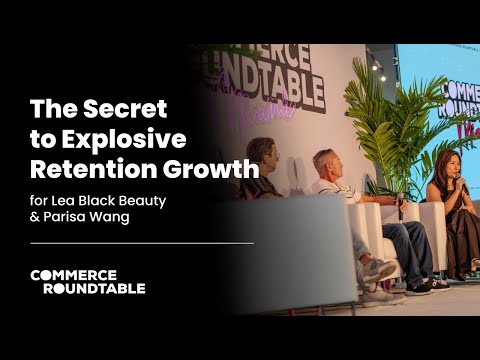
Nate Rosen talks with Parisa Wang and James Brown from Lea Black Beauty about customer education, abandonment flows, and the path from first visit to repeat purchase.
Nate Rosen talks with Parisa Wang and James Brown from Lea Black Beauty about customer education, abandonment flows, and the path from first visit to repeat purchase.
For ecommerce founders, marketers, and operators working on email & retention.
Speaker roles and platform examples reflect the session’s original context. This is an archived conversation.
Customers need to understand why a product is worth buying.
Read this part · 02:04 ↓Different products create different barriers to purchase.
Read this part · 04:58 ↓Review abandonment and re-engagement flows as part of the wider conversion journey.
Read this part · 07:27 ↓A quick editorial guide to the key ideas. Read the complete transcript below for the examples, details, and discussion in the recording.
Original recording on YouTube ↗Customers need to understand why a product is worth buying. Parisa describes her handbag brand and its positioning, connecting product quality and price with customer education. The discussion considers how retention messages can help people make a decision instead of relying entirely on another promotion.
Different products create different barriers to purchase. James discusses Lea Black Beauty and the challenges of explaining its products to potential customers. The panel connects those questions with useful follow-up content, recognizing that the same email sequence will not serve every category equally well.
Review abandonment and re-engagement flows as part of the wider conversion journey. The panel discusses using Instant and other retention tools to make more of existing traffic. Product quality and customer feedback remain central: better follow-up supports the relationship, but cannot replace a product people want.
From the recording’s auto-generated YouTube captions, with filler words removed and paragraph breaks added for readability. Names, numbers, and wording may contain caption errors; refer to the recording for exact phrasing. Chapter links jump to the text below.
Original recording on YouTube ↗0:00educate the customer too as to why that product is worth that the value in it. So it's not just you know throwing coupons or discounts or promoting things like that. It's really about educating and we have learned that those flows are actually showing us a lot better conversion. We try to identify along the way like what converts that customer and then make sure they're going into that right flow. Product always comes first. I think the most important part is actually to improve your flows. If you can do your AB testing of your regular flows or like be with your upgraded version or improvement of the flows whichever that's you know has done a better job is the one that you should be focusing on and to adding on those instant or whatever you know software that you want to test. So ultimately it's either the product or the content.
0:51So that's the most important part and that's the core. All right. How's it going everyone? It's
1:01nice and cool in here. I'm N Rosen. I'm on the partnerships team here at Instance. and I'm joined here by two of our customers. Pris from Pris New York City. New York City. And James from Leah Black Beauty. Welcome. So, I'm
1:17going to start off just describing a little bit about Instant and then we're going to ask these fine two people some questions. So, brands agencies put a lot of effort into getting people to your site, finding out about your brand. We just heard you will talking about that. And what Instant does, we're a retention marketing tool helping brands identify anonymous customers. So getting more out of the visitors to your site and making your email and abandonment flows a lot more profitable. We often see like an 80 to 100% increase on abandonment flows when we work with some of our brands. It's all first party data. We pixel the site.
1:58It's really simple and really fun. Like I said, I'm joined today by two of our amazing customers. and Pissa, I'd
2:06like to start with you. When can you just describe your brand? Yeah. my name is Perisa Wang. my it's also the name of my brand. so I started the brand when I was working as a designer in New York City and I couldn't afford the very handbags that I helped design. So I created the brand that's crafted with the same manufacturer as luxury brands but without the 10x markup. and our main product category are handbags. Yeah, we recently onboarded instant and we see pretty good result 42% uplift on in our email flow. Yeah. automation and that's how we got started with instant. No, it's really good. I mean saw 14 XR 42%. Oh yeah. Yeah.
2:59Awesome. all right, so question for you. Handbags, higher ticket items generally speaking. which naturally means a longer decision process. Was wondering how you approach staying connected to these shoppers during that consideration phase. And I know it's only been a short period of time, but have you seen an uplift from instance in that consideration phase? Yeah. So, the average order value for our customer is around $400 to $500. it takes an average of four to five sections for the customer to make the purchase. Correct. So during the first touch point to the end point when she makes the purchase there an average of seven days 7 to 10 days for her to convert. And during that day during those that period we obviously has your you know your channels to keep her engaged while starting from some of the things like Facebook Facebook ads you know the email flows that we are already doing and all other like influence marketing all other channels
4:09instant is what we recently tested it's they have this pixel driven technology basically just tracked on your website and to capture some of the lowhanging fruits. Well, those are the customer who are visiting your site anyways and we're always thinking about ways or you know any softwares that can increase our conversion rate in general and yeah. Amazing. Yeah. And for a little bit more clarification on on instant how that works is we pipe all of that data directly into your Clavio flows. We'll duplicate the Clavio flows.
4:48So we know what's attributed to Claio and what's attributed to instance. So we let Claio do that work first and then we come in on top of that. James, you
5:00have a little bit of a different brand. A little bit would love to hear a little bit about the brand and then what question for you. so I run Leah Black Beauty Skincare. Leah's kind of a public figure. Some of you all may know her from reality TV and radio and so being kind of a known celebrity using that term kind of silly but anyway being a known personality that brings a lot of attention to the brand that helps us with marketing and things but we definitely have seen a lift with instant since we've incorporated it into the website. we built a new website in 2023 and one of the things we've noticed is that we have a lot of abandoned cart and a lot of that lowhanging fruit that comes in. So what we have been able to do is identify these customers, market to them, send catered and customized emails to them on things that they've looked at maybe with product information. all of this has
5:58been built into the flows and we have seen a 60% customer identification versus the 34% Clavio has been able to do and so it has been a really high identification service for us and then we've also seen about an 8% return on the investment since we started and we just added it in October of last year. That's great. So with skincare often requires multiple touch points. Yes. when someone buys how are you ensuring that people stay top of mind you know throughout the year throughout the sales cycles you know after that first visit what are you doing on that part so we have a challenge because we do sell CBD skincare even though it's topical it is restricted on a lot of advertising platforms and we have a lot of problems with Google and Meta and all of the big players out there because it does have the CBD in it even though it doesn't have THC in it and it is topical Cool. we've found some workarounds on that, but we found it's
6:58very important to identify the customer and then use the email to market to them. email is our top revenue, you know, intake for us. So, the more we can get in front of the customers that way, we feel like that helps us stay top of mind and we see the results through the conversions that we've seen since we, you know, utilized this tool. Amazing. And you know, I know over the past few years there's been rising ad costs, cookie issues and limitations. I should say this question for both of
7:27you, but like how's your approach to re-engagement changed over the, you know, past year, past two years. So well for those anonymous visitors, those are your missed opportunities. And honestly we are well e-commerce is actually very well it it's based on a very simple idea is a formula that start with your traffic and times your conversion equals your revenue. So what we do is really just trying to improve those two aspect you know year over year and for traffics you're working on your six channels. so that area and then for conversion rate it's a way of basically you're you want to improve your conversion rate by testing different things and instant is one of the things that we tested and it worked. So, and we don't do we don't do testings, you know, a lot of things all at once because if you do that, you can't really tell like which one is working or which one is not. so we often time test one thing at a time. And for those anonymous visitors or the
8:37missed opportunities, we are able to capture with the right strategy and with the correct measurements at the end. Yeah. Are you testing anything fun right now? with instant or just anything. I'm sorry. well, yeah, we are at the well we you know we stabilized what we are doing right now and then the next big task for us is again continue to increase the conversion rate. It's also the lowhanging fruit in improving the brand visuals you know a lot of a lot of improvements. James, how are you thinking about re-engaging these these customers who are coming to your site?
9:15Once we identify them and we're able to reach back out to them, we try to make sure that we're reaching them through retargeting and we also make sure our lists are, you know, loaded across all of our channels and that we're reaching out to them. whether they're on Meta or Instagram or wherever we happen to be able to identify them. it has been a really profitable tool for us since we put it in. I will have to say we've only had it in like I said since October of last year but we've we built a new website on Shopify two years ago and the first two years I would say have been a lot of trial and errors even though we were kind of established on Woo Commerce prior to that it's a whole new way of doing business versus the way we were doing it. So there have been some challenges. I think that this has really been able to help us stay in close contact and
10:10also identify our top spending customers and really make sure they're kept engaged over and over. So those are some of the the things that we do other than email are using SMS or any other We can't do SMS because we sell CBD products. we can't do push notifications because we sell CBD products. So we can't do Google ads because CBD. So, you know, so yeah, I'll tell you exactly. We had to build a mirror website and not put those products on it to fool Google in order to do Google ads on the products that don't have CBD. So, it's been a real challenge, but I've learned a lot in workarounds over the last two years. I mean, I come from a corporate fashion background, but this has been really interesting to see how the skincare business does work and how it's been able to really take off online. I will say, you know, we really grew during the pandemic. That's when the brand really I mean Leah has been around
11:03since the 80s that the skincare brand has been, but we really took off during the pandemic and then we've continued to see that grow and try to capitalize on it even though we have seen a slowdown in the last two years a little. So email is the main channel there. Email is absolutely 70% of the revenue comes in from email. Wow. It makes sense with the the CBD limitations. I think something else I want to talk about is, you know, a lot of brands are still prioritizing acquisition, which makes a lot of sense. You want to get more and more people into the fold. You want to grow the business. You want to see a lot more eyeballs in the business, get more people, you know, knowing about you. Oh, you know, over retention sometimes. what's shifted in both of your strategies when thinking when it you know, in your thinking when it comes to where your revenue growth is coming from? Are you sort of shifting your prior prioritization? Not really. Yeah,
11:53equally as important. You know, acquisition is where we spend the most money. You know, we spend a lot on ads. We spend a good amount on influencer marketings and you know, it's important to get the word out there. But then it's also more costefficient you know to do retention to re-engage those customers when they already know you. As I mentioned there's a you know a learning phase of she first getting or yeah for us is she first getting to know your product and then before she makes the purchase. So through that journey you have to you know have enough touch points and it's all numbers game you know you it takes like like for example 30 touch points for her to convert and then you have to build that 30 customer in her journey right so yeah it's just a matter of at the beginning maybe spamming well it's not a right word but I believe that the customer don't know what she really wants yet. So, you have to you have to Yeah.
13:01teach her and educate her and show it to her. Yeah. I mean, that's true for a lot of for most brands. It's the same thing with skincare, especially in skincare. Yeah. I mean, you makes sense the decision process, especially when it's, you know, something you're putting on your skin and it's new and, you know, the the bags are of a higher price point. So, there's like these decision matric matrixes that people put in their heads. And then with food and bev it's a completely different story. but 30 steps is a is a lot. Is that Yeah. Where do you where's that funnel?
13:33What does that funnel look like? Well well for yeah we we have you know analytics tools that tracks that build on our website and tracks her journey. So for example, she first landed on the website by discovering brand through you know Facebook ads and then she would sign up on the newsletters and we have really good welcome flows and currently we also have the add-on of the instant so she keeps her engaged. Yeah. and then keep she her interested while in the meantime educate her through like storytellings and influencer marketings to continue to just educate her on the product before she makes the decision and to make the purchase. you know throughout the journeys it's really just about reduce the friction of the learning curve right same for you James absolutely absolutely I would agree with that 100%. Yeah, you know, when someone doesn't buy from the site the first time and you got to get got to get them keep coming back. How are you,
14:43you know, obviously there's there's instant, there's the abandonment flows, there's the browser abandonment flows. What else are you doing to make sure that you know that site visit, that potential customer turns into profit down the line? Interesting. We I mean we're lucky usually they convert the first or second time that they come to the website but then they don't purchase again for usually about 60 to 90 days and then after that they purchase about every 30 to 45 days it seems like and we'll get into routine and an average of five to six orders a year from a highend customer or I mean you know an active customer. so we really try to identify the c those top spending customers and really cater them. you know our skincare price points are on the luxury side. So they are a little bit higher than drugstore sure compositions and things like that. and so we have to really educate the customer too as to why that product is worth that the value in
15:45it. So it's not just you know throwing coupons or discounts or promoting things like that. It's really about educating and we have learned that those flows are actually u showing us a lot u better conversion than just sending out offers or promotional campaign emails a lot of time. So we really try to identify along the way like what converts that customer and then make sure they're going into that right flow. And we use Clavio like I said earlier which kind of does a lot of the abandoned cards and all the other flows for us. But I will say that instant is our second highest in the out of all the flows that we do right now. It's great.
16:25So are there any interesting learnings you've seen from the abandonment flows that you've you've built and all the data that you've captured from them like how and when people buy. Have you done any insight into that? We have we like I said we've looked to see like what how long it takes to really convert them and then how long it takes for the repeat and so we sort of cater our campaigns around that as well. Yeah. And we're using some tools that kind of anticipate when the customer's next purchase should be, right? So we are able to sort of in advance say it's time for your your you know it's time for you to refill this or whatnot.
17:03And we did have a subscription program on the website. We were talking about that earlier, but I won't get into that. But it has been a challenge and we have where we saw a real buildup in subscriptions during the pandemic and stuff that has fallen off quite a bit. I will say I will reinforce quite a bit. So we've actually removed them from our website as of last month. for, you know, both of you. Are there any any strategies that that it's working for you in, you know, sort of the retention side of of the space? have you seen anything, I guess, like any surprising wins or even sort of surprising losses and like what you've tried out that Yeah. yeah just to
17:47build on what he's saying honestly like with all the marketing tools or like software you're testing the most important part is still the product right like you know the previous panel panelist was talking about product always comes first so and if we're talking about like newsletters like starting with Clavio or like Omnisand the the platforms or like instant. I think the most important part is actually to improve your flows first you know if you can do your AB testing of your regular flows or like you know be with your upgraded version or improvement of the the flows whichever that's you know has done a better job is the one that you should be focusing on and to adding on those you know instant or whatever you know software that you want to test. So ultimately it's it's either the product or the content. So that's the most important part and that's the core. for the surprise wings or you know journey it's it's been tough you know I've been doing
18:57this for the past seven years and we went through you know the wholesale phase the B2B we went through the co phase when we had to switched from B2B to 100% B2C and open a an Asia office just to do China market because China is a total different animal than the rest of the world they have much much more channels you know in the country just very different marketing you know marketing in general and and then now we have the tariffs. So we really have to navigate like a lot you know constantly working on just pivoting and in general and for the surprise wings wins we raised the price last year you know before the the tariffs and we are very honest starting from the beginning and by sending new newsletter letting people customer know that we're going to increase price by a certain date I think it's like September something last year and surprisingly we see the lift in our AOV and we see the lift in our
20:10overall margin and net profit and everything. so I think it's you know it's because of the the product but the product itself is very good is very strong and the customer you know is able to you know I think attracts more than you know to upsell your product right yeah product matters I mean will was saying that earlier product really matters whether it's food whether it's beauty whether it's apparel accessories people remember a good product and people definitely remember a bad product. have you seen a lot of good feed like have you received a lot of feedback that has gone back into the product from your customers? the feedbacks. yeah we do have customers telling us you know what what the next collection should be you know we are well I think it's involving landscape the founders these days I think not only they need to know about the logistic the back end the front end we you know we see there's more and
21:18more founders IP content so last year I started to you know to do a lot of to do like a weekly like a founder content on Instagram and Tik Tok just to connect with the customers because we really are forming a community that like to that convert with us and they like to express their opinions on you know what the next colors or what the next materials they are looking for and we think it's really important to build that connection because ultimately we are designing for our customers and I'm listening to you know our customers on our next collection idea instead of the wholesalers who aren't actually buying the products. So often times you know when we were doing B2Bs a lot of the feedbacks was not not like you know not tested not coming from her. So they're thinking about the numbers, they're thinking about the sales, but while the end user, they are act thinking about their needs, right? Which is, you know, the most
22:29important when you are building the product. James, sort of same question for you. What's what's working for you in the retention side right now? And were there any Well, we have a lot of peaks and valleys in traffic to the website. So, I think that one of the big successes and that's working for us is when when Leah does go out and do something publicly, like if she's on she goes on SiriusXM radio a lot of times on the Jeff Lewis show. you know, both of them were Bravo celebrities at one point in time.
22:57So, they kind of go on there and she'll do promos and promotions. we'll do special bundles limited edition or whatever. So, we'll get a lot of traffic from that on that day and probably for the next six or seven days as the show repeats on the demand and things like that. but what we've noticed is that the tool really comes in helpful during that because there are a lot of people that are like at work and things and they go to the website when she's on and they put things in their cart then they forget or they don't. So what happens is is the Clavio does its thing for the first few hours or however we have it set up. Yeah. And then you all kick in and what I've noticed is and I love the dashboard because your dashboard tells it shows you the actual person and what they spent and how much you capitalize from it. And I will tell you that those transactions are $300 to
23:51$400 more than we're seeing like from our day-to-day transactions that we're just getting from normal shoppers that are coming in. So, it has been we we see more profitability out of it when we do have the higher traffic time. So, I think that's very important to the success of the tool. but you know, then we're able to really retarget those customers and make them a little more long-term and more consistent, right? The power of bravo liberties and email paints and flips. Yeah, exactly.
24:21Exactly. The power of TV. It's amazing.
24:23I know we have a few minutes left. Was wondering if anybody had any questions. Happy to answer. We also have a little booth outside and whatever works. I think Nick's gonna pass around some We took them completely off the website because it ended up costing us almost a million dollars over two years in rehips orders that went out they didn't want orders multiple subscriptions that they didn't realize they had set up. It also did not work well, I don't think, with our current strategy and then the slide out card on Shopify. We use Reby as well. That confused the customer a lot and they thought they were getting a discount and not a subscription. So then they would subscribe and then the next month they'd get charged. They didn't realize what had happened. So it was it was really bad. I will say that the company we were using, I had already decided we were ending. They have also ended their subscription service or will be in June. Yeah. We got questions. Here we go. Yeah. Okay. Thank you. I have
25:30a question that you have two websites. One to drive advertising and you know transfer the traffic to the how does this work in this? So, we had to build a mirror website basically exactly like our main website without CBD. And then we had to take all references to CBD off of the website, including all of the photos of our products that might say reference one of our other products on it. That all had to be photoshopped out of all the photos. We couldn't have any links or anything back to our main Google merchant ID. we had to have separate email addresses for customer service and everything set up. But within Shopify, you just have a toggle between the two sites. So you could go in and fulfill orders from the mirror site or you could go in and do that.
26:16Now, we were also able to install other applications like Shop Pay and things on the site that doesn't have the CB because you can't use Shopay on the website to process the orders. So that's sort of what it was. So it was just kind of like a workaround in that aspect. And it's still working for you. It is working somewhat. And we're actually going to be able to branch out into some other countries with it now.
26:43Dope. Let me tell you, check. We had PayPal for a while and then they froze it after we had six figures worth of money in it. And Leah's husband, who's an attorney, had to write a letter. We got the money back in about 24 hours. But yeah, I want that letter. Yeah, I think I think this whole room would want that letter. You need Leah's husband. That That helps. That's a good question. There's one right behind you.
27:06So, in terms of conversion in your flows, did you notice that people convert more with when they get a discount code? I'm always like kind of on the like I just feel like people are so used to getting a discount code now. So, do you notice that you get more conversion or higher conversion when you do give a discount on that? Yeah, of course. Yeah, of course. That's what the the whole reason why they sign up. But honestly I think it's important to build a brand with your evergreen collection and that's when why it's important to really identify the why and why is why you and that's what how you distinguish with your competitors. there are always going to be competitors and it's just a matter of you know why you stand out in the space and what values you are getting you know when the customer buy from you. For us, it's, you know, you can get the product, you can't get the product from any other competitors.
28:07I mean, unless you spend like thousands of dollars to buy it from the luxury brands because we are like literally producing these bags in the same manufacturers as some of the luxury brands. so that's the value that we're communicating with the customers and you know from that aspect. So when they you know discover you this they think that oh my god it's like this hidden jam that I discovered and it's you it the proceeding value is higher than what they received and that's that's why they love you know following your brand. so and that's your evergreen collection and during the and obviously you're going to run sales, you know, like well it's I I think it's very rare that the brand doesn't do sales. It's just it you definitely need to run sales and that's how you grow. So when when thinking about like your evergreen phases that you're hitting like say 100k and then for whatever sales that you are doing you should aim for 2x of that growth and
29:17once you reach that 2x growth like for sales is actually a very good technique I think like when you do sales your conversion rate increase and your c drops so that's when you actually should double down down on your budget to get more customers to sign up on your newsletter to buy from you. And when that happens, your your customer base increase, your revenue increase doubled. And these customer they buy from you probably from the sale on day one, but they're going to keep on, you know, learning about your your flows, learning about your product, and one day their next purchase like what we studied, it's it's often time higher than their first purchase because they're happy about it.
30:05So, you're going to get another customer with a lower acquisition cost. That's a win-win for you. And then she's going to continue to follow your journey and and your next evergreen revenue goal is should be the foundation of your the sales that you hit two acts of your growth. So meaning that when you run the next sales you are basically doing 100% month-on-month growth on on scaling and that's I think that's how we see how we see you know you can scale as a brand. I would just say you have to decide what kind of brand you want to be first. And that's the most important thing. And that's very hard sometimes to have owners and CEOs and people that look at the bottom line all the time.
30:53But when you train a customer that there's a discount somewhere or there's going to be one, they're never going to buy again at full price. I mean, you're rarely going to have that customer. There's two types of customers usually. There's the ones that want the product because they know it's good quality and they know what they're getting and they're going to pay whatever for it. If they get a discount, they're usually happy every once in a while. So that's why rewards programs and things are good, I think, sometimes, but in the end, you know, it's about consumerf facing. And if you if you're putting it out there that you're discounting the product and ads and things, then the word gets out and then it's really really hard to go back. And I have experienced this in my whole career. I worked for a big brand with 30 fashion brands under their portfolio and it was that was the problem with every brand, you know, and the owners always were like, "Oh, we have to have more
31:46business, more more business." So, it became a discount brand and then it became an outlet brand and this was a top fashion company at one point in time. So, you know, it's it's it's so you have to decide what kind of brand you want to be. You can make you can be successful at it. There's nothing wrong with being an outlet brand and being successful at it, but you have to decide, you know, and then you pay, you have to cater to the customers that way.
32:07There there's an incredible brand Miami based called Comfort. They're kind of like the hoodies and stuff. They run kind of like a deeper discount approach, but the quality of their product is so high that although it's leading and the ads are discounted, when you get the product like this doesn't feel discounted. So the the the consumers are like, "Whoa, I got this at this rate. this product is really good. I'm going to just continue to keep buying because I know I can afford it. So, there's other approaches to this because we don't like running discounts as well.
32:36But there is a there's a certain LTV that they're going to get from you. They are going to be trained to not want to actually buy at full price. But if the product's that good, that's okay. They want to come back and get it. But it kind of comes down to what Will and the boys were talking about earlier. You got to have actually a good quality product. If not, it doesn't matter whether you're running a discount, free gift, they're not coming back, right? And then you can have product segmentation too like you know your winning product doesn't has to be go on sale your hero products they're your cash cow drivers and you can have the product that are slow sellers you know obviously well I I'm just going to mark it down and have them to you know to sell it as soon as possible. So I I think you you can have your product segmentations and the people yeah there are people has different tastes and needs. Thank you. Thank you.
33:27Thank you guys so much for sharing that so much. Thank you everyone. Good questions.
37:15 34:46
 36:31
Join Commerce Roundtable in 2027 for focused learning and conversations with people working through the same challenges.