 39:20
39:20San Diego · 2025

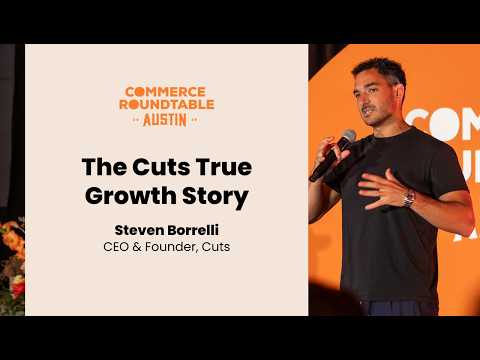
Steven Borrelli discusses the CUTS journey, from an initial product idea and Kickstarter to pricing, inventory, team structure, and adapting the business to tariffs.
Steven Borrelli discusses the CUTS journey, from an initial product idea and Kickstarter to pricing, inventory, team structure, and adapting the business to tariffs.
For apparel founders and operators balancing brand ambition with everyday commercial decisions.
Speaker roles and platform examples reflect the session’s original context. This is an archived conversation.
Watch the origin story for the connection between a focused product proposition and the launch.
Read this part · 00:30 ↓Consider assortment, staffing, and costs together when evaluating the next stage of growth.
Read this part · 05:48 ↓Use the bundle discussion to review your offer alongside first-order acquisition economics.
Read this part · 10:33 ↓Include available inventory and demand planning in the conversation about what to promote.
Read this part · 15:32 ↓Use the final chapters to consider the team, partner, and pricing choices behind sustainable growth.
Read this part · 18:27 ↓A YouTube transcript was not available for this session. These notes are based on the published session description and chapter markers; they are not a transcript. Watch the video for the full discussion.
Original recording on YouTube ↗The publisher’s session outline follows CUTS from its original product concept into its early launch. The discussion includes the shop-by-cut approach and the work of making a specific product proposition recognizable. It offers context for how the brand began before moving into later-stage operating decisions.
Watch this opening section for the founding story and product differentiation. These notes summarize the published description and chapter outline; they do not reproduce dialogue from the interview.
The interview includes lessons from expanding into women’s apparel, followed by a discussion of tariffs and changes to the team. That sequence connects growth plans with the practical demands of a broader assortment and a changing cost base.
For an operator, the relevant question is what a new category asks of the organization, beyond launching the marketing. The session places expansion, staffing, and adaptation in the same business conversation.
Bundles and pricing are a dedicated part of the interview. The published description connects offer changes with units per transaction, acquisition economics, and the goal of a workable first order.
This is a useful section to watch if you are reviewing how the offer affects the whole purchase. The notes do not establish a universal bundle formula or reproduce specific test results without a transcript; the video contains the speaker’s full explanation.
Inventory management follows the product-innovation section in the interview. The description highlights demand planning and liquidation, putting stock decisions alongside marketing and growth rather than leaving them as a separate operational afterthought.
For an apparel business, the next promotion is also a decision about the products and sizes on hand. Watch this section for the CUTS perspective on connecting those decisions as the business changes.
The final chapters cover partnerships, founder balance, and pricing. Together, they extend the conversation beyond the launch into the choices required to keep a brand operating over time.
These session notes are a guide to finding the relevant parts of the interview. A YouTube transcript was not available when this page was prepared, so the reading section is intentionally labeled as notes rather than an edited transcript.
39:20 50:45
50:45 42:03
42:03Join Commerce Roundtable in 2027 for focused learning and conversations with people working through the same challenges.